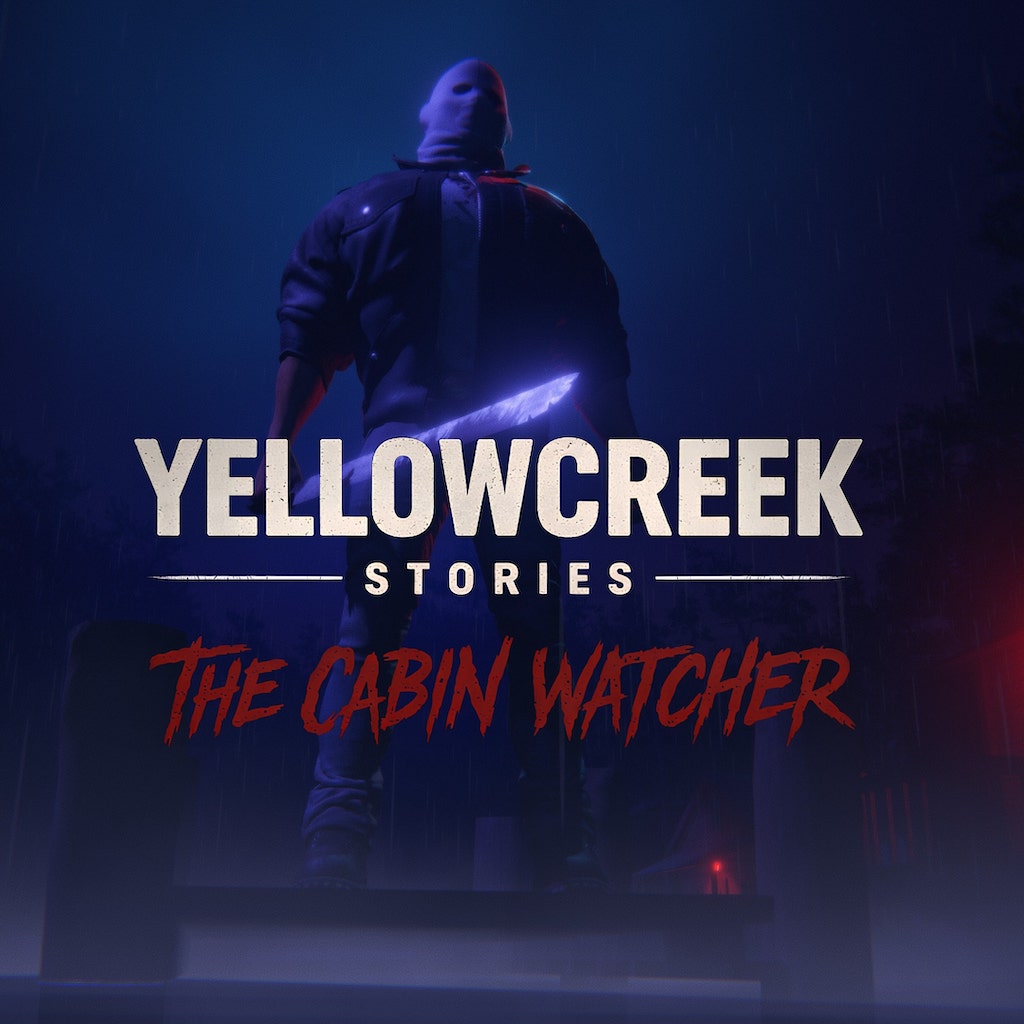
Horror games often fall into the trap of believing that louder means scarier. Bigger monsters, more elaborate chase scenes and endless jump scares become substitutes for genuine tension. Yellowcreek Stories: The Cabin Watcher takes the opposite approach. It slows everything down, strips away any sense of empowerment, and leaves you alone in a mountain cabin where every footstep feels like a decision that could cost your life.
Inspired by classic 1980s slasher films, this debut entry in the Yellowcreek Stories anthology wears its influences proudly. A violent storm rages outside, the power is unreliable, and somewhere in the darkness a masked killer is patiently waiting for you to make a mistake. There are no guns to find, no impossible martial arts moves to unlock and no miraculous last stand. Your only weapons are patience, awareness and the hope that the person hunting you chooses the wrong room to search.
While its relatively brief running time means the experience is over before it can fully evolve, The Cabin Watcher delivers a focused slice of survival horror that understands suspense far better than many games several times its size.
Gameplay
The central gameplay loop revolves around stealth, observation and risk management. Every action carries weight because the killer reacts dynamically to the player’s behaviour rather than following predictable scripted patrols. Running may help you escape immediate danger, but it also echoes through the cabin and surrounding woodland, potentially drawing your pursuer straight towards you.
Noise is one of the game’s most compelling mechanics. Opening doors too quickly, sprinting across wooden floors or knocking into environmental objects can all betray your position. Instead of encouraging speed, the game rewards restraint, creating a pace that keeps players thinking several moves ahead rather than reacting in panic.
Light management is equally important. Your flashlight is an invaluable tool for navigating dark hallways and storm-battered paths, yet every beam cuts through the darkness like a beacon, announcing exactly where you are. The result is an enjoyable balancing act where visibility and safety rarely go hand in hand.
Movement also feels deliberately considered. Walking cautiously may seem painfully slow at first, but it soon becomes second nature once you realise how dangerous reckless behaviour can be. There is an almost oppressive realism to simply crossing a room while hoping the creaking floorboards remain silent.
The hiding mechanics are straightforward yet effective. Slipping beneath furniture or squeezing into wardrobes creates genuinely nerve-racking moments as footsteps approach. Unlike many horror games, where hiding eventually becomes routine, the unpredictable search behaviour ensures these encounters continue to generate anxiety throughout the adventure.
A Killer That Feels Like a Hunter
The masked antagonist is undoubtedly the game’s greatest achievement. Rather than being a scripted obstacle that appears on cue, the killer acts as an active predator, responding to your decisions. Every noisy mistake shapes future encounters, making survival feel earned rather than predetermined.
This reactive behaviour creates countless memorable moments that are hard to replicate. One player may narrowly escape after accidentally revealing their position with a flashlight, while another may spend several agonising minutes trapped in a wardrobe, listening as footsteps circle the room before slowly disappearing into the storm.
The psychological pressure this creates is often more frightening than direct confrontation. Simply hearing movement outside your field of vision is enough to make every decision feel significant. That uncertainty becomes the game’s greatest source of horror.
The AI is not flawless, and experienced stealth players may occasionally identify exploitable behaviours, but these moments are relatively rare. For most of the experience, the illusion remains remarkably convincing.
Atmosphere
Few independent horror games capture atmosphere as effectively as Yellowcreek Stories: The Cabin Watcher. The remote mountain setting feels isolated without becoming empty, while relentless rainfall provides a constant soundtrack that both comforts and unsettles. Nature itself seems almost indifferent to your survival, carrying on as the nightmare unfolds beneath the storm clouds.
The cabin is equally impressive. Every room feels believable, cluttered with enough detail to suggest someone genuinely lived there before everything went horribly wrong. Dim lighting, flickering shadows and narrow corridors combine to create an environment where danger could be hiding just beyond every doorway.
Sound design deserves enormous praise. Rather than relying on dramatic orchestral cues, the game embraces subtle environmental audio. Rain striking the roof, distant thunder, creaking timber and muffled footsteps generate far more tension than loud musical stings ever could.
The minimal user interface also strengthens immersion. Instead of cluttering the screen with oversized objectives and intrusive indicators, the game quietly communicates essential information, allowing players to remain absorbed in the environment.
Story
Narratively, The Cabin Watcher keeps things deliberately restrained. You play as a writer seeking isolation in hopes of finding inspiration, only for that peaceful retreat to descend into a terrifying fight for survival. It is a familiar premise, yet one that suits the slasher genre perfectly.
Environmental storytelling fills many narrative gaps. Notes, abandoned belongings and subtle visual clues gradually paint a broader picture without interrupting the pacing with lengthy exposition. Players willing to explore will uncover enough details to reward their curiosity while preserving the mystery surrounding the killer.
The story succeeds largely because it refuses to explain everything. Horror often loses its power once every question receives a convenient answer, and The Cabin Watcher wisely allows uncertainty to linger. Some players may crave additional lore, but the ambiguity suits the anthology format remarkably well.
Although the cast remains relatively small, the writing avoids unnecessary melodrama. The protagonist reacts believably to increasingly desperate circumstances, making the unfolding nightmare feel grounded despite its familiar horror setup.
Presentation
Visually, the game embraces grounded realism, enhanced by subtle retro-horror influences. Lighting is used exceptionally well throughout, creating sharp contrasts between well-lit safe spaces and oppressive darkness that constantly threatens to swallow the player whole.
The optional VHS-inspired presentation adds welcome personality without overwhelming the experience. Grain, distortion and muted colours evoke classic horror cinema while remaining entirely optional for players who prefer a cleaner image.
Performance remains consistently stable, allowing tension to build uninterrupted. Animations occasionally reveal the limitations of a smaller production, particularly in certain cinematic sequences, but these moments never seriously undermine immersion.
The interactive cinematic moments also deserve recognition. Rather than taking control away entirely, they often maintain player involvement, allowing suspense to continue naturally rather than becoming passive cutscenes.
Where It Falls Short
Its greatest strength is also its greatest limitation. The focused design keeps the pacing remarkably tight, but the adventure concludes just as its mechanics reach their full potential. A few additional scenarios exploring new locations or introducing fresh environmental challenges would have considerably elevated the overall package.
Replay value depends largely on appreciating dynamic AI encounters rather than narrative surprises. While no two chases unfold exactly alike, the overall structure remains relatively fixed once the mystery has been experienced.
Players expecting combat or more elaborate survival mechanics may also find the gameplay deliberately simplistic. Everything revolves around stealth, observation and patience, leaving little room for alternative playstyles. Fortunately, the game commits fully to that vision rather than diluting it with unnecessary systems.
Final Verdict
Yellowcreek Stories: The Cabin Watcher proves that effective horror rarely depends on scale. Its focused design, intelligent use of sound, reactive enemy behaviour and wonderfully oppressive atmosphere combine to create a memorable slasher experience that keeps players on edge. Every cautious step through the cabin feels earned, every flicker of the flashlight carries genuine risk, and every distant footstep sends your imagination racing.
Although its short length and limited replay value prevent it from reaching the very highest tier of survival horror, what is here is crafted with confidence and restraint. Carlos Azuaga has delivered a promising opening chapter that captures the spirit of classic slasher films while introducing enough modern stealth ideas to stand on its own. If future Yellowcreek Stories build on this foundation, horror fans will have plenty to look forward to.