Death is usually treated as the endpoint in fiction, the moment when a character’s journey comes to a close and the remaining cast are left to deal with the consequences. Kugayama Shiori’s Death Diary takes that idea and twists it into something far stranger. Here, death is not the conclusion but the beginning of a bizarre, emotional and occasionally hilarious investigation into identity, regret and the things that keep people tied to the world they have left behind.
Developed and published by Laplacian, with writing by 9-nine series author Kazuki Fumi, Kugayama Shiori’s Death Diary is a supernatural visual novel that refuses to settle into a single tone. One moment it is making you laugh with its absurd ghostly situations, and the next it is exploring loneliness, forgotten memories and the painful reasons people struggle to move on. That contrast could easily have become messy, but the game’s strongest moments come from how it balances its comedy with genuine emotional weight.
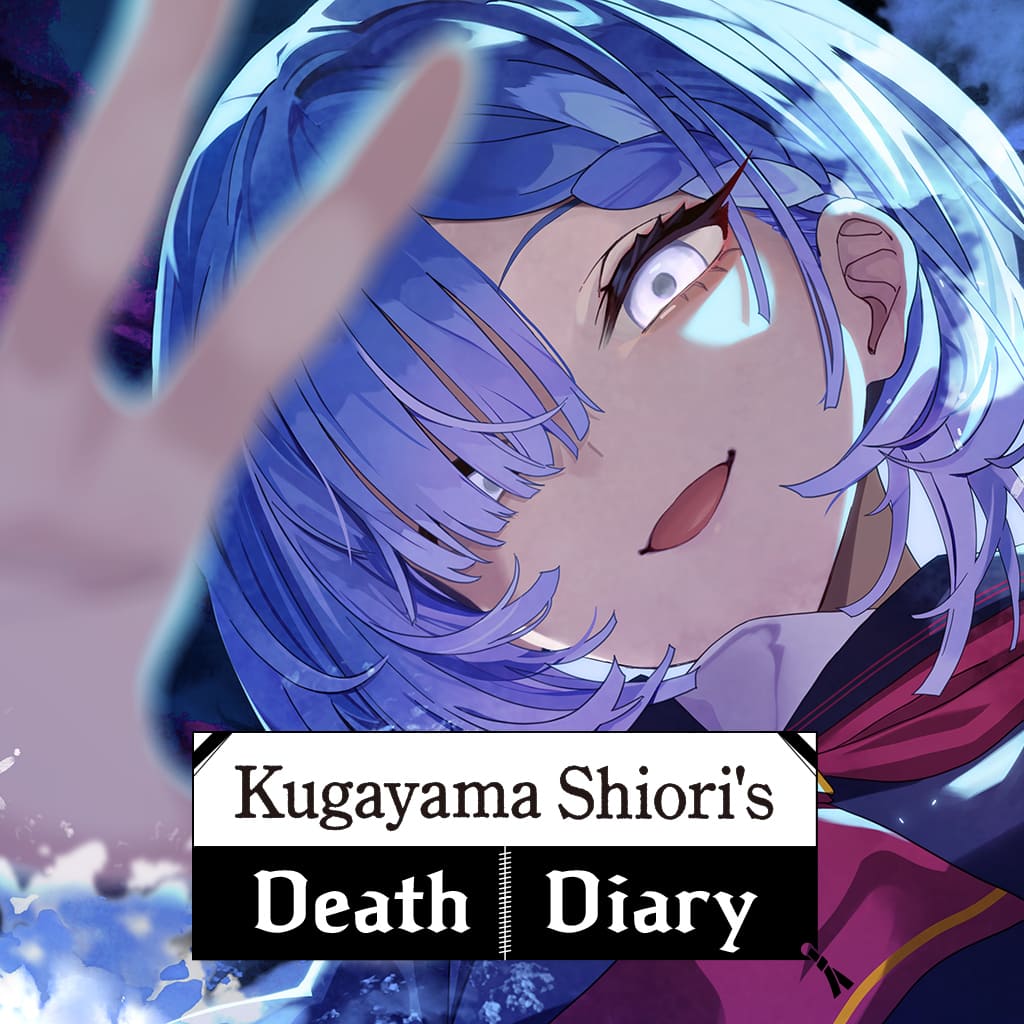
At the centre of everything is Kugayama Shiori herself, a ghost who remembers almost nothing about her life beyond her name and her strange habit of repeatedly attempting to die. Unfortunately for Shiori, every attempt fails to send her onward, leaving her trapped between worlds with no understanding of why she remains. When she meets the only living person capable of communicating with her, the two begin searching for answers about her past, her death and the unresolved feelings keeping her spirit attached to the world. It is a strange premise, but one that quickly proves surprisingly heartfelt.
Investigating the Unknown
Unlike many visual novels that rely almost entirely on reading and dialogue choices, Kugayama Shiori’s Death Diary adds a layer of investigation to its storytelling. The player is not simply watching Shiori’s journey unfold but actively helping to uncover the truth hidden beneath her fragmented memories. Conversations with ghosts, encounters with supernatural events, and careful observation all play a part in piecing together the larger mystery.
The investigative elements are deliberately light, yet they provide enough interaction to keep the story engaging. Rather than overwhelming players with complicated puzzles, the game focuses on making discoveries feel meaningful. Every strange encounter adds another piece to Shiori’s forgotten history, while the in-game Urban Legend Encyclopedia provides additional context about the paranormal world surrounding her.
This approach works particularly well because the mystery is not just about finding out what happened. The bigger question is why it happened and what Shiori lost along the way. The game slowly reveals that the circumstances surrounding her death are only part of the story, with the emotional consequences proving far more important than the event itself.
The branching structure also encourages exploration. Certain decisions can lead to unexpected outcomes, including alternate endings and unfortunate conclusions where the investigation takes a darker turn. While some routes may feel like trial and error, reaching the true ending feels rewarding because it requires understanding Shiori as a character rather than simply selecting the correct dialogue options.
A Strange Mix of Horror and Comedy
The biggest surprise about Kugayama Shiori’s Death Diary is how funny it can be. A story about a ghost searching for the reason behind her death could easily become relentlessly bleak, but Laplacian constantly injects moments of absurdity and personality. Shiori’s unusual attitude towards her situation creates plenty of darkly comedic moments, especially as her attempts to understand death grow increasingly ridiculous.
However, the humour never completely undermines the darker themes. Behind the jokes lies a story about someone who has forgotten who they were and whether their existence mattered. Shiori’s cheerful determination masks a deeper sadness, and watching her slowly rediscover herself becomes the emotional foundation of the entire experience.
This balance is where the writing shines. The game understands that horror is often more effective when there is something human beneath the fear. The supernatural elements are interesting, but it is the characters and their emotional struggles that give the story its impact.
The horror itself is more psychological than frightening. Players looking for constant scares or disturbing imagery may find the experience relatively restrained, but the unsettling atmosphere works because it focuses on mystery and uncertainty. The idea of being trapped between life and death, unable to remember why you cannot move on, creates a much more lingering sense of unease than simple jump scares ever could.
Characters That Keep the Story Moving
Shiori is undoubtedly the star of the show. A character concept centred on repeated death attempts could easily have become a one-note joke, but the writing gives her surprising depth. Her curiosity, frustration and occasional vulnerability make her far more than a quirky ghost companion.
The relationship between Shiori and the protagonist forms the emotional core of the story. Although the protagonist is intentionally quiet, their role as Shiori’s link to the living world creates an interesting dynamic. The two characters gradually become dependent on each other, each learning important truths about themselves through their investigation.
The supporting cast also helps to strengthen the supernatural atmosphere. Ghosts and strange encounters often provide humour, mystery or additional background information that expands the world beyond Shiori’s personal story. Not every character receives the same level of development, but the overall cast adds plenty of charm.
Presentation and Atmosphere
Visually, Kugayama Shiori’s Death Diary embraces Laplacian’s distinctive style, blending expressive character artwork with a darker, supernatural atmosphere. The contrast between colourful character moments and eerie locations reflects the game’s overall approach to storytelling. It can be playful one minute and unsettling the next.
The presentation works particularly well in emotional scenes, where character expressions carry much of the storytelling. Shiori’s shifting emotions are conveyed effectively, allowing quieter moments to have a stronger impact.
The game also includes several quality-of-life options that make the experience more accessible. Features such as the adjustable blood filter are a thoughtful addition, especially for players who may want more control over the visual intensity of certain scenes.
Final Verdict
Kugayama Shiori’s Death Diary is an unusual visual novel that succeeds by embracing its contradictions. It is a ghost story that is surprisingly warm, a mystery filled with humour, and a comedy that still manages to explore genuinely emotional themes. Its greatest strength is how it makes players care about a character who begins the story believing she is already finished.
The investigative mechanics are not revolutionary, and some of the branching paths can feel a little reliant on experimentation rather than deduction. However, those minor frustrations are outweighed by the strength of the writing, the charm of Shiori’s character, and the emotional payoff waiting at the end of the journey.
For fans of supernatural visual novels, character-driven mysteries, and stories that are willing to laugh while exploring darker subjects, Kugayama Shiori’s Death Diary is an experience worth discovering. Beneath its strange premise lies a thoughtful story about memory, connection, and finding a reason to keep going, even when you believe your story has already ended.