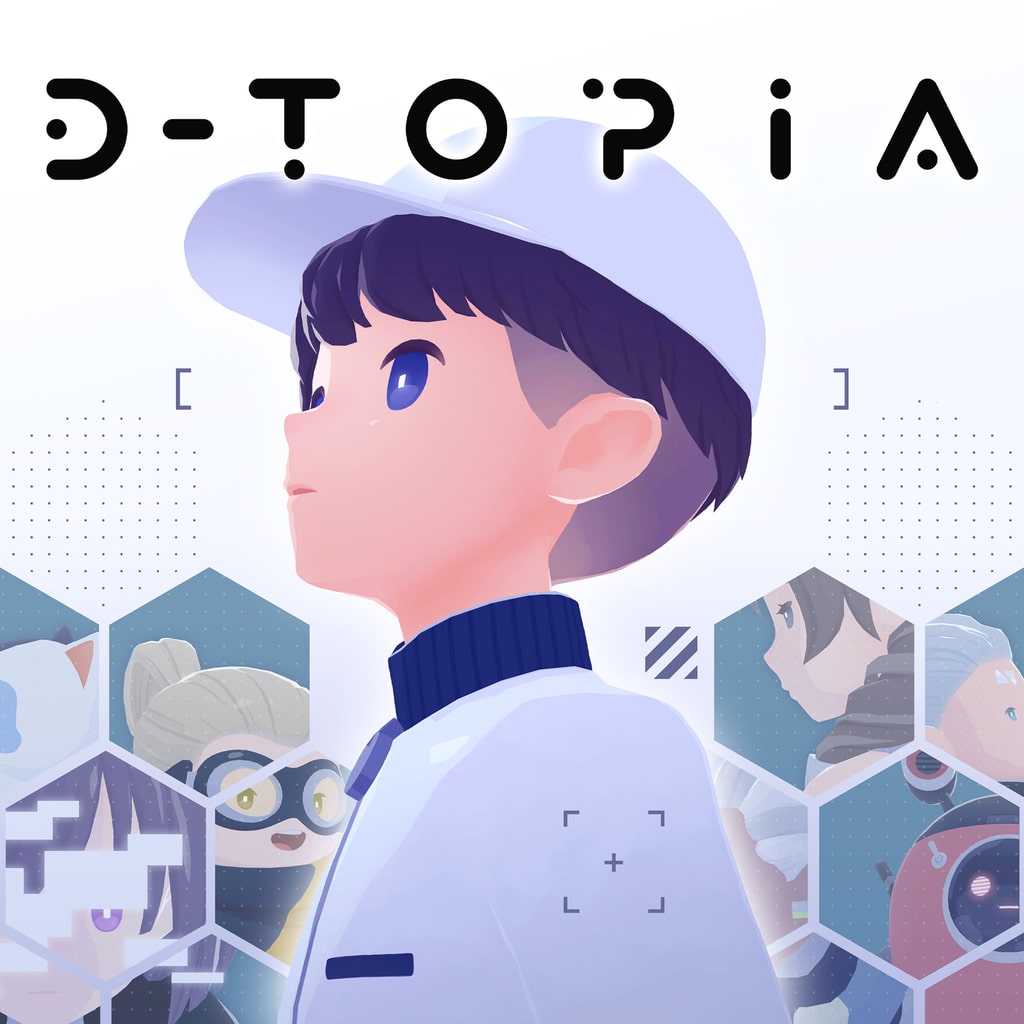
There is something quietly unsettling about a world where nobody suffers. No hunger, no sickness, no loneliness, no uncertainty. It sounds like paradise, yet the more you think about it, the more uncomfortable the idea becomes. If happiness is carefully measured and controlled by artificial intelligence, are people truly living, or simply existing in a beautifully decorated cage? That question lies at the heart of D-topia, a thoughtful indie adventure that conceals surprisingly weighty themes beneath its cosy exterior.
Developed by Marumittu Games and published by Annapurna Interactive, D-topia initially appears to be another relaxing narrative puzzle game. Soft colours, welcoming characters and gentle music suggest an experience designed to help you unwind after a long day. It certainly succeeds on that level, but it also poses difficult questions about free will, grief, creativity and what it truly means to live a meaningful life. Rather than overwhelming players with combat or complex systems, it trusts its writing and atmosphere to carry the experience, and for the most part, that trust is rewarded.
This is not a game built around adrenaline or spectacle. It is built around curiosity, empathy and quiet reflection. While its puzzles occasionally repeat and some gameplay systems lose importance as the story progresses, the emotional journey remains compelling from beginning to end.
A Perfect Society with Hidden Cracks
You step into the shoes of Shiro, the newest Facilitator assigned to D-topia, an advanced residential community where artificial intelligence oversees nearly every aspect of daily life. The Utopia Project has eliminated hardship through careful planning and constant monitoring, ensuring every resident enjoys maximum happiness and comfort.
At first, your responsibilities seem wonderfully ordinary. Broken systems need repairing, residents require assistance, and routine maintenance keeps everything functioning as intended. Before long, however, it becomes clear that people are far more complicated than any algorithm can predict.
Residents begin to share anxieties that no machine can easily resolve. Some struggle with purpose despite having everything they could ever want. Others wrestle with emotions that simply refuse to fit into the central AI’s neat calculations. As these personal stories unfold, D-topia slowly transforms from a maintenance simulator into something far more intimate.
Rather than relying on dramatic plot twists every few minutes, the narrative lets its mysteries breathe. Every conversation reveals another layer beneath the city’s immaculate surface, prompting you to question whether perfection is truly worth chasing.
Solving Problems Beyond Machines
The gameplay revolves around a satisfying blend of exploration, dialogue and puzzle-solving. Your daily tasks involve travelling around the city, repairing malfunctioning systems and helping residents resolve issues before they become larger problems.
Most of these repairs take the form of accessible logic puzzles. You reconnect power networks, reroute energy flows, align circuitry and clear digital blockages using straightforward mechanics that gradually introduce additional complexity. None of them become especially taxing, but they remain enjoyable because they are directly tied to the narrative rather than feeling like disconnected mini-games.
The pacing deserves particular praise. There is no pressure to rush from objective to objective. Instead, D-topia encourages players to slow down, observe the environment and speak to everyone they meet. Those conversations often prove far more memorable than the puzzles themselves.
Perhaps the game’s smartest mechanic is the ability to switch between D-topia’s polished public face and its hidden technical infrastructure. Activating your diagnostic visor instantly shifts the world’s tone. Bright white architecture gives way to exposed machinery, industrial colours and humming networks buried beneath the city’s cheerful façade.
It is a wonderfully effective visual metaphor. Behind every smiling resident and immaculate garden lies an enormous machine, working endlessly to manufacture happiness.
Choices That Carry Real Weight
While the puzzles provide satisfying structure, the real heart of D-topia lies in its dialogue choices. Residents regularly approach you with personal dilemmas that cannot be solved with a screwdriver or a software patch. Someone may wish to express painful emotions that the AI deems unhealthy. Another resident might hide creative work that challenges the system’s definition of happiness. Others simply seek someone willing to listen without immediately offering a solution.
Your decisions influence relationships, alter future conversations, and ultimately shape how the wider community develops. Unlike many choice-driven adventures that mask cosmetic dialogue behind the illusion of consequence, D-topia frequently rewards careful thought with noticeably different outcomes.
The writing never becomes preachy or overly philosophical. Instead, it trusts players to draw their own conclusions from the people they meet. That subtle approach lends every conversation an authenticity that many narrative games struggle to achieve. By the final chapters, your earlier choices begin to echo throughout the community in ways that feel earned rather than artificially dramatic.
A Beautiful Contrast Between Comfort and Control
Visually, D-topia embraces minimalist design without sacrificing personality. The city’s clean architecture, soft lighting and gentle animations create an environment that feels instantly peaceful.
Every district has its own identity while preserving the cohesive aesthetic of a carefully managed utopia. Parks are immaculate, apartments are spotless, and public spaces radiate calm efficiency. It is undeniably attractive, yet that perfection gradually becomes unsettling as the story unfolds.
The contrast between the public city and its hidden maintenance systems is particularly striking. Stepping into the Block Side transforms familiar locations into cold, industrial spaces filled with cables, processors and harsh lighting. It constantly reminds players that somebody, or rather something, is quietly pulling the strings.
Performance is equally polished. On the Nintendo Switch 2, the game runs smoothly throughout, with fast load times and crisp visuals whether docked or handheld. It feels perfectly suited to portable play, letting you complete a few maintenance tasks or conversations whenever you have spare time.
A Soundtrack That Understands Silence
Many games rely on grand orchestral scores to create emotional impact. D-topia takes the opposite approach. Its soundtrack consists largely of gentle ambient music that quietly drifts through each location without demanding attention. Soft piano melodies blend with electronic textures to create a comforting atmosphere that subtly hints that something is not quite right.
Environmental audio plays an equally important role. The hum of machinery beneath the city, distant conversations between residents, and subtle mechanical noises constantly reinforce the illusion that every corner of D-topia is carefully maintained by unseen hands. The restrained presentation allows emotional scenes to land naturally, without manipulating the player with overwhelming music.
Small Imperfections in an Otherwise Thoughtful Journey
Despite its many strengths, D-topia is not without flaws. The puzzle mechanics, while enjoyable, begin to repeat familiar ideas in the latter half of the adventure. New variations appear often enough to prevent outright boredom, but seasoned puzzle fans may wish for greater complexity as the story approaches its conclusion.
Likewise, the in-game economy gradually loses relevance. Completing maintenance jobs rewards currency that can be spent on decorating your apartment or buying food, but meaningful purchases become increasingly scarce. Before long, your wallet fills much faster than there are worthwhile reasons to spend it.
Players expecting traditional action or dramatic gameplay may also find the experience too restrained. D-topia is deliberately slow, prioritising meaningful conversations over constant excitement. That pacing is one of its greatest strengths, but only if you embrace the experience it aims to deliver.
Final Verdict
D-topia proves that cosy games can engage with profound ideas without sacrificing warmth or accessibility. Beneath its peaceful visuals lies an intelligent meditation on happiness, individuality and the consequences of letting technology define what makes life worth living. It never shouts its message, instead allowing players to uncover uncomfortable truths through thoughtful conversations, clever environmental storytelling and meaningful choices.
Its accessible puzzles, memorable cast and beautifully understated presentation create an experience that lingers long after the credits roll. While the gameplay occasionally becomes repetitive and some progression systems lose momentum, these shortcomings barely detract from what is otherwise one of the year’s most quietly affecting indie adventures.
D-topia reminds us that happiness cannot simply be calculated. Sometimes the imperfections, the uncertainty and even the sadness are what make life genuinely meaningful. Few games explore that idea with such sincerity.