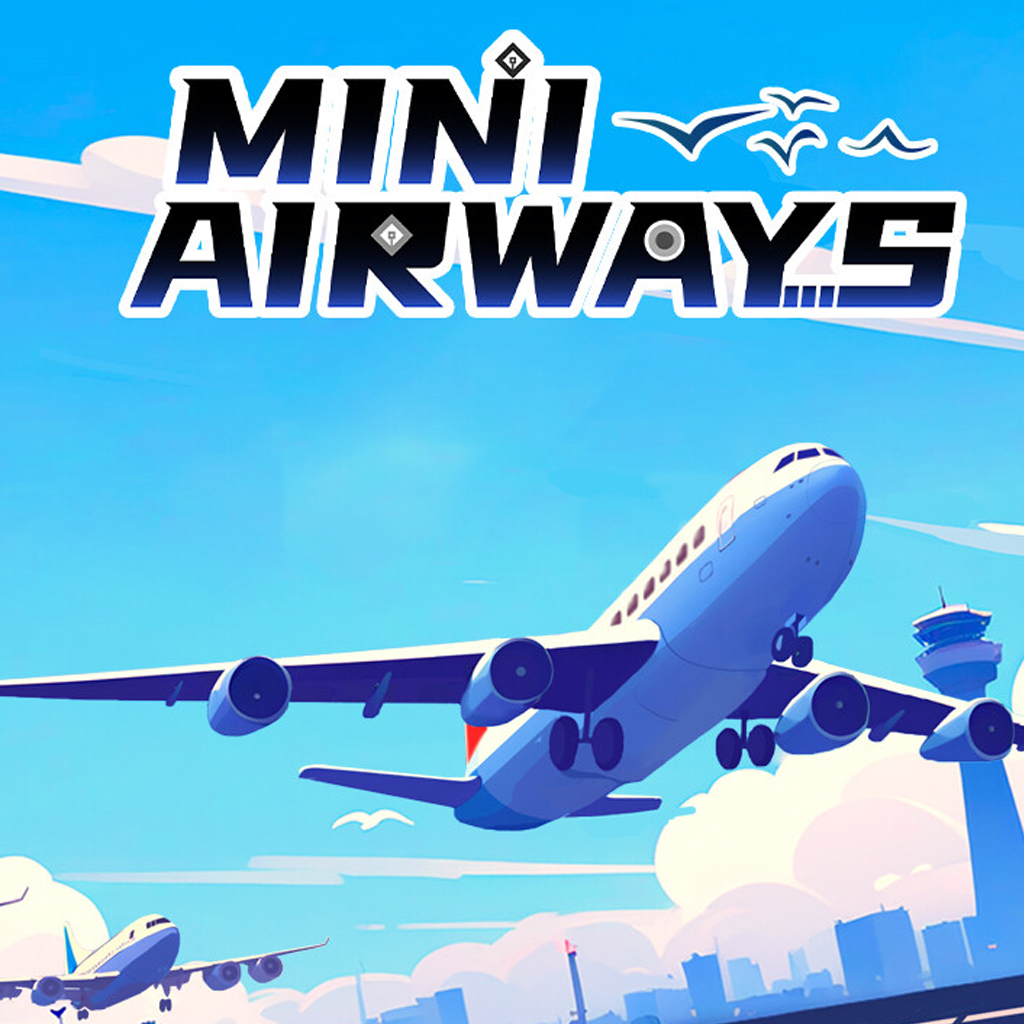
There is something strangely fascinating about air traffic control. From the outside, it looks impossibly stressful, a profession built on split-second decisions where even the smallest mistake can have catastrophic consequences. Yet for decades, games have tried to capture that pressure and turn it into something enjoyable. Few have struck the right balance between tension and satisfaction. Mini Airways comes remarkably close.
Developed by CCCP and published by SeaPower, Mini Airways draws clear inspiration from the minimalist management classics that helped define the genre. The fingerprints of games like Mini Metro and Mini Motorways are immediately obvious, but this is far more than a simple imitation. Instead of drawing train routes or connecting roads, you are responsible for safely guiding dozens of aircraft through increasingly crowded skies. It sounds simple enough at first, but it rarely stays that way for long.
What begins as a calm exercise in organisation gradually evolves into a white-knuckle battle against chaos, demanding concentration, foresight, and quick reactions in equal measure. The result is one of the most compelling management games to arrive in recent years.
Clear Skies Don’t Last Long
Mini Airways wastes no time introducing its central concept. Aircraft enter your airspace from the edges of the map, each needing safe passage to a specific runway or departure corridor. Using simple drag-and-drop controls, you create flight paths that guide them around obstacles and prevent dangerous encounters with other aircraft.
Initially, everything feels manageable. A handful of planes drift peacefully across the radar screen as you casually direct traffic and establish safe landing patterns. The interface is so clean and intuitive that newcomers can grasp the basics within minutes. It is a masterclass in accessibility, allowing players to jump straight into the action without lengthy tutorials or complicated menus.
That sense of comfort is temporary. As more flights enter the airspace, every decision carries greater weight. Landing queues lengthen, departures become harder to coordinate, and crossing flight paths create increasingly dangerous situations. Before long, your once orderly airport resembles a tangled web of moving aircraft, all demanding immediate attention. The transition from calm efficiency to organised panic is where Mini Airways truly shines.
The Art of Controlled Chaos
What makes the game so compelling is how naturally complexity emerges from simple systems. There are no unnecessary mechanics cluttering the experience. Every challenge stems from managing limited space, limited time, and an ever-growing number of aircraft.
Each incoming flight presents a small puzzle. How can it reach its destination safely without interfering with existing traffic? Can another aircraft depart before the runway is occupied? Is it worth placing a plane in a holding pattern while you resolve a larger congestion issue elsewhere? These questions arise constantly.
The game rewards careful planning, but it also demands flexibility. A beautifully organised approach can collapse within seconds when multiple flights arrive simultaneously or unexpected traffic creates a bottleneck. Success comes from maintaining control even as your carefully constructed plans begin to unravel.
There is an almost musical rhythm to the gameplay once everything starts flowing smoothly. Aircraft follow elegant curves through the sky, while landing sequences operate with precision. Watching a crowded airport function perfectly because of your decisions creates a deep sense of satisfaction. Of course, perfection rarely lasts.
Upgrades That Matter
One of Mini Airways’ smartest features is its upgrade system. After surviving a set period of operations, players are presented with a selection of improvements that can dramatically alter how an airport functions.
Additional runways provide much-needed capacity. Automated holding patterns reduce workload. Expanded airspace gives busy sectors breathing room. Other upgrades improve efficiency through faster turns, smoother traffic flow, or specialised routing tools.
What makes these upgrades particularly effective is that they never feel meaningless. Every choice has immediate consequences for how you approach future challenges. Selecting the wrong option can leave your airport struggling to cope with rising demand.
This adds an engaging layer of strategy beyond simply directing aircraft. You are constantly balancing short-term survival against long-term efficiency, trying to build an airspace capable of handling whatever comes next.
Because upgrades appear in randomised selections, no two sessions unfold exactly the same way. That unpredictability gives the game excellent replay value and encourages experimentation.
Airports Around the World
Another major strength is the variety of maps available. Inspired by real-world airports from across the globe, each location offers unique layouts and challenges that demand different approaches.
A wide-open airport might offer plenty of room to manoeuvre but be plagued by heavy traffic. Another location may force aircraft to navigate around mountains or restricted airspace, creating difficult routing problems from the outset.
This variety keeps the experience fresh throughout the campaign. Learning each airport’s quirks becomes part of the challenge, and adapting your strategy to new environments prevents the gameplay from becoming repetitive.
Particularly enjoyable are the random events inspired by real aviation history. These scenarios introduce moments of unpredictability that can completely change the flow of a session. Whether dealing with emergency flights or special priority clearances, these events add flavour without overwhelming the core experience.
A Minimalist Masterpiece
Visually, Mini Airways embraces simplicity, and it benefits enormously from that decision. The radar-inspired presentation is clean, readable, and elegant. Aircraft icons, flight paths, runways, and warning indicators are instantly understandable, even at the busiest moments. This clarity becomes increasingly important as traffic density rises and players must process large amounts of information quickly. The interface never feels cluttered or overwhelming. Instead, every element serves a clear purpose.
Complementing the visuals is an excellent soundtrack of relaxing electronic and jazz-inspired melodies. It creates a surprisingly soothing atmosphere that contrasts beautifully with the growing pressure of managing a crowded airspace.
There are moments when dozens of aircraft converge simultaneously, alarms sound, and your attention is pulled in every direction, yet the music somehow keeps the experience from becoming frustrating. It is a small touch, but an incredibly effective one.
Turbulence Ahead
For all its strengths, Mini Airways is not without issues. The biggest hurdle is its steep difficulty curve. While the opening stages ease players into the experience, later sessions can become brutally demanding. Traffic volume increases rapidly, and situations that once seemed manageable can spiral out of control in seconds.
For some players, this escalating pressure is exactly what makes the game exciting. Others may find the sudden spikes in difficulty exhausting rather than enjoyable.
The random nature of upgrades can occasionally add to this frustration. Certain runs feel noticeably harder simply because crucial options fail to appear when needed. While randomness helps maintain replayability, there are moments when bad luck feels more influential than player skill.
Additionally, players expecting a deeply realistic air traffic control simulation may find the experience somewhat abstract. Mini Airways prioritises elegant design and accessibility over authentic aviation procedures. That choice works brilliantly for gameplay, but simulation enthusiasts should keep their expectations in check.
Final Verdict
Mini Airways is a wonderful example of how great design can elevate a simple concept into something truly special. It takes the intimidating complexity of air traffic control and distils it into a format that is easy to understand yet endlessly challenging to master.
Its minimalist presentation conceals remarkable strategic depth, while its satisfying progression systems and varied airport layouts offer countless hours of replayability. The difficulty spikes can occasionally feel harsh, and the random upgrade system sometimes introduces frustrating variables, but these issues do little to diminish the overall experience.
Most importantly, Mini Airways captures that elusive feeling that defines the best management games. Every mistake feels like your fault. Every success feels earned. Every close call becomes a story you’ll remember long after the session ends.
For fans of strategy games, management simulations, and elegant puzzle design, Mini Airways is an easy recommendation. Once those aircraft begin filling your radar screen, you’ll find it surprisingly hard to look away.