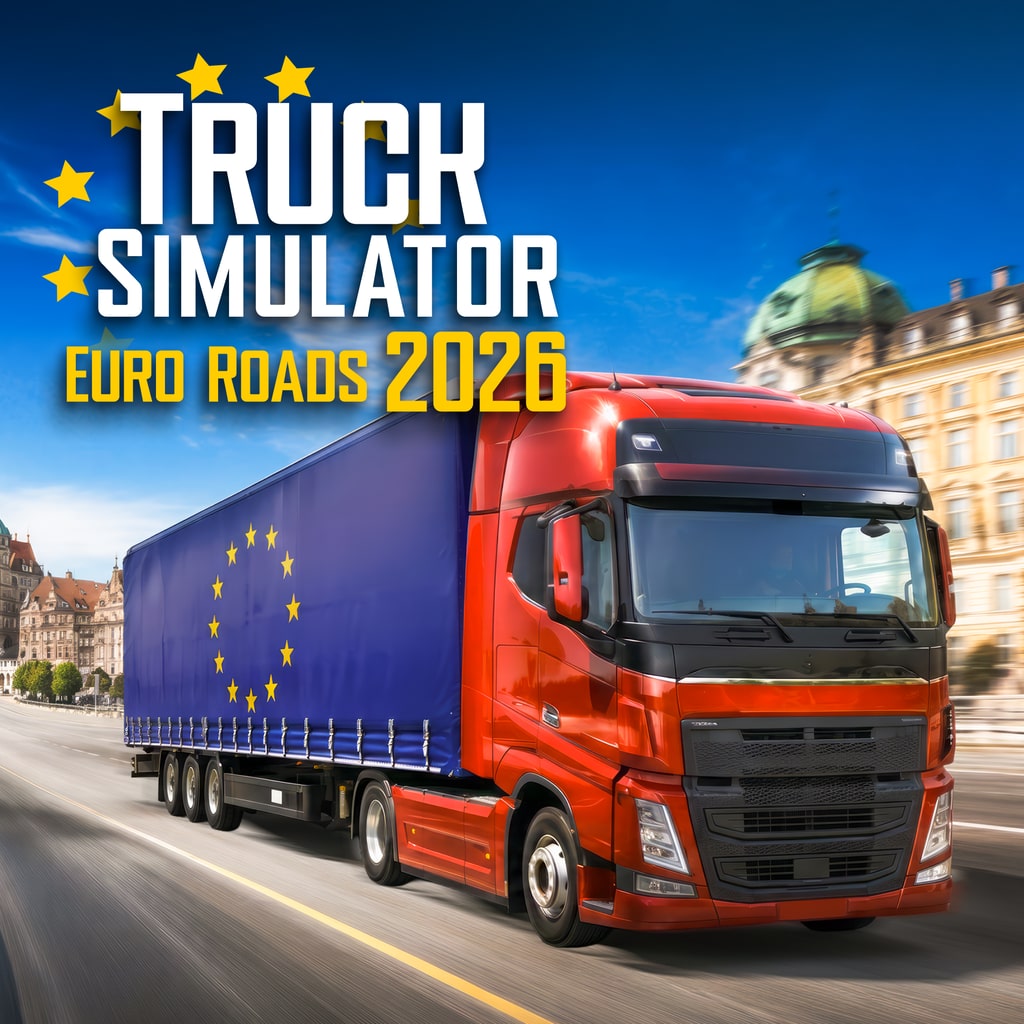
Trucking simulators have cultivated a surprisingly passionate audience over the years. What seems mundane from the outside often proves oddly therapeutic once you settle into the driver’s seat. There is something deeply satisfying about plotting a route, hauling valuable cargo across vast distances, and watching a transport business gradually grow from humble beginnings. While the genre has long been dominated by heavyweight PC experiences, console players have often been left searching for alternatives.
Truck Simulator Euro Roads 2026 arrives hoping to fill that gap. Developed as a budget-friendly trucking simulator for console audiences, it places players behind the wheel of powerful lorries as they travel across a fictionalised European road network. Featuring cargo contracts, truck upgrades, business management, dynamic weather, and a large collection of roads to explore, it certainly ticks many of the genre’s expected boxes. The question is whether it can deliver enough depth to keep drivers engaged beyond the first few deliveries.
The answer sits somewhere in the middle. While Euro Roads 2026 never reaches the heights of the genre’s finest examples, it offers a relaxing, approachable trucking experience that is easy to pick up and enjoy.
Building a Haulage Empire
Like most transport simulators, the journey begins with very little. Players start as a lone driver taking on small contracts to earn enough money to expand their operation. Early jobs involve transporting basic cargo between neighbouring locations, but larger opportunities quickly become available as your finances improve.
There is a pleasing sense of progression throughout the game’s opening hours. Every successful delivery contributes to something tangible, whether that is a new truck, a performance upgrade, or an investment in your growing business. Watching your transport company slowly evolve from a single-vehicle operation into a larger enterprise provides a rewarding long-term goal.
The business management side remains fairly straightforward throughout. You can purchase additional vehicles, invest in upgrades, and hire drivers to generate passive income. These systems lack the complexity of more advanced management simulators, but they serve their purpose well enough. The game clearly prioritises accessibility over intricate economic modelling, making it approachable for players who simply want to enjoy the driving experience without being buried beneath spreadsheets and statistics.
The Open Road
The driving itself is arguably the strongest aspect of the package. Truck Simulator Euro Roads 2026 captures the simple pleasure of being behind the wheel, with a destination ahead and hundreds of miles stretching out before you. The roads are easy to navigate, the controls are responsive, and the trucks carry enough weight to feel substantial without becoming frustrating to handle.
This accessible approach works particularly well on consoles. Rather than demanding constant attention to complex controls and advanced vehicle systems, the game lets players settle into a comfortable rhythm. Long journeys become opportunities to relax rather than stressful exercises in precision driving.
The variety of cargo helps maintain interest. Deliveries range from standard freight containers and fuel tankers to oversized industrial equipment. Different cargo types encourage slightly different approaches, particularly when navigating tighter roads or dealing with changing weather conditions.
The progression system also fits neatly into the driving loop. New upgrades improve vehicle performance and create a sense of ownership over your growing fleet. Customisation options allow players to personalise their trucks with new paint jobs, lighting configurations, wheels, and cabin enhancements, adding a welcome layer of individuality.
Weathering the Journey
One area where the game performs surprisingly well is its atmosphere. Dynamic weather and day-night cycles add much-needed variety to the lengthy journeys. Driving beneath clear blue skies feels entirely different from navigating a motorway in a torrential downpour. Rain streaking across the windscreen while headlights cut through the darkness create genuinely immersive moments.
The changing conditions also prevent routes from feeling entirely predictable. A journey completed in daylight can feel remarkably different when tackled at night in heavy rain. These environmental shifts help mask some of the repetition that inevitably emerges during longer play sessions.
Sound design contributes positively as well. The low rumble of diesel engines, the hum of tyres on tarmac, and the ambient sounds of traffic create a calming backdrop that suits the game’s relaxed pace. While not particularly groundbreaking, the audio does enough to support the experience without becoming intrusive.
Where the Road Starts to Narrow
Unfortunately, the game’s limitations become increasingly apparent as more hours are invested. Despite advertising a vast European road network, the world often lacks the variety needed to sustain long-term exploration. Many routes begin to blend together after a while. Highways, service stations, toll booths, and urban environments frequently feel recycled, creating a sense of familiarity that arrives much sooner than it should.
The illusion of travelling across Europe is further weakened by the lack of regional identity. Distinctive landmarks, architectural styles, and cultural touches are limited, so many locations struggle to establish their own personality. While the roads are functional, they rarely leave a lasting impression.
Traffic AI also proves inconsistent. Most of the time, other vehicles behave reasonably, but occasional oddities break immersion. Cars can brake unexpectedly, traffic jams sometimes appear without explanation, and certain vehicle behaviours feel noticeably unnatural. These moments are not constant, but they occur often enough to be noticeable.
Simulation Lite
Perhaps the biggest divide will be how players feel about the game’s simplified approach to simulation. Hardcore trucking enthusiasts may be disappointed by the lack of mechanical depth. Fuel management exists but rarely becomes a significant concern. Vehicle maintenance is present, though simplified. Advanced logistics systems are largely absent, and precision-parking challenges are far less demanding than elsewhere in the genre.
For some players, this will be a genuine criticism. Those seeking a deeply authentic trucking simulator may feel that Euro Roads 2026 barely scratches the surface of what the genre can offer.
However, there is another side to this argument. By stripping away much of the complexity, the game becomes considerably more welcoming. Not everyone wants to spend twenty minutes carefully reversing a trailer into a loading bay or managing intricate fuel-efficiency calculations. Sometimes it is enough to simply enjoy the drive. Truck Simulator Euro Roads 2026 understands that audience remarkably well.
Final Verdict
Truck Simulator Euro Roads 2026 does not aim to compete directly with the genre’s most established giants. It lacks the depth, authenticity, and world-building needed to stand alongside the best trucking simulators available today. Repetitive environments, inconsistent AI, and relatively shallow management systems prevent it from becoming a truly memorable road trip.
Yet there is genuine enjoyment to be found here. The accessible driving model, satisfying progression loop, relaxing atmosphere, and approachable business systems create an experience that is easy to unwind with after a long day. Sometimes a game does not need to reinvent the wheel to be enjoyable. It simply needs to understand what makes the journey worthwhile.
For players seeking a casual trucking experience on console, Truck Simulator Euro Roads 2026 delivers a pleasant enough ride. It may not be the king of the motorway, but it knows how to make the miles pass comfortably.