Retro game preservation has become one of the most important aspects of modern gaming. As technology advances and original hardware becomes increasingly difficult to maintain, collections such as Hamster Corporation’s Console Archives ensure that influential classics remain accessible to future generations. While the company’s Arcade Archives line has earned a stellar reputation among enthusiasts, Console Archives shifts its focus to the home console experiences that defined countless childhoods in the 1980s.
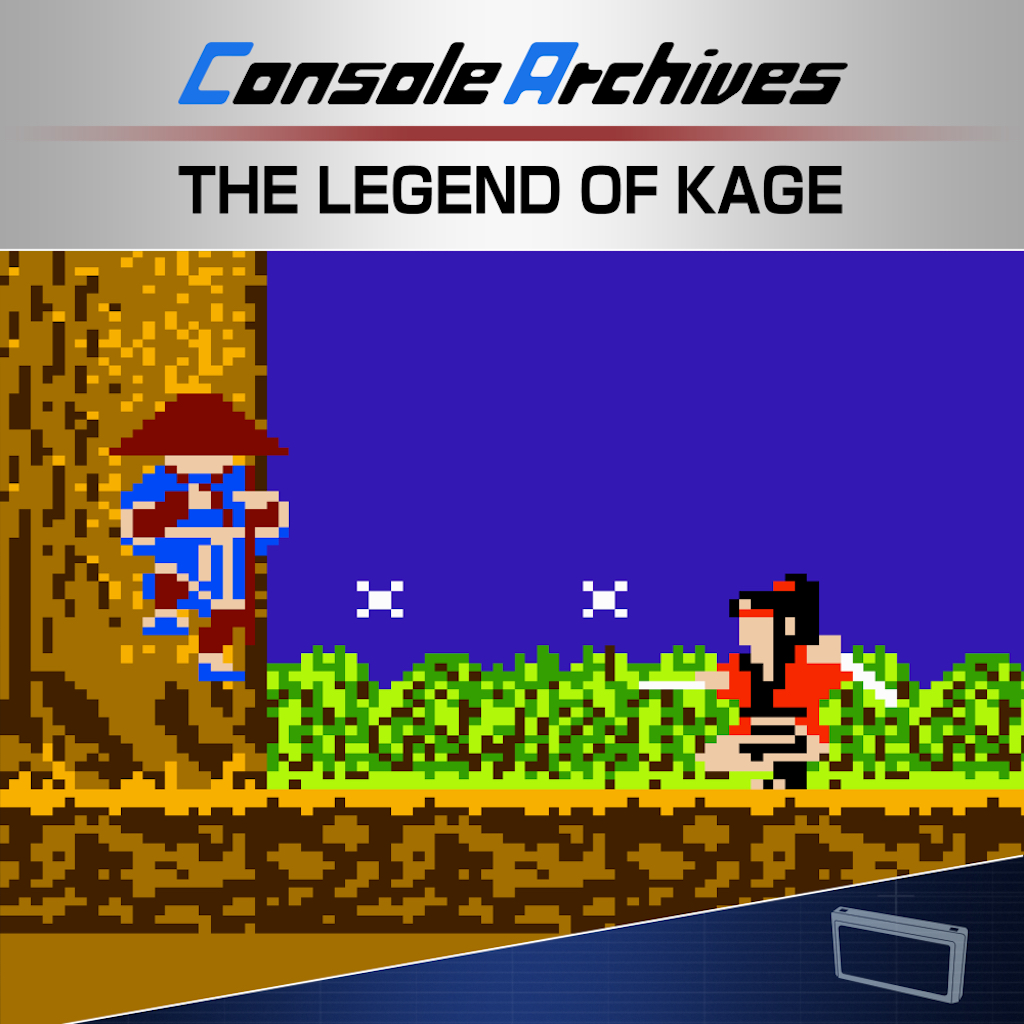
Console Archives THE LEGEND OF KAGE brings Taito’s 1986 home console adaptation of the arcade hit to modern platforms. On paper, it is a simple package. There are no flashy remakes, no modernised graphics, and no dramatic reinventions. Instead, Hamster has focused on presenting the game as authentically as possible, while adding a selection of thoughtful quality-of-life features that make it easier to enjoy today.
The result is a fascinating reminder of gaming’s early years. While its age is impossible to ignore, there is an undeniable charm to Kage’s fast-paced ninja adventure that still entertains nearly four decades later.
The Rescue of Princess Kirihime
Stories in the mid-1980s were often little more than brief excuses for action, and The Legend of Kage follows that tradition proudly. Players take control of Kage, a young Iga ninja tasked with rescuing Princess Kirihime after she is abducted by a villainous force and taken deep into enemy territory.
The plot is straightforward, but it serves its purpose well. There is something timeless about a lone warrior charging into danger to save a captive princess. This simplicity allows the gameplay to take centre stage while still providing enough motivation to keep players moving forward.
What makes the adventure memorable is not the narrative itself, but the atmosphere surrounding it. The changing seasons, traditional Japanese settings, and endless waves of enemy ninjas create a sense of myth and legend that helps the game stand out from many action titles of its era.
Fast, Fluid, and Surprisingly Ambitious
At first glance, The Legend of Kage appears deceptively simple. You run, jump, throw shuriken, and slash enemies with your sword. Yet within minutes, it becomes clear that Taito was experimenting with ideas that felt remarkably ambitious for the time.
The most distinctive feature is Kage’s movement. Unlike many action heroes of the period, Kage can propel himself enormous distances through the air. His jumps feel almost supernatural, allowing him to bounce between treetops, leap across entire sections of the screen, and reposition himself rapidly during combat.
These exaggerated jumps transform what could have been a basic side-scrolling action game into something far more dynamic. The opening forest stage feels almost like an aerial ballet as players hop between branches while fending off attackers from every direction. There is a freedom to movement that still feels enjoyable today.
Combat is equally straightforward yet satisfying. Shuriken serve as your primary ranged weapon, while your sword becomes essential when enemies close the distance. Battles are fast, chaotic, and often demand quick reactions. While the controls may seem simplistic by modern standards, they remain responsive enough to keep the action engaging throughout.
The Home Console Advantage
Players familiar with the arcade version may be surprised by how different this home console adaptation feels. Rather than a direct conversion, Taito made numerous adjustments that ultimately give the game its own identity.
The pacing is noticeably more deliberate. Enemy encounters feel slightly less overwhelming, giving players more room to appreciate the game’s movement mechanics. This version also introduces collectible crystal balls that provide meaningful upgrades and add a layer of progression absent from the arcade release.
These power-ups alter Kage’s appearance while improving his abilities. Larger projectiles, increased movement speed, and greater survivability make a substantial difference in tougher encounters. They also encourage players to engage more actively with the environment rather than simply rushing towards the exit.
Arguably the most significant improvement is the addition of a health buffer. The arcade game’s unforgiving one-hit deaths could be brutally punishing, whereas the console version offers slightly more forgiveness. This small change makes the adventure feel more approachable without removing its challenge entirely.
A Short Journey with Hidden Depth
One criticism frequently levelled at The Legend of Kage is its brevity. A skilled player can reach the ending in well under twenty minutes. By modern standards, that may seem disappointingly short.
However, this first completion only tells part of the story. To experience the game’s true ending, players must complete multiple loops of the adventure. Each subsequent run introduces new seasonal settings, faster enemies, and increasingly difficult encounters.
The changing environments help maintain visual interest, while the increased challenge provides a compelling reason to keep playing. What initially appears to be a tiny action game gradually reveals itself as a score-chasing endurance test that rewards mastery.
This design philosophy feels very much of its era. Games were expected to extract longevity through repetition and skill development rather than sheer content volume. Modern players may not fully embrace that approach, but there is something admirable about how effectively The Legend of Kage encourages improvement.
Preservation Done Right
As important as the game itself is, the quality of the preservation package deserves equal praise. Hamster continues to demonstrate why it has become one of the industry’s most respected preservation specialists. The presentation is clean, responsive, and respectful of the original source material. Visual options let players choose between sharp pixel displays and CRT-inspired filters that recreate the look of an old television.
The inclusion of save states immediately makes the game more approachable for newcomers. The ability to save progress at any moment removes much of the frustration associated with older titles. The rewind feature is even more valuable, allowing players to instantly correct mistakes without restarting entire sections.
Customisable controls, display settings, and accessibility options round out an excellent package. None of these additions compromise the original experience. Instead, they give players the freedom to enjoy the game however they prefer.
Where Age Shows
As enjoyable as The Legend of Kage remains, its age is inescapable. Enemy variety is limited, and repetition sets in quickly. While the looping structure extends the game’s lifespan, some players may grow tired of revisiting the same stages. The combat system, though responsive, lacks the depth of modern action games.
There are also occasional moments when enemy placement seems designed more to drain lives than to encourage thoughtful play. Such frustrations were common in the mid-1980s, but they can feel harsh to contemporary audiences. These shortcomings do not ruin the experience, but they serve as reminders that this is very much a product of its time.
Final Verdict
Console Archives THE LEGEND OF KAGE is exactly what retro preservation should be. It respects the original game, enhances accessibility with modern conveniences, and preserves an important piece of gaming history without unnecessary alterations.
The adventure itself remains surprisingly enjoyable. Kage’s gravity-defying movement still feels distinctive, the action remains fast and satisfying, and the seasonal loops add more depth than the game’s modest runtime suggests. While some aspects inevitably feel dated, the core gameplay holds up remarkably well.
This is not a sprawling modern epic, nor does it pretend to be. Instead, it offers a snapshot of a different era when simple mechanics, challenging gameplay, and a memorable atmosphere were enough to keep players coming back for one more run. For retro enthusiasts, preservation fans, and anyone curious about the roots of ninja action games, this release is an easy recommendation.