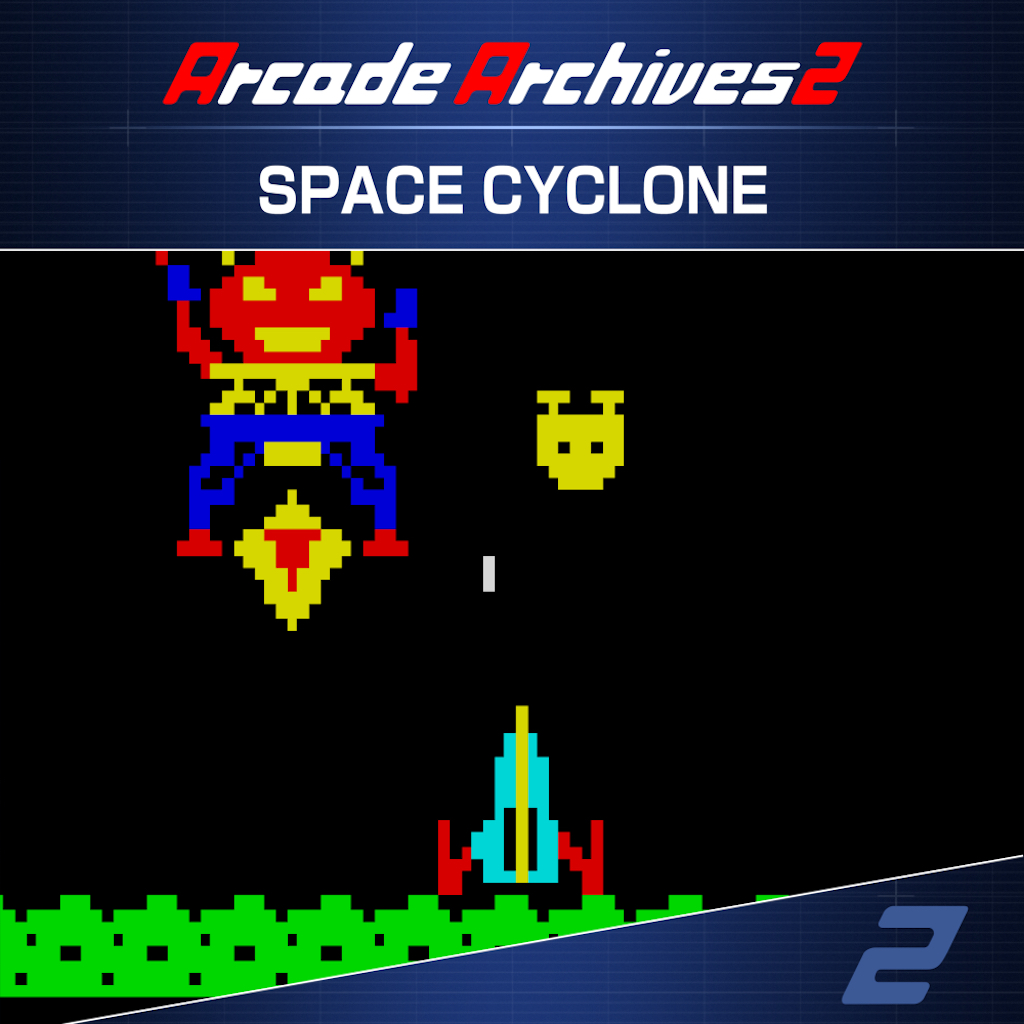
The early years of arcade gaming were marked by experimentation. While modern players often look back on the golden age through the lens of giants like Space Invaders, Galaxian, and Galaga, the reality is that developers were constantly seeking new ways to evolve the formula. Every successful arcade hit inspired a dozen fascinating variations, many of which quietly disappeared into history. SPACE CYCLONE is one such game.
Originally released by TAITO in 1980 and designed by Space Invaders creator Tomohiro Nishikado, SPACE CYCLONE arrived at a time when the shooting genre was still finding its footing. It borrowed familiar ideas from the titles that came before it, yet introduced enough fresh mechanics to stand out. Unfortunately, unlike its more famous contemporaries, it never enjoyed widespread recognition outside Japan.
Thanks to Hamster Corporation’s Arcade Archives 2 initiative, this forgotten relic has finally returned. More importantly, it arrives with the kind of care and attention that retro enthusiasts have come to expect from the preservation specialists behind the Arcade Archives brand.
What emerges is not merely an old arcade game. It is a fascinating snapshot of gaming history that still possesses a surprising amount of energy more than four decades after its original release.
A Forgotten Branch of Arcade Evolution
At first glance, SPACE CYCLONE looks familiar enough. You control a lone defence craft at the bottom of the screen. Enemy forces descend from above. Your task is to shoot them down before they overwhelm your position. It sounds remarkably similar to countless fixed shooters released in the late 1970s and early 1980s.
However, the moment the action begins, the differences become apparent. Rather than marching in predictable rows like the aliens of Space Invaders, the insect-like BEMs move dynamically across the battlefield. They dart between meteors, change direction unexpectedly, and create a much less structured encounter. The result feels significantly more chaotic than many of its contemporaries.
This unpredictability is where SPACE CYCLONE begins to carve out its own identity. Success depends less on memorising rigid formations and more on rapidly assessing threats as they emerge. Every wave demands attention because enemy behaviour constantly shifts and adapts. Even by today’s standards, there is something refreshingly tense about never knowing exactly where the next danger will come from.
Defending More Than Your Own Ship
The game’s most interesting mechanic centres on what happens when you fail. Destroying enemies is obviously important, but simply surviving is not enough. Any BEM that slips past your defences lands on the planet’s surface and begins constructing an enemy rocket. At first, this may not seem particularly threatening, but allowing too many invaders to reach the ground quickly creates a serious problem.
Once completed, these rockets launch into orbit and unleash devastating Cyclone Shots that fill the screen with danger. Suddenly, what began as a manageable shooting gallery becomes a desperate fight for survival.
This mechanic adds a compelling layer of strategic tension. Players must constantly weigh immediate threats against long-term consequences. Do you focus on the enemy diving directly towards your ship, or eliminate the builder quietly assembling a rocket on the surface? For a game released in 1980, it is an impressively forward-thinking idea.
The system creates a sense of escalation that keeps every stage engaging. Small mistakes snowball into larger problems, forcing players to remain alert at all times.
Brutal in the Best Possible Way
Like many arcade releases of its era, SPACE CYCLONE was designed to consume coins. Difficulty ramps up quickly, and the game makes few concessions to newcomers. Enemy speeds increase rapidly, reaction windows tighten, and the screen can become overwhelmingly busy within minutes. Yet despite this challenge, the game rarely feels unfair.
The controls remain responsive throughout, and failure almost always feels like the result of player error rather than questionable design. Every defeat teaches a lesson. Every lost life encourages a slightly different approach.
That addictive “one more try” mentality is alive and well here. It is easy to see how arcade regulars of the early 1980s would spend entire afternoons chasing higher scores and attempting to survive just one wave longer than before.
Arcade Archives 2 Raises the Bar
While SPACE CYCLONE itself deserves attention, the real star of this release may be Hamster’s presentation. Arcade Archives has long been regarded as the gold standard for arcade preservation, but Arcade Archives 2 marks a noticeable step forward. New features help modern players appreciate these classics without compromising their original design.
The headline addition is Time Attack Mode. Unlike traditional score chasing, this mode challenges players to clear content as quickly as possible. It offers a fresh take on the game’s mechanics and gives experienced players another reason to return after mastering the standard modes. Alongside Original Mode, Hi Score Mode, and Caravan Mode, there is a healthy selection of ways to experience the game.
The inclusion of Variable Refresh Rate support is another welcome addition. While casual players may not immediately notice the difference, enthusiasts will appreciate the smoother presentation and improved visual accuracy. It helps the game feel remarkably close to how the original hardware behaved.
Preservation Done Properly
One of Hamster’s greatest strengths has always been recognising that preservation is about more than simply emulating software. Modern convenience features have become an expected part of the Arcade Archives package, and SPACE CYCLONE benefits enormously from them.
Save states let players practise difficult sections without repeatedly starting from scratch. The rewind feature is an invaluable learning tool for those struggling with the game’s steep difficulty curve. Rapid-fire options make the experience more comfortable, while remaining entirely optional. Customisable display settings, screen filters, and control configurations further enhance accessibility.
Importantly, none of these additions feel intrusive. Purists can enjoy the game exactly as it existed in arcades decades ago, while newcomers can use modern tools to ease the learning process. That balance between authenticity and accessibility remains one of Hamster’s greatest achievements.
Showing Its Age
As enjoyable as SPACE CYCLONE remains, its age is undeniable. The presentation is extremely minimalist. The visuals are functional rather than spectacular, relying on simple sprites and basic colour schemes. The audio is similarly sparse, consisting largely of electronic effects and repetitive sound cues. Players raised on later arcade shooters may initially find the experience lacking in spectacle.
The gameplay loop is also relatively straightforward. While the rocket-building mechanic adds welcome depth, there is only so much variety a 1980s shooter can offer. Extended sessions can become repetitive once the initial novelty wears off.
Yet judging SPACE CYCLONE by modern standards somewhat misses the point. This is not intended to compete with contemporary shooters. It is an important historical artefact that showcases where the genre was heading during its formative years. Viewed through that lens, its simplicity becomes part of its charm.
Final Verdict
Arcade Archives 2 SPACE CYCLONE is exactly the kind of release that makes retro preservation so valuable. It shines a spotlight on a game many players have never encountered, while offering a beautifully polished way to experience it on modern hardware.
The game itself remains surprisingly engaging. Its dynamic enemy behaviour, clever rocket-building mechanic, and relentless pacing create a level of tension that still feels effective today. While its age shows in places, the underlying design remains remarkably compelling.
Hamster has once again demonstrated why it sits at the top of the retro preservation field. Every feature included here serves the goal of helping players appreciate an important piece of arcade history without sacrificing authenticity.
SPACE CYCLONE may never achieve the legendary status of Space Invaders or Galaga, but after spending time with this release, it becomes clear that it deserves far more recognition than history has afforded it. For arcade enthusiasts, shoot ’em up historians, and anyone curious about gaming’s formative years, this is an easy recommendation.