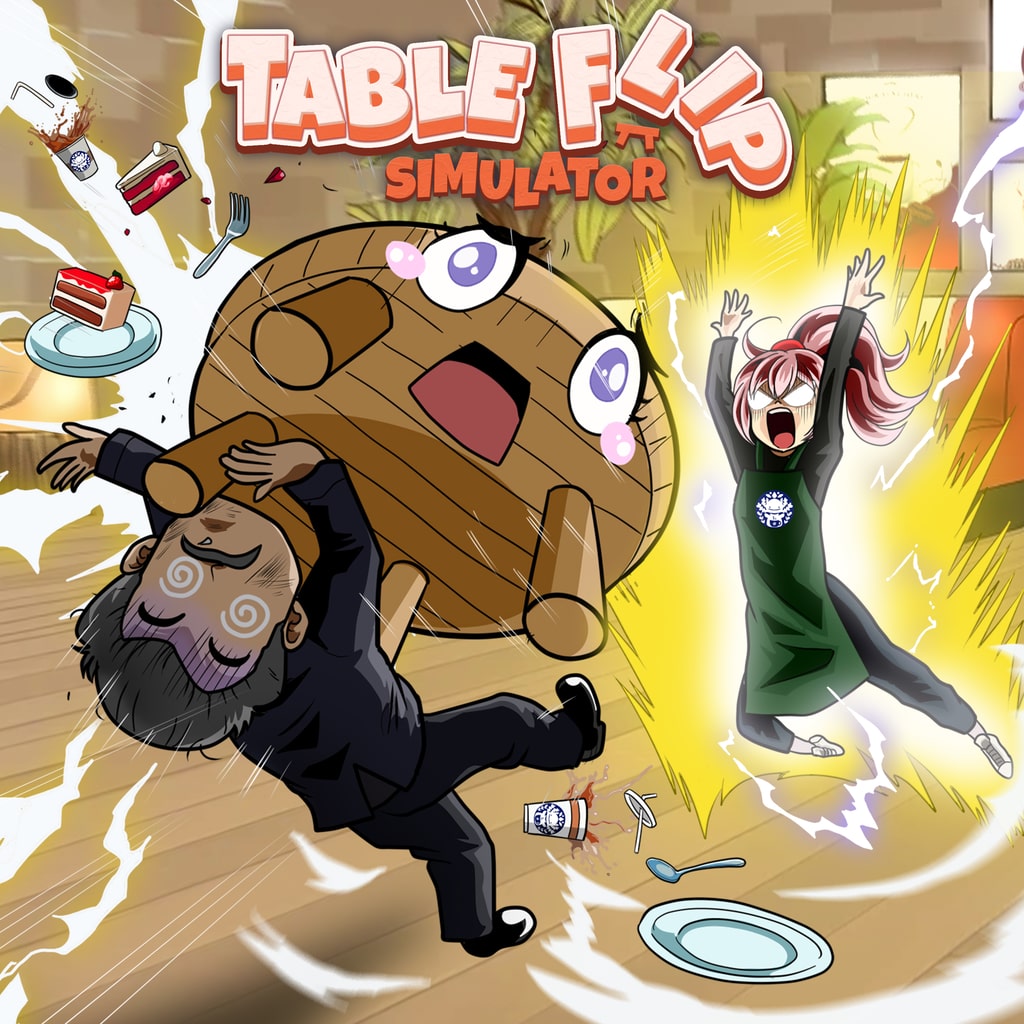
There is something universally understandable about wanting to flip a table after a terrible day. A bad meeting, impossible deadlines, rude customers, or simply one frustration too many can leave anyone fantasising about dramatic acts of rebellion. Table Flip Simulator takes that fleeting impulse and turns it into an entire game. The result is chaotic, ridiculous, and far more heartfelt than its title suggests.
At first glance, it looks like another novelty physics game built around internet humour and destruction clips. Spend a few hours with it, though, and a different picture starts to emerge. Beneath the flying chairs and collapsing furniture lies a light puzzle game wrapped in a surprisingly committed comedy adventure. It rarely takes itself seriously, but that commitment to silliness becomes part of its charm.
Gameplay
The premise begins with a painfully relatable setup. Your character is stuck in a dead-end job and forced to work overtime on their birthday. Rather than quietly accepting their fate, they snap in spectacular fashion and embark on a strange journey of escalating chaos that somehow ends with them becoming President of Antarctica.
That escalation defines the entire experience. Levels continually shift settings and objectives, preventing the formula from growing stale too quickly. One moment you are causing havoc in a café while managing impatient customers. The next has you surviving classrooms, dismantling corporate offices, or battling bizarre authority figures in exaggerated boss encounters.
The destruction itself is satisfying because it is not entirely mindless. Levels usually present optional goals, score targets, or environmental puzzles that encourage experimentation. Simply throwing a chair across a room rarely yields the best results. Instead, success comes from understanding object placement, triggering chain reactions, and finding creative ways to maximise destruction.
This gives Table Flip Simulator more structure than expected. It becomes less about random smashing and more about orchestrating chaos efficiently. There is a strange joy in setting off a perfect cascade of flying objects and watching a carefully planned disaster unfold exactly as intended.
Physics are naturally the star attraction. Nearly every item behaves as an independent object with weight and momentum. Tables topple realistically, cups scatter across floors, and heavy furniture crashes with satisfying force. Mistakes often become comedy highlights, too. An object thrown with too much enthusiasm can rebound directly into your own character, instantly turning triumph into slapstick disaster.
Level Design
Variety carries much of the game. The campaign constantly introduces fresh scenarios and environmental gimmicks, helping to avoid repetition. A classroom stage feels entirely different from a coffee shop or office environment because the objectives shift alongside them.
The game also rewards players for revisiting earlier stages. Optional challenges unlock extra content and encourage more creative approaches. Chasing higher scores becomes surprisingly addictive because every run invites experimentation.
Boss encounters also deserve special mention. Fighting professors or authority figures in object-throwing contests sounds ridiculous on paper, yet the game fully commits to the joke. These moments often become memorable simply because of how shamelessly absurd they are.
The inclusion of an in-game level editor adds significant longevity, too. Players can build their own destructible arenas and share their creations online, opening the door to community creativity. For a smaller indie project, this feature feels impressively ambitious and fits perfectly with the game’s sandbox nature.
Graphics and Presentation
Table Flip Simulator adopts a retro, voxel-inspired visual style that suits its tone perfectly. Characters appear blocky and exaggerated, while environments remain colourful and readable even amid absolute chaos.
This art direction works because realism would probably undermine the comedy. Watching hundreds of tiny voxel pieces explode across a room creates a toy-box energy that keeps destruction playful rather than aggressive.
The animation also deserves credit. Objects tumble naturally, and environmental reactions sell the impact of every action. Rooms gradually transform from neat workplaces into disaster zones filled with debris, adding visual payoff to every successful rampage.
Performance on the PlayStation 5 generally holds up well despite the heavy physics calculations running constantly. There are occasional moments when extreme destruction causes minor instability, but nothing severe enough to derail the experience.
Humour and Tone
Humour is subjective, yet Table Flip Simulator mostly lands its jokes because it commits wholeheartedly to nonsense. The narrative escalates absurdly from the outset and never tries to justify itself. The game pokes fun at work culture, authority figures, social frustrations, and everyday stress without tipping into cynicism. There is a lightness to everything. Even moments of destruction feel playful rather than malicious.
What surprised me most was how strangely therapeutic the whole experience became. There is genuine satisfaction in dismantling a stressful environment after a long day. It feels like harmless digital catharsis. Not every joke lands perfectly, and some scenarios run a little too long, but the overall tone remains infectious. It knows exactly what it wants to be and never pretends otherwise.
Replay Value
Replayability is stronger than expected, thanks to unlockable costumes, optional objectives, score chasing, bonus stages, and user-generated content. Unlocking cosmetics gives progression a steady rhythm, while online level sharing provides potentially endless new scenarios. Creative players will likely spend more time in the editor than in the campaign itself.
The high-score system also adds arcade-style appeal. Finding faster or more spectacular ways to clear objectives becomes rewarding, particularly when experimenting with environmental destruction. While the campaign itself is not especially long, the surrounding systems extend the experience considerably.
Final Verdict
Table Flip Simulator is exactly what its title promises, yet it manages to be more than a one-joke novelty. Beneath the chaos lies a genuinely entertaining puzzle game built around creativity, experimentation, and comic timing. Its physics systems are satisfying, the level variety keeps things moving, and the destruction never loses its appeal. The humour will not work for everyone, and some ideas wear thin before the credits roll, but the game’s energy carries it through weaker moments.
Most importantly, it understands the fantasy it is selling. Sometimes you do not need epic stakes or emotional drama. Sometimes you just need to throw a table through a boardroom window and watch the world explode into voxel pieces. Table Flip Simulator delivers exactly that fantasy with enthusiasm.