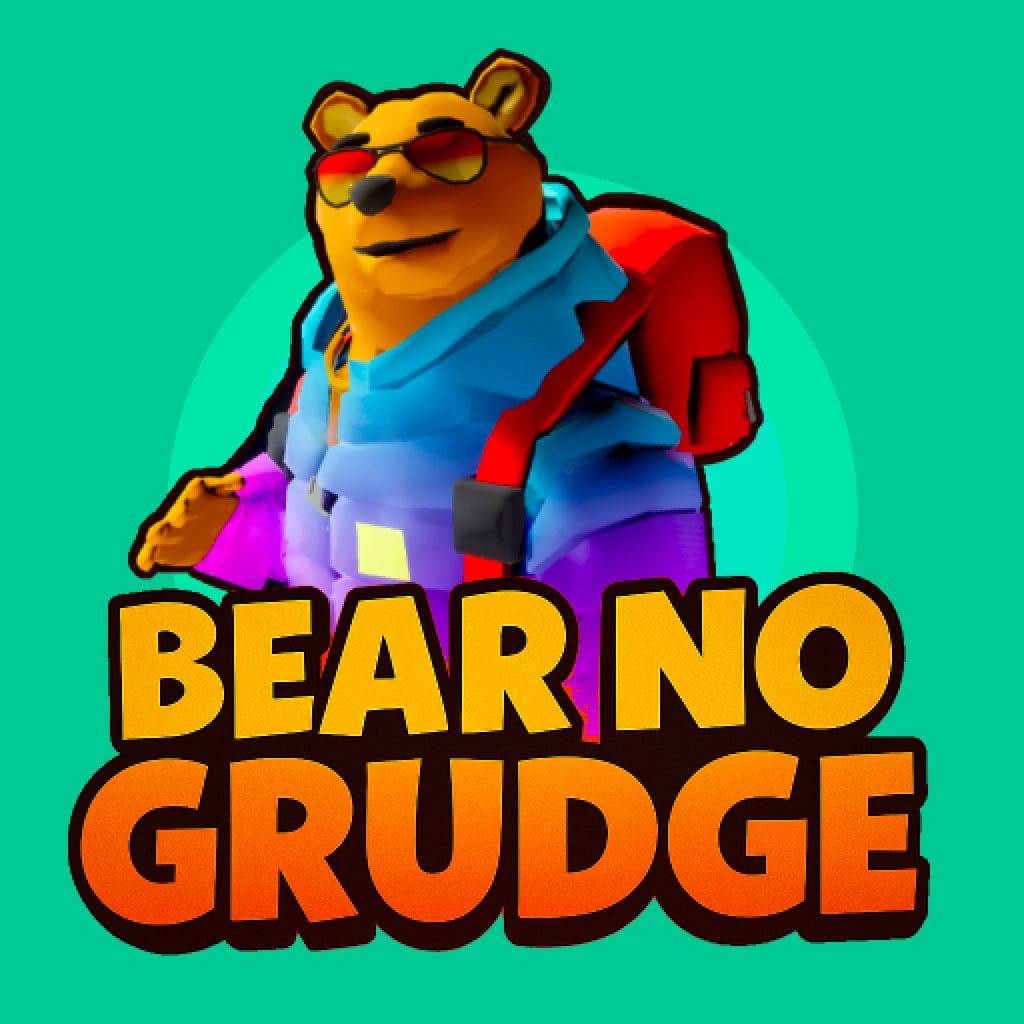
We all remember the high-stakes drama of the childhood playground — the unspoken rules, sudden betrayals, and fierce rivalries that could erupt over something as simple as a game of tag. Bear No Grudge by Strongbeam Games bottles that chaotic energy and launches it directly at your friends with the force of a cartoon cannonball. Beneath its soft colours and rounded character designs lies a gloriously petty multiplayer experience where revenge is not only encouraged; it is practically the entire point.
At first glance, the game looks harmless enough. Chunky bears wobble around bright environments while goofy music hums in the background. Yet within minutes, friendships begin to collapse under the weight of exploding honey traps, collapsing platforms, and last-second betrayals. It captures the same spirit that made couch multiplayer classics unforgettable: the understanding that victory feels better when someone nearby is loudly accusing you of cheating.
Despite the title, Bear No Grudge absolutely thrives on grudges. It wants players to remember every betrayal, every accidental shove into danger, and every stolen victory. More importantly, it wants those grudges to fuel the next round.
Controlled Chaos
The core structure is simple. Players compete across a series of physics-driven mini-games and survival arenas, where the objective is usually a variation on “don’t die before everyone else.” What elevates the experience is the game’s commitment to unpredictability.
Every movement feels slightly unstable in the best possible way. Bears stumble, slide, bounce, and crash into each other with exaggerated weight, creating constant comedy. A perfectly timed jump can suddenly turn into a disaster when another player tumbles into your path, sending everyone flying off a cliff together.
Strongbeam Games clearly understands the value of momentum in party games. The best moments are rarely planned. They emerge naturally from systems colliding in ridiculous ways. One second you are comfortably leading a race through a collapsing logging camp, and the next you are flattened by a runaway crate while a ghost bear sprays grease across the finish line.
That unpredictability gives Bear No Grudge its identity. Winning feels satisfying, but losing is often just as entertaining because the disasters themselves are so absurd.
The Joy of Sabotage
The game’s smartest feature is the Grudge System. Eliminated players do not simply sit and watch. Instead, they return as mischievous ghosts capable of interfering with the remaining competitors.
It is an inspired mechanic because it solves one of the biggest problems in party games: downtime. Nobody enjoys being knocked out early only to spend several minutes waiting for the next round. Here, elimination simply changes your role from competitor to chaos agent.
Ghost players can freeze sections of the map, drop hazards, trigger traps, or manipulate environmental elements to sabotage the survivors. This creates an atmosphere where nobody is ever truly safe, even after eliminating their biggest rival.
More importantly, it keeps every player emotionally invested until the final seconds. Some of the funniest moments come from eliminated friends working together purely out of spite to ruin the leader’s perfect run.
There is something beautifully childish about it. The game embraces pettiness with complete sincerity, turning revenge into a mechanic rather than a side effect.
Variety Through Absurdity
The mini-games cover a wide range of ideas. Some are straightforward survival challenges set in unstable environments, while others lean into racing, platforming, or outright destruction.
One arena has players survive on cracking ice floes as giant fish leap from below. Another becomes a frantic downhill logging race filled with swinging hazards and falling debris. The variety keeps the pacing energetic, ensuring no single idea overstays its welcome.
A few games stand out more than others. The hovercraft sections are particularly entertaining thanks to their slippery handling and cramped arenas. Meanwhile, the skateboard-inspired levels perfectly capture the game’s “barely controlled disaster” energy.
Not every mode lands equally well. A handful of the slower challenges lack the same chaotic spark as the stronger rounds, occasionally feeling more repetitive than exciting. Fortunately, matches move quickly enough that weaker games rarely drag down the overall experience for long.
Better With Friends
Like most party games, Bear No Grudge lives and dies by the people you play with. Local multiplayer is where the experience truly shines. Sitting beside friends as accusations, laughter, and increasingly dramatic revenge plots unfold transforms even the simplest mini-game into an event.
There is an immediacy to couch multiplayer that online play still struggles to replicate. You can feel the tension rise in the room as someone lines up a perfect sabotage or narrowly survives a collapsing platform. The game feeds beautifully on that shared energy.
Online functionality works well enough technically, but the current friends-only lobby structure limits spontaneity. Solo players seeking random matchmaking may be disappointed by the lack of broader online options.
That said, the Daily Gauntlet mode offers a decent alternative for players without a regular group. Competing in leaderboard challenges adds some longevity, even if it cannot fully replicate the magic of live multiplayer chaos.
Comedy Without Pretension
One thing I appreciated throughout my time with Bear No Grudge is how comfortable it feels to be silly. Modern multiplayer games sometimes try too hard to become “the next big competitive experience.” Strongbeam Games wisely avoids that trap.
This is not an esports title pretending to be casual. It is unapologetically designed around laughter, accidents, and ridiculous outcomes. Even the game’s descriptions lean into self-aware humour. “Pretty OK Gun Play” captures the tone better than any polished marketing pitch.
The visual style supports that identity well. The bears themselves are expressive without becoming overly exaggerated, and the environments remain colourful and readable even during chaotic moments. Explosions, traps, and hazards are easy to track, which is important in a game where so much happens simultaneously.
The soundtrack deserves mention too. Its playful energy keeps the atmosphere light even when players are actively ruining each other’s chances of victory.
Rough Edges Beneath the Fur
For all its charm, Bear No Grudge is not flawless. Physics-driven games always walk a delicate line between “fun chaos” and “frustrating randomness,” and the game occasionally crosses into the latter.
There are moments when the outcome feels dictated more by unpredictable collisions than by player skill. While that unpredictability often creates comedy, it can occasionally undermine competitive satisfaction.
Some environmental hazards also recur a little too often across longer sessions. The variety is decent overall, but certain gimmicks appear often enough that matches can begin to blend together after extended play.
The lack of broader online matchmaking is probably the biggest limitation. Party games thrive when communities remain active and accessible, and restricting online options may hurt the game’s long-term momentum. Still, these issues feel more like missed opportunities than major failures. The core experience remains consistently entertaining.
Final Verdict
Bear No Grudge succeeds because it understands exactly what makes party games memorable. It is not balance, precision, or competitive fairness that people remember years later. It is the accidental betrayals, the ridiculous recoveries, and the moments when everyone in the room bursts into laughter at the same time.
Strongbeam Games has created a wonderfully chaotic multiplayer experience built around momentum, sabotage, and gleeful pettiness. The Grudge System is genuinely clever, local multiplayer is fantastic, and the unpredictable physics constantly generate stories worth retelling.
It may lack robust online features and a bit more mechanical refinement, but when played with the right group, those shortcomings quickly fade into the background.
Sometimes the best multiplayer games are not the ones that make you feel powerful. They are the ones that remind you how funny failure can be when everyone is tumbling into disaster together.