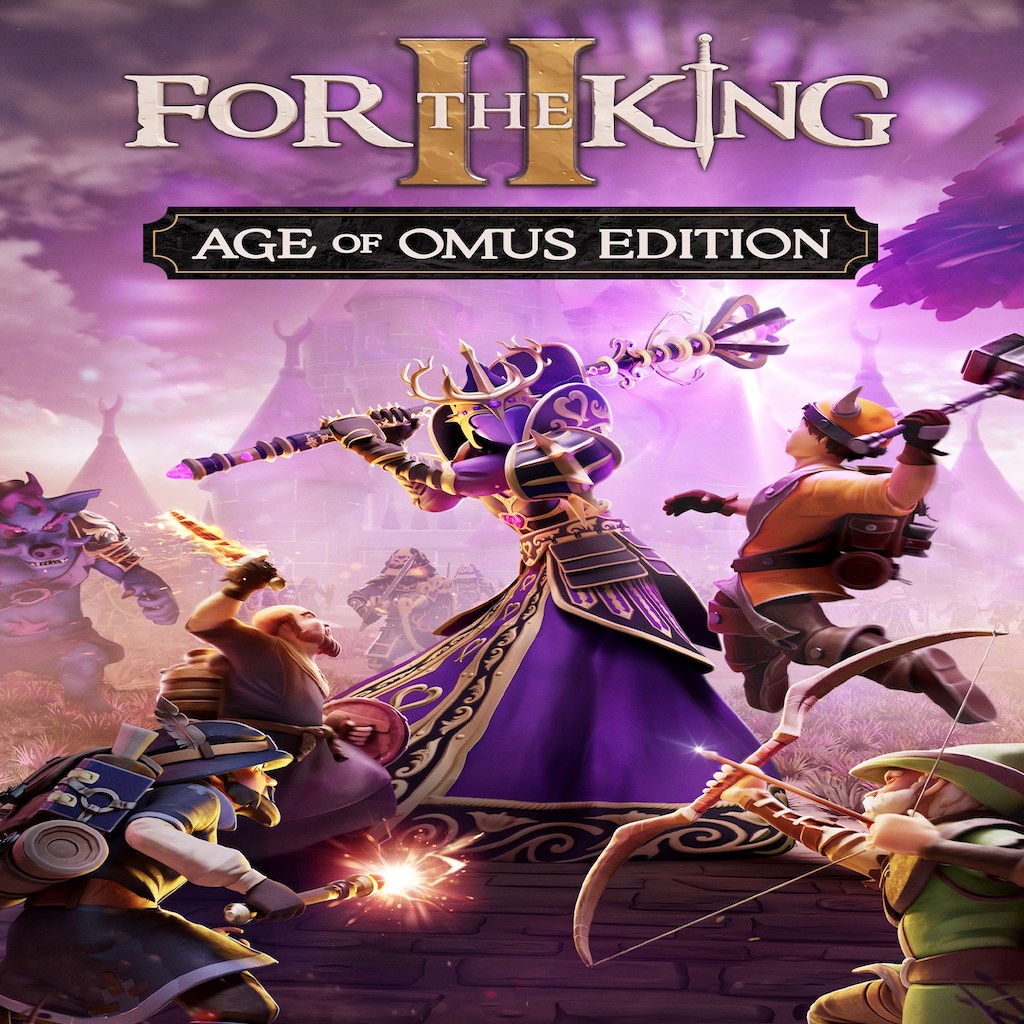
Developed by IronOak Games Inc. and published by Curve Games, For The King II builds on its predecessor by blending turn-based tactical combat with a procedural roguelite structure. The Age of Omus Edition, released in May 2026, brings together the base game and a broad selection of expansions into a single definitive package.
At its core, the experience remains unchanged. You assemble a party of adventurers and venture into the fractured lands of Fahrul, a kingdom constantly reshaped by procedural systems, shifting encounters, and unpredictable terrain. Every run becomes a different story of survival, sacrifice, and sometimes spectacular failure.
The Age of Omus Edition expands that experience. It includes seven replayable campaign chapters, the Dark Carnival endless dungeon, and the Dungeon Crawl Gauntlet mode, alongside additional character packs such as Tinkerers of Fate and Fallen Oaths. It is less a reinvention and more a consolidation of everything For The King II has become.
Gameplay
The backbone of For The King II has always been its blend of tabletop logic and roguelite unpredictability. Every move feels like a calculated risk, wrapped in uncertainty. Dice rolls determine outcomes, but preparation determines survival.
Combat unfolds on a grid, where positioning, synergy, and resource management matter as much as raw damage output. Each character class brings a distinct role to the party, and success depends on how well those roles interact under pressure.
The Age of Omus Edition significantly expands this toolkit. The included DLC characters introduce new tactical identities that shift how encounters play out. Some focus on control and utility, while others lean into aggressive scaling or resource manipulation. These additions do not just add variety. They subtly reshape how parties are built from the ground up.
The new Dungeon Crawl Gauntlet mode is perhaps the most structurally interesting addition. Instead of the main campaign’s broader overworld exploration, this mode focuses on tightly packed, escalating dungeon runs. Encounters are faster, risk is higher, and failure comes more quickly. It is a distilled version of the core experience, designed for players who prefer intensity over long-form exploration.
The Dark Carnival endless dungeon pushes this even further. There is no real endpoint, only escalation. Waves of enemies grow more dangerous, loot becomes more tempting, and survival depends on how far your party can adapt before collapse becomes inevitable.
Across all modes, the game continues to rely heavily on procedural generation. Maps, encounters, and rewards shift between runs, ensuring that no two journeys feel identical. This unpredictability remains one of its strongest design pillars, even if it occasionally leads to uneven pacing.
Strategy and Progression
What sets For The King II apart from simpler tactical RPGs is its willingness to let systems collide unpredictably. Gear, traits, and party composition interact with environmental conditions and randomised events.
Progression is not purely linear. Instead, it feels like a series of small adaptations. You constantly react to what the game gives you rather than following a fixed build path. Sometimes that leads to powerful synergy. Other times it leads to improvisation under pressure.
The addition of new classes in the Age of Omus Edition reinforces this flexibility. The Beekeeper, introduced in earlier updates, brings swarm-based mechanics that can control space in unconventional ways. The Angler introduces resource-driven utility that rewards patience and positioning. These designs encourage experimentation rather than optimisation alone.
Between runs, progression systems offer long-term incentives to keep playing. Unlocks, upgrades, and new character options gradually expand your strategic toolkit. It is a structure that respects repetition, framing it as discovery rather than grind.
Structure and Replayability
Replayability has always been central to For The King II, and Age of Omus leans fully into that identity. The seven replayable campaign chapters offer a more structured experience for those who prefer narrative framing. Each chapter offers a slightly different rhythm, with varied objectives and escalating difficulty.
Meanwhile, Dungeon Crawl mode and Dark Carnival are for players who want a pure, systems-driven challenge. These modes strip away narrative pacing in favour of continuous combat and decision-making pressure.
This dual structure works well. It allows the game to cater to both long-form campaign players and those who prefer shorter, high-intensity sessions. However, the sheer volume of content can sometimes feel overwhelming for new players.
Presentation and Atmosphere
Visually, For The King II maintains its stylised tabletop aesthetic. The world of Fahrul feels like a living board game, complete with miniature-style environments, exaggerated terrain, and clear readability in combat spaces.
The presentation is functional rather than cinematic, and that is intentional. Clarity is essential in a game where positioning and probability matter so heavily. Effects are clean, animations are legible, and environments serve gameplay first.
Sound design supports this tone without drawing excessive attention. Music shifts appropriately between exploration, tension, and combat, reinforcing the game’s sense of unpredictability without overwhelming it.
Final Verdict
For The King II: Age of Omus Edition is best understood as a complete evolution of an already layered tactical roguelite. It does not drastically alter the foundation, but it significantly expands how that foundation can be experienced.
The addition of new characters, modes, and structural refinements makes this the most robust version of For The King II to date. The Dungeon Crawl and Dark Carnival modes, in particular, give players sharper, more focused ways to engage with its systems, while the expanded roster encourages experimentation across multiple runs.
It remains a game defined by unpredictability. Sometimes that leads to brilliance. Sometimes it leads to frustration. But it is always active, always shifting, and always asking you to adapt.
For players willing to embrace its dice-driven chaos, Age of Omus offers a deep and replayable tactical experience that continues to reward patience and curiosity.