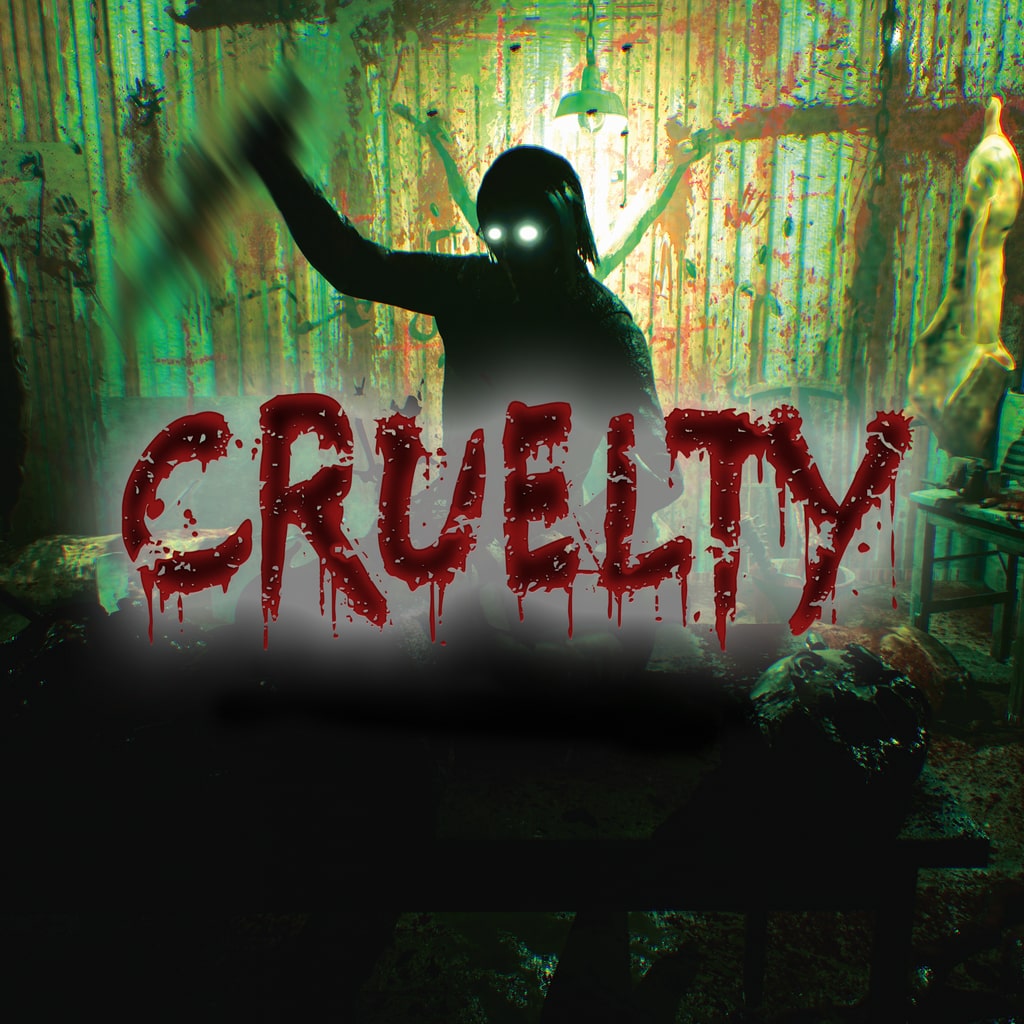
CRUELTY does not introduce itself gently. You wake in a place that feels wrong before you even understand what it is. Metal surfaces glisten under harsh lighting. The air feels heavy, thick with something you do not want to name. Then it clicks. You are in an abattoir. That setting defines everything that follows.
This is not horror built on mystery or slow revelation. It is immediate, physical, and deeply uncomfortable. The environment is not just a backdrop. It is an active part of the experience, constantly reminding you that this is a place built for processing bodies, not saving them. There is no sense of heroism here. Only survival.
No Weapons, No Control, Just Instinct
CRUELTY belongs to a very specific branch of survival horror. One that removes the power fantasy entirely. There are no weapons to rely on, no combat systems to master. When something finds you, your only options are to run, hide, or accept what comes next.
That design choice shapes the entire experience. You move through narrow corridors and industrial spaces with a constant awareness that you are not equipped to fight back. Every sound matters. Every turn carries risk.
The result is a game that feels less like a challenge to overcome and more like a situation to endure. You are not conquering this space. You are slipping through it, hoping not to be noticed. That lack of control is where CRUELTY finds its identity.
A World That Presses Back
The abattoir setting is more than just visually striking. It is oppressive in a way that feels deliberate. Spaces are tight, often forcing you into close proximity with things you would rather avoid. Sightlines are limited, corners are sharp, and the layout rarely gives you a clear sense of safety.
The game uses this to its advantage. You are constantly unsure of what is just out of view. Even when you think you understand the layout, the tension never fully lifts.
Sound design amplifies that feeling. Mechanical hums, distant metallic clanks, and unsettling ambient noise create a constant sense of unease. It is not loud or dramatic. It is persistent. You are never alone, even when nothing is visible.
Enemies That Feel Like Forces, Not Characters
The creatures that inhabit CRUELTY are less defined as characters and more as threats. They are not there to tell a story. They are there to hunt.
Their behaviour is unpredictable enough to keep you on edge. They patrol, react, and pursue in ways that feel reactive rather than scripted. This creates moments of genuine panic, where plans fall apart and instinct takes over.
Hiding becomes an art. Knowing when to stay still, when to move, and when to risk everything for progress is the core of the experience. There is no perfect solution. Only better decisions. And sometimes, even those are not enough.
Puzzles as Breathing Space
Between moments of tension, CRUELTY introduces environmental puzzles that serve as both progression and brief relief. These tasks are not overly complex, but they require enough attention to shift your focus away from immediate danger.
You might be restoring power, unlocking new paths, or interacting with machinery that feels as hostile as the creatures themselves. These moments slow the pace just enough to prevent exhaustion, without ever fully removing the underlying dread. They are not the highlight of the game, but they are essential to its rhythm.
Aesthetic That Refuses to Soften
Visually, CRUELTY commits fully to its splatter horror identity. This is not stylised horror or abstract suggestion. It is direct, graphic, and often uncomfortable to look at.
The environments are soaked in texture and detail that reinforce the setting’s brutality. Surfaces feel used, worn, and stained in ways that are hard to ignore. It is a deliberate choice, and one that will not appeal to everyone.
There is a certain roughness to the presentation. Animations can feel stiff, and movement lacks the fluidity seen in higher-budget titles. But in a strange way, that roughness adds to the experience. It makes everything feel slightly off, slightly unnatural. Which, in this context, works.
Short, Sharp, and Difficult to Shake
CRUELTY is not a long game. It is designed as a concentrated experience, one that delivers its ideas quickly and without unnecessary padding.
That brevity works in its favour. The intensity never has time to wear thin, and the experience feels focused rather than stretched. It is something you endure, not something you settle into.
However, that also means it offers limited replay value. Once you have seen its systems and environments, there is little incentive to return beyond revisiting the atmosphere.
Where It Holds Itself Back
For all its strengths, CRUELTY does show its limitations. Movement can feel sluggish at times, which occasionally clashes with the need for quick reactions. This can turn tense moments into frustrating ones, particularly when precision is required.
The gameplay loop, while effective, is also quite simple. There is little mechanical depth beyond stealth and navigation, and some players may find that it does not evolve enough over the course of the experience. It is a game built around a specific idea, and it does not stray far from it.
Final Verdict
CRUELTY is a harsh, uncompromising take on survival horror that prioritises atmosphere and vulnerability over complexity. It traps you in a space that feels hostile in every sense and asks you to survive without ever giving you the tools to feel comfortable.
Its simplicity is both its strength and its limitation. It delivers a focused, intense experience, but does not expand much beyond its core loop. Still, what it does, it does with conviction. This is not a game for everyone. It is meant to unsettle, to press, and to linger. And it succeeds.