Gunboat God starts with exile, as you are banished from a radiant sky-city and sent into a hostile world beneath. You are stripped of your status but retain your firepower. The concept is straightforward yet impactful, with no lengthy introductions or excessive explanations. There’s a clear objective and a destructive machine at its core. This machine, your gunboat, is central to the game.
From the opening mission, the game sets its tone as swift, aggressive, and slightly overwhelming. Enemies rush from every direction, projectiles flood the screen, and survival hinges on instinctive movement. Instead of easing into this world, you’re fighting to stay afloat.
Movement as Survival
Gunboat God lives and dies by how it feels to control, and thankfully, it feels excellent. The gunboat glides with precision, responsive enough to thread through tight spaces yet weighty enough to feel grounded. There is a constant sense of momentum, as if you are always on the edge of losing control but never quite crossing that line.
The addition of dash movement elevates everything. It is not just an escape tool. It is a core part of how you navigate the battlefield. You weave through incoming fire, slip past enemy formations, and reposition in an instant. When everything clicks, it feels almost like a dance.
Then the game shifts again with the introduction of underwater traversal. Movement becomes heavier and slightly slower, forcing you to rethink your timing and spacing. It is a small mechanical change, but it adds a welcome layer of variation that prevents the experience from feeling one-note.
Shooting That Feels Earned
Combat is immediate and satisfying. Your weapons fire with impact, enemies visibly react to hits, and every encounter carries a sense of urgency. There is no filler. Every moment is active.
What keeps things interesting is the upgrade system. Rather than offering simple stat boosts, Gunboat God leans into meaningful loadout choices. You can tailor your weapons to suit different playstyles, whether that means focusing on raw damage, wider spread, or more specialised effects.
These decisions matter more as the game progresses. Early stages give you room to experiment. Later stages demand commitment. A poorly optimised build can quickly become a liability when enemy density spikes and bosses begin layering multiple attack phases. There is real satisfaction in finding a setup that works for you and pushing it to its limits.
Boss Battles That Demand Respect
If the standard enemy waves are a test of endurance, the bosses are a test of focus. Multi-stage encounters escalate in complexity, introducing new attack patterns that force you to adapt on the fly.
These fights are where Gunboat God truly shines. They are loud, visually striking, and mechanically demanding. You are constantly reading patterns, spotting openings, and trying to maintain composure as the screen fills with danger.
There is very little margin for error, especially in later encounters. That can be frustrating at times, but it also gives victories a weight that many shooters struggle to achieve. When you finally bring down a boss that has pushed you back for multiple runs, it feels earned.
Style That Carries the Experience
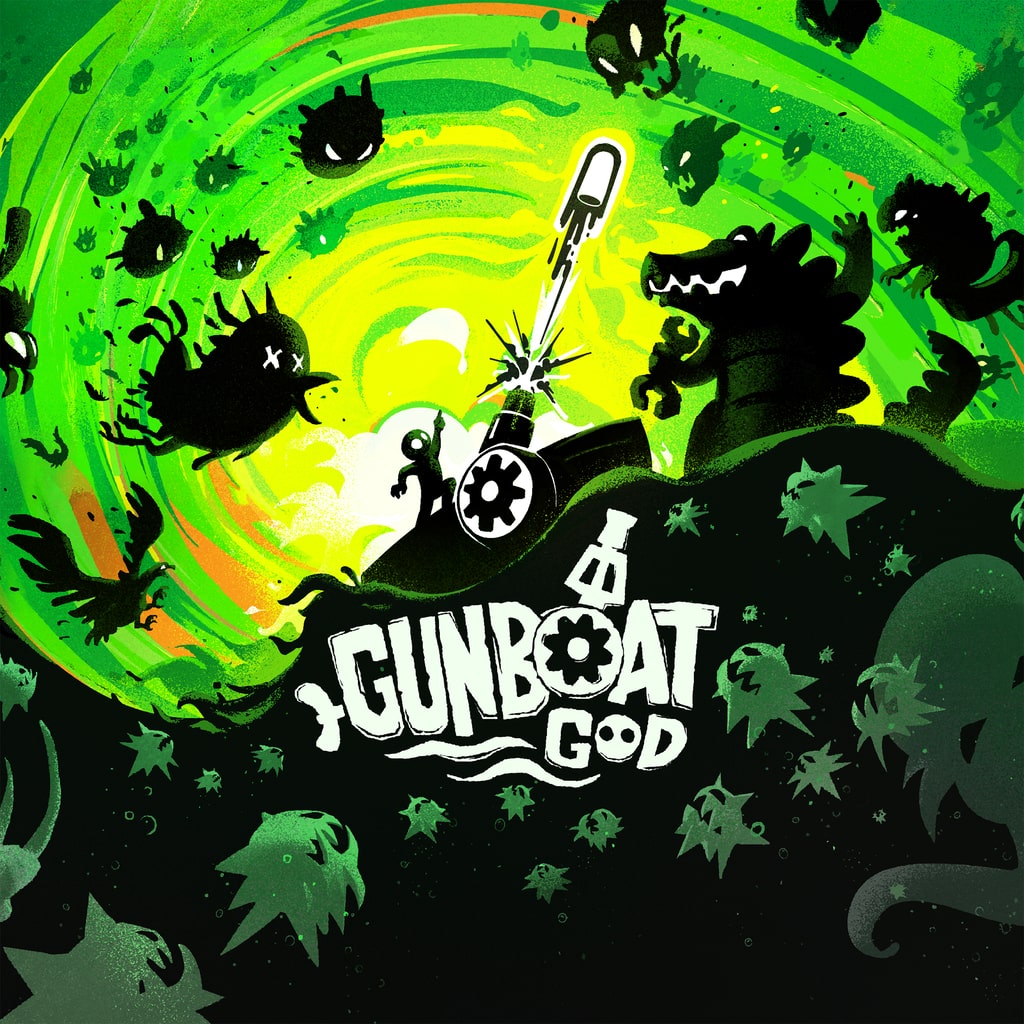
Visually, Gunboat God makes a strong first impression and sustains it throughout. The high-contrast art style, with silhouetted action set against vibrant backdrops, gives the game a distinct identity that is easy to read even in its most chaotic moments.
Explosions flash against neon skies. Enemy shapes stand out clearly against shifting colour palettes. It is not just stylish; it is functional. You always know where you are, even when everything else is trying to overwhelm you.
There is a sense of cohesion here that elevates the entire experience. The visuals, sound design, and pacing all work towards the same goal: keeping you locked into the moment.
The Rhythm of Short, Intense Runs
Gunboat God shines in short sessions. Missions are fast and intense, encouraging a “one more run” mindset that feels very much in line with classic arcade shooters.
You jump in, push as far as you can, unlock upgrades, and try again. There is a satisfying loop here, one that respects your time while still offering depth for those who want to master it.
The progression system supports this structure well. Unlocks feel meaningful without being overwhelming, and each run contributes to a broader sense of growth. Still, the game knows exactly what it is. It does not try to stretch itself into a sprawling experience. It thrives in bursts.
Where the Pressure Builds Too High
For all its strengths, Gunboat God struggles with balance in its later stages. The challenge ramps up sharply, sometimes crossing the line from demanding to punishing.
Enemy density increases, attack patterns become more complex, and the room for error shrinks significantly. For players who enjoy mastering tough systems, this will be part of the appeal. For others, it may feel like a wall that is difficult to push through.
The game offers tools to help, but it does not compromise its vision. It expects you to learn, adapt, and improve. There is no easy path forward.
Final Verdict
Gunboat God is a confident, stylish shooter that understands the appeal of fast, focused gameplay. It delivers tight controls, striking visuals, and a satisfying progression loop that keeps you coming back for just one more run.
Its difficulty can be unforgiving, and its structure does not aim for long-form storytelling or variety beyond its core loop. But when it does, it does it well. This is a game about momentum, precision, and the quiet satisfaction of overcoming something that once felt impossible.