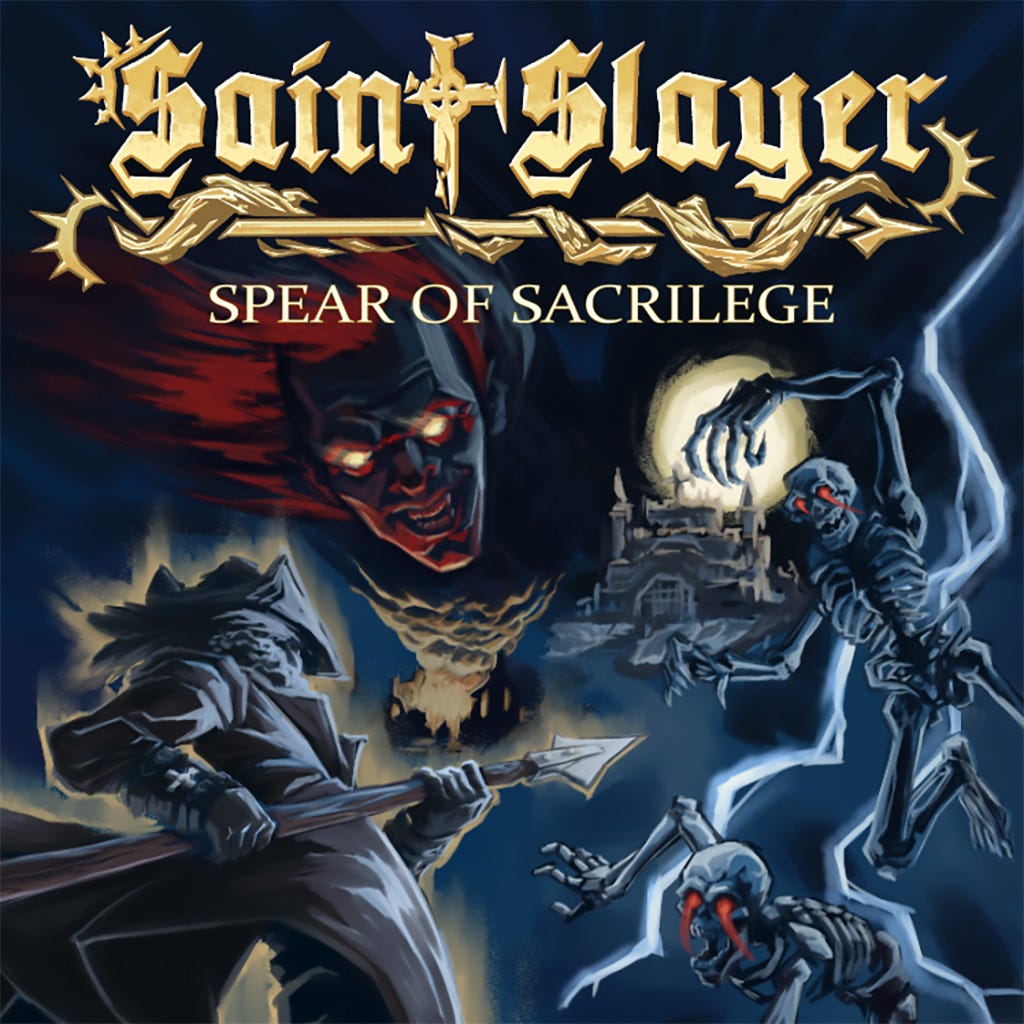
Building a modern game around the bones of an 8-bit action title requires a certain confidence. It demands clarity of design, restraint in scope, and an understanding that nostalgia alone will not carry the experience. Saint Slayer: Spear of Sacrilege, the latest release from Lillymo Games, meets that challenge with a grim smile and a bloodstained spear. Set against a warped vision of 1698 Europe, it delivers a tightly constructed action platformer that feels both reverent and refreshingly cruel.
Gameplay
From the outset, the game establishes its identity. Movement is deliberate, attacks carry weight, and enemies are placed with precision rather than in abundance. This is not a button-mashing experience. Each encounter feels considered, and mistakes are punished quickly.
The spear, Rudiger’s primary weapon, is the centrepiece of combat. It offers satisfying reach that encourages spacing and timing, while upgrades gradually expand its utility without ever making it feel overpowered. Combat remains grounded and skill-based throughout, rewarding patience over aggression.
The level design is where the game truly excels. Across its 21 stages, pacing is handled with care. Early levels introduce mechanics gently, while later stages demand mastery through layered hazards and enemy combinations. Hidden paths and branching routes encourage exploration, giving each level a sense of purpose beyond simply reaching the exit.
Player choice adds a subtle but meaningful layer. Deciding whether to help or harm characters you encounter influences rewards and alters certain encounters. It is not overly complex, but it provides enough variation to make repeat playthroughs worthwhile.
Co-op play is another highlight. The full campaign can be experienced with a second player, and it feels thoughtfully implemented rather than tacked on. It changes the flow of combat, making positioning and coordination more important while slightly easing the overall difficulty.
Visuals and Audio
Visually, the game commits fully to its NES-era inspiration. The pixel art is detailed without sacrificing authenticity, creating environments that feel nostalgic yet distinct. From crumbling churches to bleak forests, each setting carries a heavy, oppressive tone that complements the game’s themes.
The use of gore is striking but purposeful, reinforcing the brutality of the world rather than feeling gratuitous. Animation is equally strong, with clear enemy movements that ensure fairness even in the most demanding encounters.
The soundtrack is a standout element. Its 8-bit chiptune compositions are energetic and memorable, shifting tone effectively to match the action. Sound effects are sharp and impactful, enhancing the feel of combat and reinforcing player feedback.
Bosses and Progression
The seven boss encounters are among the game’s strongest moments. Each presents a unique challenge that demands pattern recognition and precise execution. They are difficult but fair, and victory feels earned rather than handed.
Progression is supported by a range of upgrades and unlockables. Animal familiars add a layer of strategy, offering bonuses that can shape how you approach each stage. Experimentation is encouraged, and finding the right combination can make a noticeable difference.
Replayability is also well supported. With branching decisions, unlockables, and challenge incentives, there is plenty of reason to revisit the game after completion. The password system is a charming nod to classic design, reinforcing its retro identity.
Performance and Issues
While the experience is largely polished, its commitment to old-school difficulty can occasionally work against it. Some sections lean towards repetition rather than meaningful challenge, particularly in later stages, where the margin for error becomes extremely tight.
There are also minor pacing dips in the mid-game, where a handful of levels feel less inventive than the rest. These moments are brief, but they stand out in an otherwise consistently strong campaign.
Verdict
Saint Slayer: Spear of Sacrilege is a focused, confident action platformer that understands its roots. It does not attempt to modernise the genre beyond recognition, instead refining its core ideas with precision and care. Strong level design, satisfying combat, and a striking audiovisual style combine to create a cohesive and rewarding experience.
It will not appeal to everyone, particularly those less fond of retro difficulty, but for players willing to engage with its systems, it offers a memorable and challenging journey.