There is a specific, breath-holding tension many of us remember from the games of our childhood, the agonising stillness required to extract a single block from a leaning tower, or the surgical focus needed to navigate a wire frame without triggering a sudden, sharp buzzer. Whether it was the tactile stakes of Jenga or the high-pressure precision of Operation, those moments taught us that success is often a matter of millimetres.
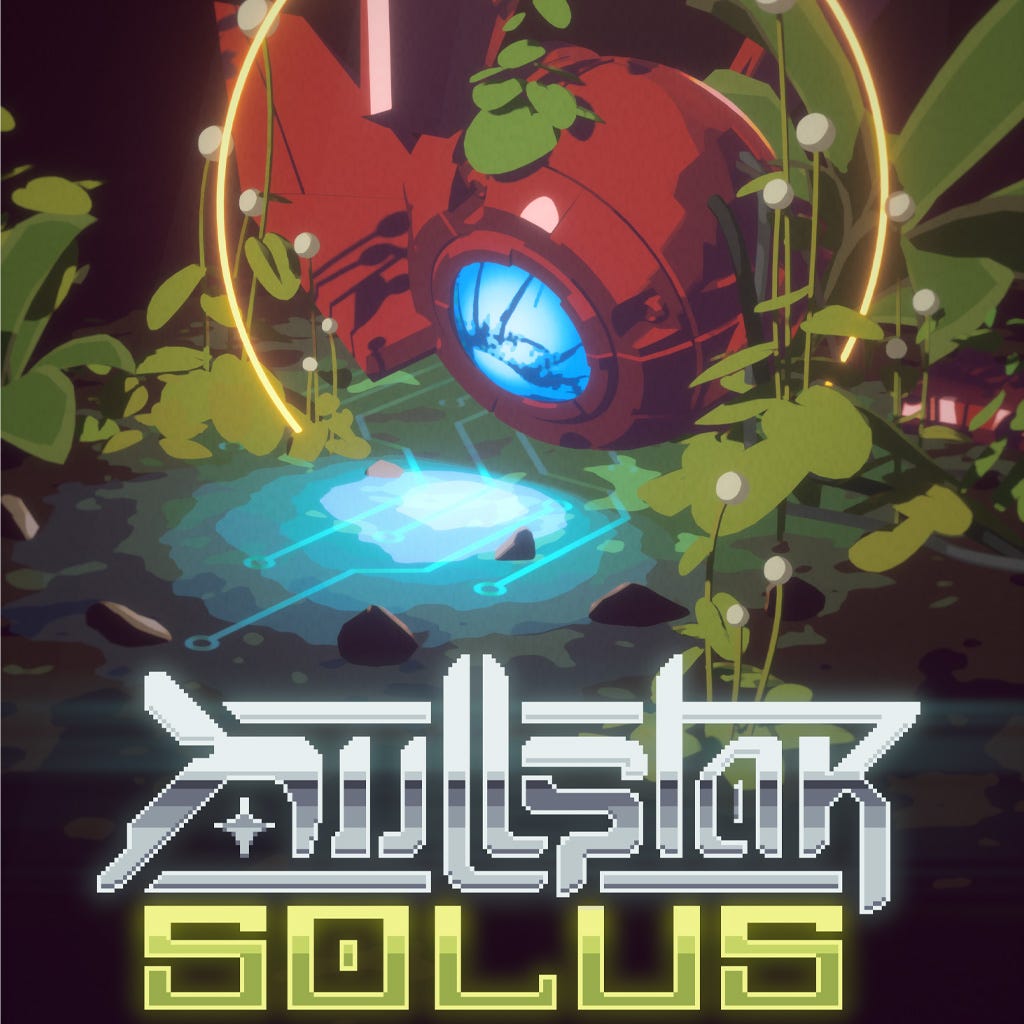
Nullstar: Solus by Smash Attack bottles that exact feeling, translating it into a masterclass of high-velocity precision. Released this month, it casts you as a corporate drone pilot tasked with salvaging the glowing heart of a dead world from the jagged remains of its past. It is a game that understands the greatest thrills aren’t found in the destination, but in the frantic, millisecond-perfect adjustments made while hurtling through the dark. It stands as a neon-soaked reminder that in the vacuum of space, your only true allies are your own momentum and the sheer courage to kill the engines a split second before you hit the wall.
Nullstar: Solus strips things down to their bare essentials, refining control schemes to their purest form, and then challenges the player to keep up. Nullstar: Solus fits squarely into this category, but it pushes the boundaries even further than most.
Developed by Hobart-based Smash Attack Studios and published by indie.io, this drone-centered precision platformer immerses players in the haunting ruins of a collapsing cosmic megastructure. You take on the role of Solus, a scavenger drone sent into the wreckage of a dying world to hunt down the legendary nullstar before rival forces beat you to it.
The story’s simple, but it opens the door to a gameplay experience that is surprisingly rich, challenging, and layered with mechanical depth.
A World Built from Decay
The setting of Nullstar: Solus immediately grabs your attention. The megastructure you step into isn’t just broken; it gives off a sense of having been left behind for ages, layered with stories of what once was. Its architecture is a haunting blend of ancient civilizations, corporate greed, and the inevitable march of mechanical decay, all intertwined in a silent testimony to its long-lost glory.
Pixel art works beautifully here, bringing the scene to life with impressive detail that never feels cluttered or confusing. You can almost hear the faint crackle of energy in flickering conduits and imagine the eerie silence of the rusted corridors. Collapsed platforms add to the feeling of a world that’s both industrial and alien, making everything feel alive and real, as if you’re stepping into a strange, forgotten place.
There’s a deep history woven into this place. It’s not just about moving from one level to another; it’s about walking amidst the remnants of something that once operated on a scale so vast, it’s almost beyond understanding. You can feel the weight of the past pressing around you, telling stories of a time long gone.
The Flight Path System
At the heart of the entire experience lies the Flight Path System. This isn’t just a technical component; it’s the very essence that shapes the game’s identity and guides its difficulty curve, giving the game a unique soul.
Unlike traditional platformers, where movement is just about pressing the right and left keys, Solus offers a whole new level of freedom. You can drift effortlessly, give a quick boost, hit the brakes, or bounce off surfaces with precise control over your momentum. Every move you make influences your path, and you need to stay sharp and think on your feet to keep your trajectory just right.
This journey presents a challenging yet fulfilling learning path. In the beginning, you learn restraint, feeling your way through the fundamentals. As you progress, fluency takes over, and the steps become more natural. Eventually, your movements shift from conscious input to a matter of instinct, flowing effortlessly from within.
When you really get the hang of it, the system reveals an incredible level of precision. Players find themselves weaving skillfully through hazards, redirecting moves mid-air with grace, and linking actions together into seamless, almost musical flows that feel alive and organic.
This control system stands out as one of the most rewarding experiences I’ve encountered recently. At the same time, it can be incredibly tough and unforgiving, pushing you to your limits. There’s a certain soul in its challenge and satisfaction that makes it unforgettable.
Level Design as Language
Across its 100 handcrafted levels, Nullstar: Solus tells its story through the design itself rather than relying on exposition. Each stage introduces a new idea, explores it fully, and then blends it with what came before, creating a seamless flow of challenges. Hazards aren’t just random obstacles; they are carefully crafted extensions of movement puzzles—laser grids, collapsing platforms, rotating corridors, reactive machinery—all designed to test your understanding of momentum and control.
What truly sets the design apart is its clarity. Despite the complexity of movement involved, each level remains easy to read and understand. When you falter, it almost always feels like a misjudgement rather than a moment of confusion, which keeps the experience fair and engaging.
Adding to the depth are the Dark World variants that appear later for each stage. These remixed versions aren’t simply more difficult; they reshape the space, tweak timing windows, and challenge you to reconsider solutions you thought you knew. They demand focus and skill, but they never feel arbitrary or unfair, always rewarding your mastery.
The Role of Speed
Speed isn’t just a feature in Nullstar: Solus; it’s the heartbeat of the game. It’s essential for progressing and truly mastering what the game has to offer.
Completion times award players with decryption points, which in turn unlock hidden lore and fragments that deepen the story and our understanding of this world. This creates a cycle where how fast you play directly influences what you discover and learn.
But speed isn’t only about racking up points. It’s woven into the very fabric of the game’s design. The levels are crafted to keep players in that perfect flow state—where hesitation becomes the biggest hurdle to moving forward.
There’s an ongoing struggle between control and acceleration. Moving too cautiously slows you down, making progress inefficient, while rushing recklessly risks failure. Striking the right balance between these two forces is what truly defines the experience.
Audio and Atmosphere
One of the most striking features of the game is its soundtrack. The vocal performances by Amelia Jones and Mariya Anastasova bring a rare emotional depth to a world that might otherwise feel cold and mechanical.
The music shifts seamlessly between moments of ambient tension and bursts of rhythmic energy, depending on what’s happening in the game. When you’re speeding through intense sequences, layers of vocals and percussion push forward, mimicking your movement and keeping you immersed. In calmer times, the soundscape becomes sparse, emphasizing feelings of solitude and quiet introspection.
What results is an atmosphere that feels both grand and intimate. You’re alone inside a vast, imposing structure, yet there’s always a sense of life pulsing beneath the surface, as if the space itself is alive with lingering energy.
Challenge and Accessibility
There’s no denying that Nullstar: Solus is a tough game. Its control system demands getting used to, and as you progress to the later stages, you’ll find that precision is everything—something that might not be for everyone.
Making mistakes comes with immediate consequences. While there are checkpoints, you’ll find yourself repeating sections often. Mastery is expected—you can’t just coast through.
Despite its difficulty, the game rarely feels unfair. Its mechanics are consistent, and the physics behave reliably from start to finish. Usually, when you fail, it’s due to how you play rather than a misleading design.
That said, the high level of challenge can be overwhelming for players new to such demanding platformers. It’s a game that tests your patience and skill, but for those willing to stick with it, there’s a real sense of achievement waiting.
Narrative Through Decryption
Storytelling unfolds subtly through decryption points that players earn by performing. Instead of relying on cutscenes or dialogue, players piece together snippets of information about the nullstar, the megastructure, and the forces that are fighting to control it. It’s a journey of discovery, where every fragment brings a new layer of understanding and mystery.
This fractured approach really fits the tone of the game. It emphasizes that knowledge isn’t just handed out freely—it’s something you earn through effort and persistence, making the experience feel more authentic and grounded.
But there’s a bit of a catch. The story comes together mostly because players are drawn into the optional systems. If you’re someone who just wants to dive into the gameplay itself, you might miss out on a lot of the rich world-building that makes this experience special.
A Controlled Descent
What Nullstar: Solus ultimately manages to do is find a rare balance. It combines precise mechanical design with a depth of atmosphere that draws you in. The game is about movement—fluid and relentless—but it also explores decay, illustrating the inevitable decline that follows all things. It’s about maintaining control even as entropy slowly takes over, creating an experience that feels both tense and poetic.
At its core, every system revolves around one simple truth: the challenge of guiding through chaos with skill and care.
It doesn’t aim to attract a wider audience by making things easier or softer. Instead, it stays true to its own vision, trusting that players who dive into its challenges will discover true depth through practice and perseverance.
Final Verdict
Nullstar: Solus feels like a sleek, meticulously crafted platformer that truly shines through its responsive controls and clear environmental design. The game’s dedication to momentum-based gameplay keeps the experience exciting and fluid, making every move count. Its Flight Path System stands out as one of the most polished movement mechanics in the genre, beautifully supported by carefully designed levels and a strong, immersive atmosphere that draws you in from start to finish.
It’s a challenging design, pushing boundaries and demanding effort, but every detail is crafted with purpose and care, giving it a real sense of intention and soul.