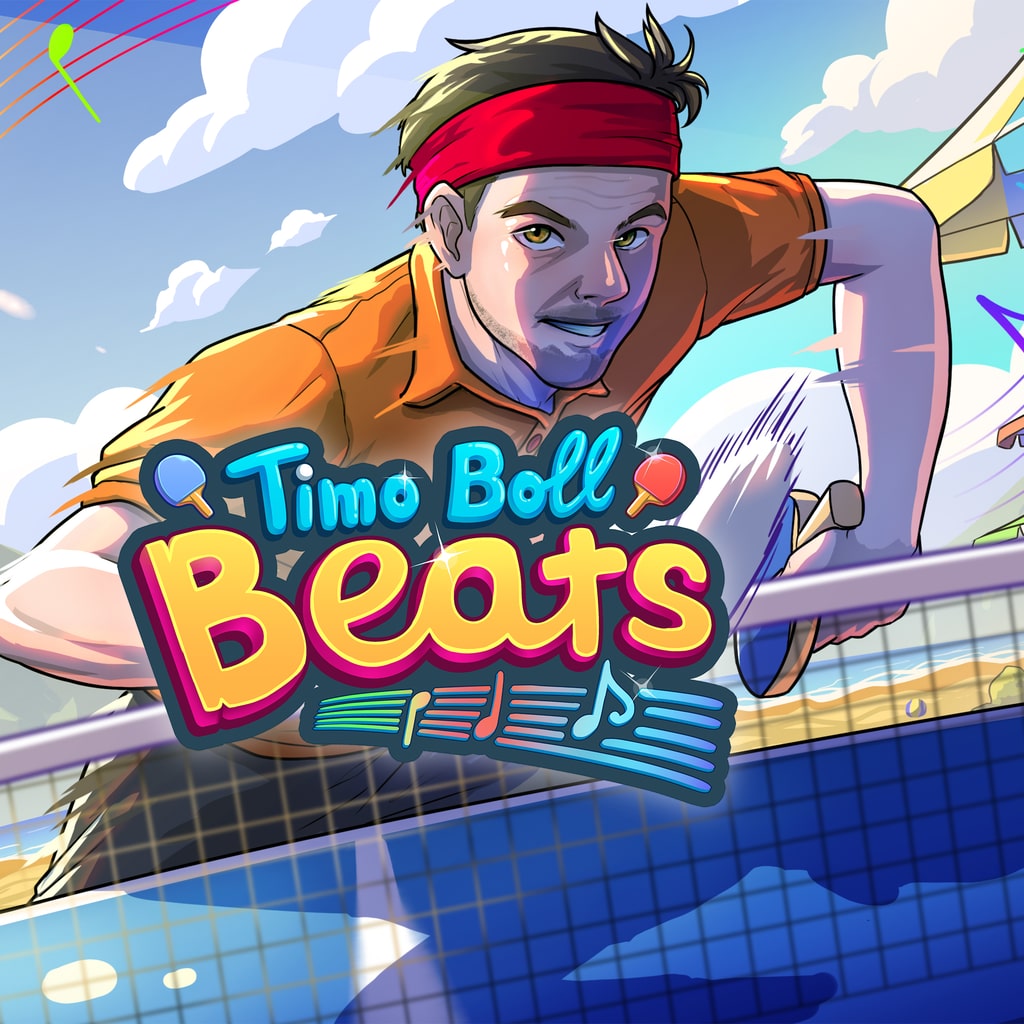
Rhythm games and sports simulations have occasionally crossed paths, but rarely with the conceptual confidence of Timo Boll Beats Table Tennis. Developed by hiphip games and published by Markt & Technik, with TREVA Entertainment handling the Nintendo Switch release, this unusual hybrid blends professional table tennis mechanics with beat-matching rhythm gameplay. The result is a game that poses a deceptively simple question: what if every rally depended not just on reflexes but on musical timing?
Released in waves over the past year, the game has now completed its rollout across platforms, with PC (Steam) launching on March 3, 2025, followed by PlayStation 5 on April 8, 2026, and finally Nintendo Switch on April 9, 2026. This staggered release has given the game time to evolve, yet its core identity remains unchanged: precision sport action fused with rhythm-based execution, all framed through the lens of legendary German table tennis player Timo Boll.
A New Kind of Rally
At first glance, Timo Boll Beats Table Tennis appears to be a stylised sports game. You control Timo Boll himself, stepping into a series of urban arenas to face increasingly challenging opponents. But very quickly, it becomes clear that traditional sports logic does not apply here.
Instead of freely reacting to ball physics in real time, every shot is tied to the rhythm of the soundtrack. Each return, smash, and defensive block must be executed in sync with the beat. Timing replaces pure reaction, transforming table tennis into a structured musical performance.
This design choice fundamentally reshapes the sport. In its real-world form, table tennis is defined by speed and unpredictability. Here, it is reinterpreted as pattern recognition and rhythmic discipline. Success depends less on instinct and more on internalising the tempo.
The result is a game that feels closer to a performance piece than a simulation—one where each rally becomes a choreographed exchange of sound and movement.
Rhythm as Mechanics
The central mechanic is deceptively straightforward: hit the ball in time with the music. Yet this simplicity deepens quickly as players encounter more complex shot types and timing variations.
Basic returns require clean, on-beat inputs. Smashes demand precise timing windows that reward accuracy with higher combo multipliers. Defensive plays often require anticipating rhythmic shifts rather than reacting visually to the ball alone.
As players progress, the game introduces layered rhythm structures, in which shots are no longer aligned with a single beat but with subdivisions of the track. This creates a gameplay experience that begins to resemble advanced rhythm titles, where mastery is defined by internalising musical structure rather than simply reacting to prompts.
When it works, the sensation is highly satisfying. Landing a perfect rally streak creates a rhythmic flow in which sport and music become indistinguishable. The game effectively turns table tennis into a form of kinetic percussion.
Timo Boll as a Gameplay Identity
The inclusion of Timo Boll is more than branding—it is embedded in the game’s progression structure. Players “train” with Timo Boll, unlocking techniques inspired by his real-world playing style. These moves are stylised, yet they reinforce the sense that you are learning from a professional athlete.
Rather than serving as a traditional sports avatar, Boll becomes a guide to rhythm mastery. His techniques are framed as extensions of timing discipline, encouraging players to refine precision rather than brute reaction speed.
This approach gives the game a unique identity across both the sports and rhythm genres. It does not try to simulate real-world table tennis in a literal sense; instead, it abstracts the sport into a rhythmic discipline system built around elite performance.
Soundtrack and Genre Variety
One of the game’s standout features is its 77-track soundtrack spanning seven genres, including pop, hip-hop/RnB, rock, electro, chill-out, country, and even kids’ music. This variety plays a crucial role in shaping gameplay diversity.
Each genre subtly alters the pacing and feel of matches. Faster electronic tracks push the game into high-intensity rally sequences, while slower chill-out tracks create more deliberate, timing-focused exchanges. Rock and hip-hop tracks tend to emphasise stronger beats, making combo chaining more intuitive.
However, this variety is both a strength and a limitation. While genre diversity keeps gameplay fresh, not all tracks feel equally suited to rhythm-based sports action. Some songs create smoother flow states than others, and occasional tonal mismatches can slightly disrupt immersion.
Still, when the soundtrack aligns with the gameplay rhythm, the experience becomes highly engaging. It transforms matches into rhythmic performances where audio and input feel tightly interconnected.
Arenas and Presentation
Visually, the game embraces a stylised, urban aesthetic. Matches take place in locations such as industrial zones, train stations, and other everyday environments reimagined as competitive arenas. These spaces provide a grounded contrast to the otherwise abstract rhythm mechanics.
The presentation is clean and readable, prioritising clarity over visual spectacle. This is essential given the precision timing required for gameplay. Visual noise is kept to a minimum so players can focus on rhythmic cues and ball trajectories.
However, while functional, the visual design rarely moves beyond its utilitarian purpose. Arenas are varied but not particularly dynamic, and environmental interactivity is limited. The focus remains firmly on rhythm execution rather than visual immersion.
Difficulty and Mastery Curve
Timo Boll Beats Table Tennis is easy to understand but difficult to master—a design philosophy that underpins its entire structure. In the early stages, basic timing mechanics are introduced gently, allowing players to adjust to the rhythm-based interpretation of table tennis.
As difficulty increases, timing windows tighten, rally speeds rise, and rhythmic complexity intensifies. Maintaining combo streaks demands sustained concentration, and mistakes are heavily punished by broken multipliers.
The game’s scoring system strongly encourages perfection. High scores depend on flawless execution, which pushes players towards repeated practice and memorisation of rhythm patterns.
This can be highly rewarding for rhythm game enthusiasts, but it may feel restrictive for players expecting a more traditional sports simulation.
Where It Falters
Despite its originality, the game is not without shortcomings. The most noticeable issue is structural repetition. While songs and opponents change, the core loop—timed returns in rhythm—remains largely consistent throughout.
Additionally, the hybridisation of sports and rhythm mechanics occasionally creates tension between the systems. At times, the abstraction of rhythm overrides the intuitive physicality expected of a sports title, which may alienate players seeking an authentic table tennis simulation.
There is also a slight inconsistency in the learning curve, where early accessibility gives way to sharply increased demands for precision in later stages.
Final Thoughts
Timo Boll Beats Table Tennis is a bold, unconventional fusion of rhythm-game mechanics and sports simulation. Developed by hiphip games and released across all major platforms between 2025 and 2026, it reimagines table tennis as a structured rhythmic discipline where timing is everything.
Its strongest moments arise when music, motion, and input align perfectly, creating a flow state that feels both musical and mechanical. However, its repetitive structure and abstracted sports logic may limit its appeal to a niche audience.
It is neither a conventional sports game nor a pure rhythm title—it sits somewhere in between, carving out its own unusual identity.