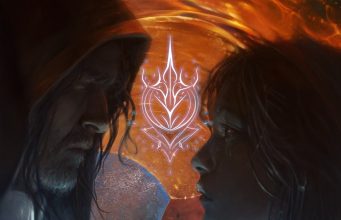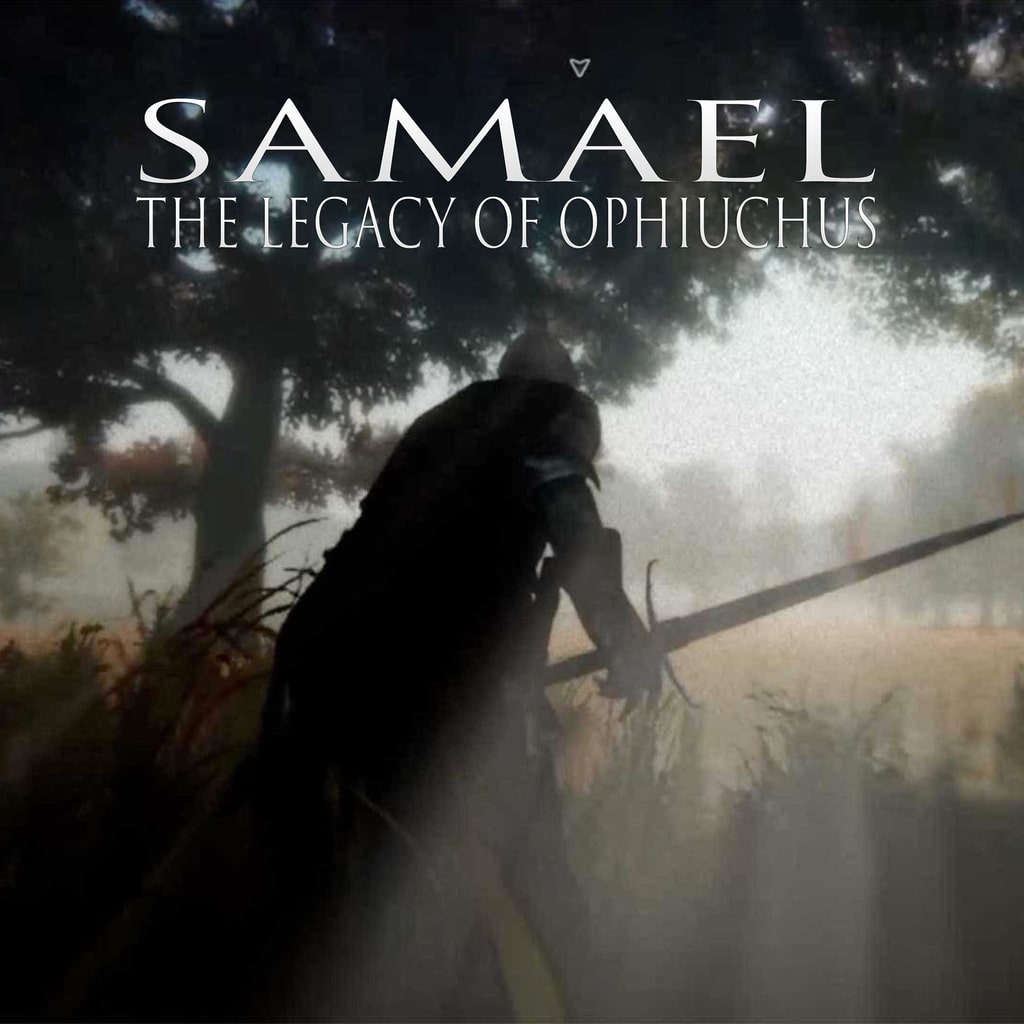
Samael: The Legacy of Ophiuchus begins not with chaos, but with serenity. The kingdom of Nevaeh is portrayed as a near-utopia—an immaculate realm characterised by peace, balance, and divine order. At its centre stands Samael, one of its most revered commanders, a figure both admired and feared for his strength and unwavering presence.
It is also noteworthy that the game received very negative critical reception at launch, most notably amplified by a viral critique video from Jimpressions, which highlighted significant issues with its execution, technical performance, and overall design quality. While that perspective focuses heavily on the game’s broken or underdeveloped systems, this review on Game Critix adopts a different approach—examining Samael: The Legacy of Ophiuchus through its themes, ambition, and atmospheric interpretation, rather than solely its mechanical shortcomings.
Developed by an independent studio with a clear fascination for mythological symbolism and philosophical storytelling, the game immediately positions itself as more than a traditional action-adventure. Instead, it presents itself as an introspective descent into doubt—one where certainty erodes under the weight of thought itself.
Samael’s central question—whether good can truly exist without evil—becomes the foundation of the entire experience. It is not merely thematic dressing; it actively shapes how the world is framed, how characters speak, and how the player interprets even the smallest environmental detail.
A World Painted in Divine Contradiction
Visually, the kingdom of Nevaeh is breathtaking. Constructed with a mix of high-fantasy architecture and celestial design, the world seems suspended between creation and judgment. Floating citadels hover above luminous oceans, marble temples shine with internal light, and vast golden fields stretch endlessly beneath shifting skies.
Yet beneath this splendour lies a sense of unease. Nothing in Nevaeh feels wholly natural. Statues appear too perfect, skies too controlled, and even the wind seems orchestrated rather than organic. This intentional artificiality highlights the game’s core philosophical tension: when perfection becomes absolute, it can feel unsettling.
Exploration is managed through semi-open zones linked by narrative progress. While not fully open-world, each region is sufficiently large to promote slow observation. Hidden lore fragments, environmental storytelling, and optional dialogues all contribute to a sense of a world quietly questioning its own foundations.
Combat: Graceful but Restrained Divinity
Combat in Samael: The Legacy of Ophiuchus is elegant rather than chaotic. Samael himself fights using a blend of melee weapons and celestial powers, combining grounded strikes with radiant energy manipulation.
Encounters are paced carefully. Instead of overwhelming the player with constant aggression, enemies often behave like ritualistic challengers—each encounter feels staged, almost ceremonial. This design choice emphasises the game’s themes of order and control.
Abilities linked to Samael’s divine authority develop throughout the story. Early powers are simple bursts of light or defensive shields, while later skills introduce morally ambiguous mechanics—such as draining vitality, corrupting enemy constructs, or temporarily altering battlefield conditions.
This gradual escalation reflects Samael’s internal transformation. As his doubts grow, so does the instability of the powers he wields.
However, while visually striking, combat sometimes lacks mechanical depth. Enemy variety is limited in early chapters, and encounters can start to feel structurally similar over time. The system is satisfying but seldom surprising.
Narrative Design: Philosophy as Progression
Where the game truly stands out is in its narrative structure. Instead of relying solely on traditional cutscenes, Samael: The Legacy of Ophiuchus incorporates philosophical dialogue directly into gameplay.
NPC conversations often occur during exploration, requiring players to keep moving while engaging with moral discussions. This creates a constant blend of action and reflection, ensuring that the story feels integrated with the experience.
The writing is dense, sometimes bordering on poetic abstraction. Characters rarely speak plainly; instead, they communicate through metaphor, allegory, and contradiction. This will resonate strongly with players who enjoy symbolic storytelling, although it may seem inaccessible to those expecting straightforward narrative progression.
Samael’s arc is especially compelling. His transformation is driven not by betrayal or external disaster, but by internal conflict. The more he observes Nevaeh’s perfection, the more he questions whether such perfection can exist without suppression.
Boss Encounters and Mythic Structure
Boss fights are among the game’s highlights. Each major encounter presents a conceptual challenge rather than just a mechanical one. Opponents often symbolise philosophical ideas—judgement, obedience, entropy, or denial.
These battles are staged with theatrical intensity. Arenas shift mid-fight, music swells dynamically, and visual effects escalate into near-abstract displays of light and shadow. Defeating a boss often feels less like conquering an enemy and more like resolving a contradiction.
However, difficulty balancing can be inconsistent. Some encounters are beautifully paced tests of patience and timing, while others feel slightly prolonged or mechanically repetitive.
Presentation and Sound Design
If there is one area where Samael: The Legacy of Ophiuchus excels confidently, it is in presentation. The art direction is consistently stunning, with a strong focus on contrast—light against darkness, order against corruption, symmetry against decay.
The soundtrack underscores this duality. Orchestral pieces are layered with choral elements and ambient distortion, creating a soundscape that feels both divine and unstable. Moments of silence are employed effectively, often more powerful than the music itself.
Voice performances are generally excellent, especially for Samael, whose delivery conveys both authority and quiet uncertainty. His voice acts as the emotional centre of the entire experience.
Pacing and Structural Limitations
Despite its strengths, the game has some flaws. The most noticeable issue is pacing. The early parts move slowly, with a strong focus on exposition and world-building. While this helps set the tone, it might test the patience of players looking for more immediate engagement.
Furthermore, the game’s mechanics sometimes lag behind the development of its narrative ideas. As the story becomes more complex and philosophical, gameplay systems stay relatively unchanged, causing a slight disconnect between theme and interaction.
Final Verdict
Samael: The Legacy of Ophiuchus is a contemplative, atmospheric, and visually captivating experience that emphasises philosophical depth over mechanical complexity. It is a game that encourages interpretation rather than demanding a specific reaction, thereby establishing a unique identity within the action-adventure genre.
While its combat systems and pacing occasionally fall short of its narrative ambitions, the strength of its world-building and thematic unity remains undeniable. Nevaeh is a setting that stays in the mind long after the game has finished — not solely because of spectacle, but because of the questions it chooses not to answer definitively.
This is a game about uncertainty unraveling, and in that regard, it succeeds more often than it fails.