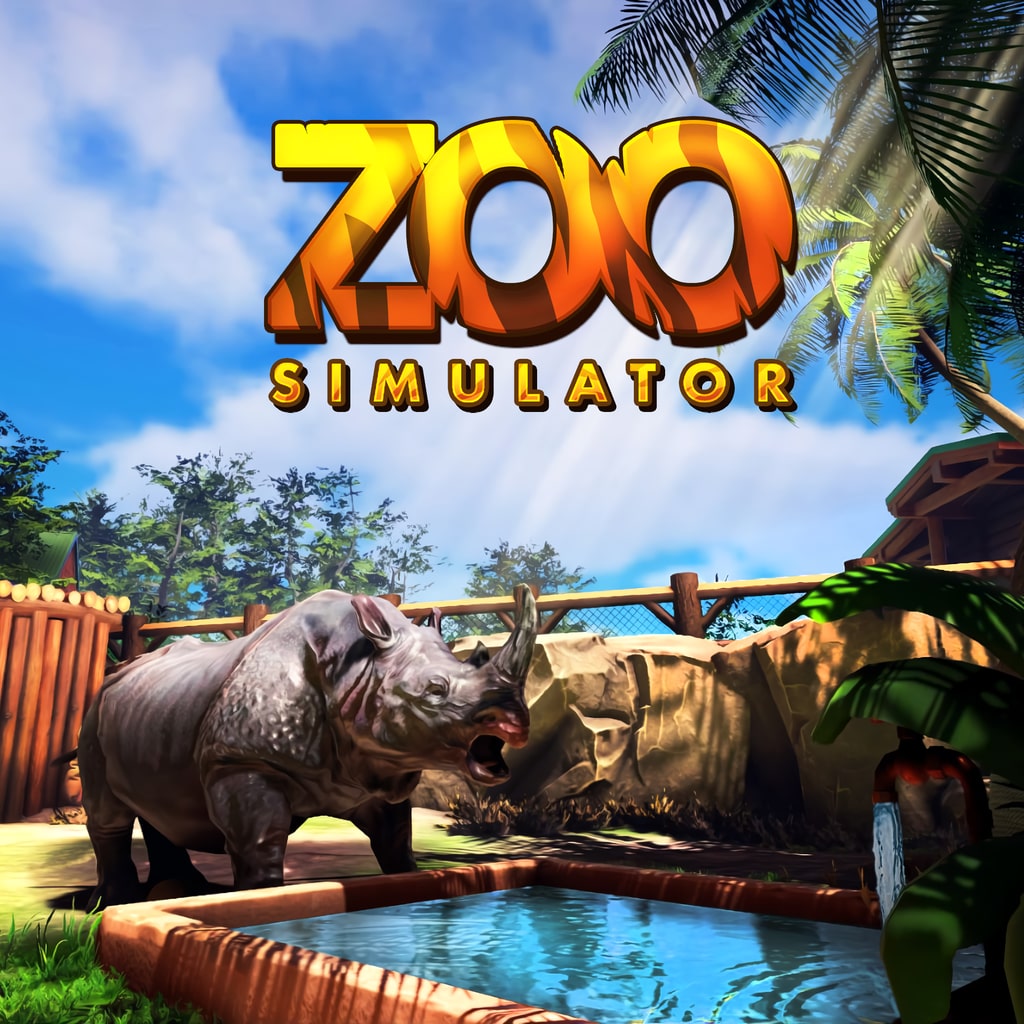
There is a specific, tactile memory many of us share from our first visit to a zoo—the smell of fresh hay, the cool mist from a cleaning hose, and the awe of standing just a few feet from something truly wild. Zoo Simulator by Games Incubator captures that physical connection, trading the abstract menus of traditional management games for a pair of work gloves and a pressure washer. Launched this week on consoles, it invites us to do more than just oversee a park; it asks us to physically rebuild it. It is a grounded, rewarding experience that reminds us that the best way to appreciate nature’s majesty is to get our hands a little dirty while protecting it.
There is an honesty to that pitch that Zoo Simulator largely lives up to. Developed by Games Incubator and published by PlayWay, this management sim strips away some of the genre’s usual complexity in favour of something more tactile, slower, and surprisingly personal.
Gameplay
Zoo Simulator begins not with animals or attractions, but with damage. Your zoo is broken, neglected, and quietly falling apart. Before anything else, you clean.
That loop is the game’s foundation. You scrub, repair, and replace, slowly bringing life back to abandoned spaces. The pressure washer is your most important tool, and the act of restoring order becomes strangely absorbing. Dirt fades, colour returns, and empty enclosures begin to feel like real places again.
Once restoration is underway, the game shifts into a gentler management rhythm. You select animals, build habitats, and gradually shape your park into something functional. The systems here are intentionally accessible. You are not buried in spreadsheets or overwhelmed by micromanagement. Instead, you focus on placement, comfort, and steady expansion.
There is a satisfying clarity to it all. Every action has a visible result, and progress feels earned without becoming stressful. However, that simplicity can also become a limitation over time. Players seeking deeper simulation systems or complex ecological behaviour will find the mechanics relatively shallow. Still, as a hands-on introduction to the genre, it works.
Graphics
Visually, Zoo Simulator sits in a comfortable middle ground. Environments are detailed enough to feel grounded, especially after restoration, yet not so advanced that performance suffers on consoles.
The strongest visual moments come from transformation. Watching a rusted, overgrown enclosure slowly become a clean habitat filled with foliage and animal life is where the game shines. Lighting also plays an important role, with soft sunlight helping sell the idea of a living, breathing park.
Animal models are generally solid, though not especially expressive. They behave believably but lack the nuanced animations seen in higher-budget simulation titles. The focus is clearly more on environment and structure than on wildlife realism. It is not a showpiece game, but it does not need to be. Its visual identity is built around function and clarity rather than spectacle.
Audio
Sound design leans heavily on calm, ambient tones. There is no overwhelming musical presence, just gentle background tracks that support the slow rhythm of building and maintenance.
The most effective audio moments are environmental. Water spraying from the pressure washer, footsteps on gravel paths, and distant animal calls all contribute to a grounded sense of place. It is subtle work, but it helps reinforce the game’s relaxed pacing.
The animals themselves have simple yet effective audio cues. Nothing overly complex, but enough to make each enclosure feel active rather than static.
Performance
On consoles, Zoo Simulator runs smoothly for the most part. Load times are reasonable, and frame rates remain stable during normal play. Even as the zoo expands and visitor numbers rise, performance holds up well, with only occasional dips in more densely built-up areas.
The control scheme has been thoughtfully adapted for gamepads. Building structures, placing objects, and navigating menus feel intuitive once you adjust to the layout. There are moments when precision placement can feel slightly awkward in tighter spaces, but nothing that breaks the experience. Overall, it is a competent and stable port that avoids major technical distractions.
Progression and Structure
The game’s progression is steady rather than dramatic. You unlock animals, expand enclosures, and gradually increase visitor interest. Growth feels organic, if a little predictable.
What drives you forward is less about challenge and more about satisfaction. Seeing your zoo evolve from ruins into a functioning space is the core motivation. However, the lack of major systemic surprises means long sessions can start to feel repetitive over time. It is a comfortable loop, but not a particularly deep one.
Final Verdict
Zoo Simulator succeeds because it understands its identity. It does not try to compete with dense, high-complexity management games. Instead, it focuses on physical engagement, gentle progression, and the quiet satisfaction of rebuilding what is broken.
It is at its best when you are cleaning, restoring, and watching life return to empty spaces. It is at its weakest when its systems begin to repeat with little variation. Yet there is something undeniably relaxing about it. Something grounded. In a genre often defined by spreadsheets and optimisation, Zoo Simulator offers dirt, water, wood, and wildlife. Not perfect, not revolutionary, but genuinely soothing in its own way.