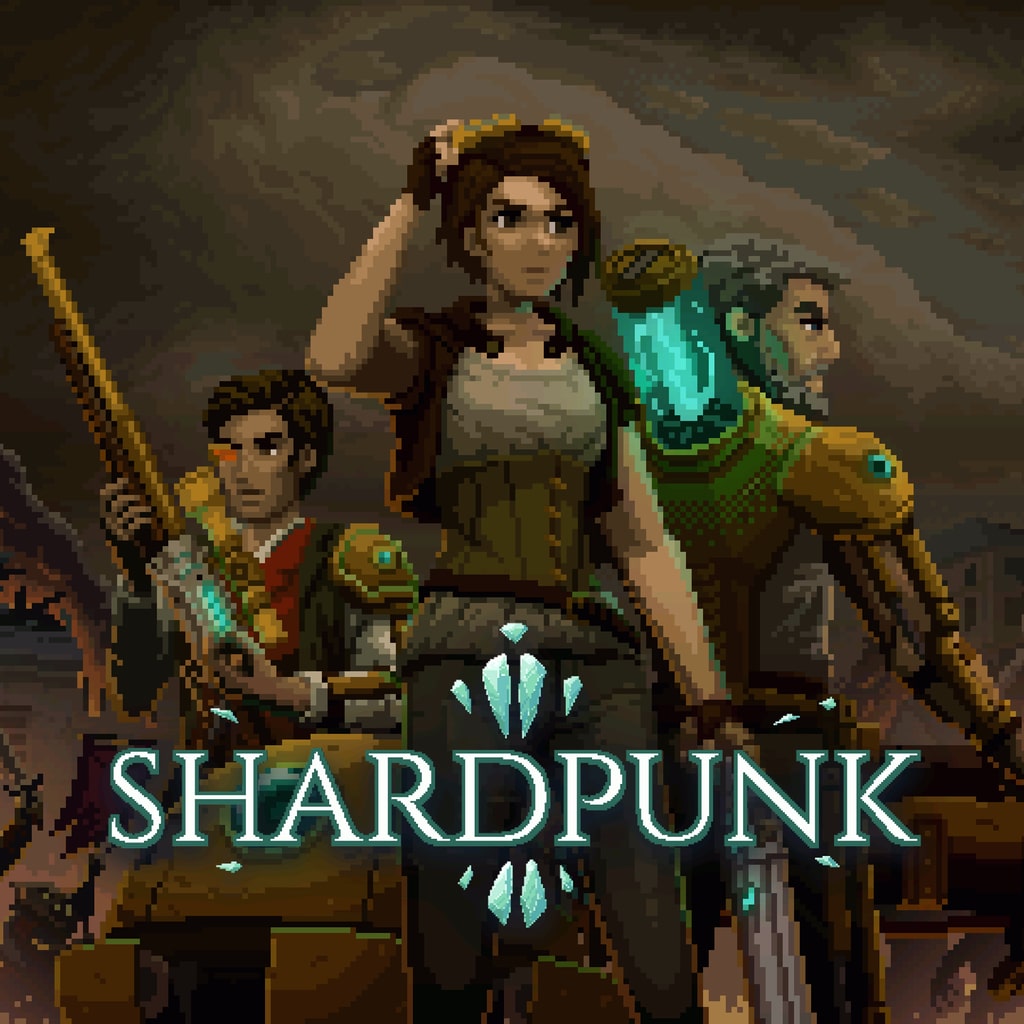
Desperation is a challenging thing to replicate in games. Many titles flirt with the concept—limited resources, overwhelming odds, the illusion of consequence—but few truly embrace it. Shardpunk (originally Shardpunk: Verminfall) does. From its very first moments, it sets a tone not of heroism, but of retreat. You are not here to win. You are here to survive long enough to escape.
Often described as “XCOM meets Darkest Dungeon,” the comparison is fitting—but also somewhat misleading. While it takes structural elements from both, Shardpunk ultimately establishes its own identity as a bleak, momentum-driven survival tactics game where every decision feels like it’s made under pressure, because it is.
A War Already Lost
The premise is straightforward but brutally effective. The Rat Swarm has taken over the Capitol. Civilisation has fallen apart. Your task isn’t to reclaim it — it’s to escape.
This perspective influences every aspect of the game’s design. There’s no grand counterattack, no final stand to flip the odds. Instead, you’re always moving forward, scavenging what you can, fighting only when necessary, and aiming to reach the next bunker before the situation worsens.
It’s a fresh twist on the usual tactical RPG structure. Progression isn’t about dominance — it’s about survival.
Tactical Combat Under Pressure
On the surface, Shardpunk offers familiar turn-based, grid-based combat. You command a squad of survivors, each with unique abilities, moving them across maps, taking cover, and fighting enemies with various weapons.
But the main difference is the sense of urgency.
Unlike traditional tactics games, where you can carefully eliminate enemies at your own speed, Shardpunk constantly pushes you to keep moving. The rat swarm is practically endless. Stay in one spot too long, and you’ll be overwhelmed.
This makes combat a balancing act between being aggressive and escaping. Do you stay to gather resources, or do you move on to avoid danger? Do you risk a wounded soldier to finish a fight, or retreat to save your team?
The system creates a tense atmosphere that many turn-based games find hard to replicate. Every turn counts, not just because of enemy placements, but because of the ticking clock itself.
The Weight of Survival
Outside of combat, Shardpunk heavily relies on survival mechanics.
Resources are limited, and every item holds value. Ammunition, medical supplies, crafting materials—they all compete for scarce inventory space. Deciding what to carry and what to leave behind becomes an ongoing dilemma.
Back at the bunkers, these choices become even more important. This is where you manage your team, allocate resources, craft equipment, and make tough decisions about who gets what.
The game is excellent at creating moral tension without explicit morality systems. There are no dialogue wheels or alignment meters—just situations where someone might not receive the medpack they need.
And you have to live with that.
A Crew with Consequences
Your squad comprises a diverse group of survivors, each with their own strengths, weaknesses, and quirks.
Some are natural fighters, while others excel in support roles. Certain characters may clash, yet others build bonds that boost their effectiveness in battle. Injuries, stress, and exhaustion influence performance and survivability.
This adds an emotional layer that heightens the experience. Losing a character isn’t just a mechanical setback — it’s the loss of someone you’ve depended on, whose absence will be felt in future encounters.
The game doesn’t dwell on these moments, but it doesn’t need to. The systems handle the storytelling.
Steampunk Systems and Fragile Tools
The world of Shardpunk is steeped in a gritty, industrial steampunk style, and its technology mirrors that. Weapons and equipment aren’t just tools—they’re liabilities. Many require maintenance, cooling, or careful handling to prevent malfunctioning at the worst possible moment.
This adds an extra layer of decision-making to combat. A powerful weapon might turn the tide of a fight, but overusing it risks failure when you need it most.
It’s a clever system that underlines the game’s main theme: nothing is dependable, and everything has a price.
Atmosphere in Every Pixel
Visually, Shardpunk adopts detailed pixel art, and the results are striking.
The environments are bleak and oppressive, filled with crumbling architecture, dim lighting, and the constant suggestion of something lurking just out of sight. The rat swarm itself is particularly effective—less a collection of enemies and more a creeping, overwhelming force.
Animations are fluid, effects are impactful, and the overall presentation is cohesive. It’s not flashy, but it doesn’t need to be. The art style perfectly complements the tone.
Sound design and music further enhance the atmosphere. Subtle audio cues build tension, while the soundtrack underscores the continual sense of urgency and dread.
Console Performance and Adaptation
The transition to consoles is quite successful.
Controls have been effectively adapted for gamepads, with intuitive menus and smooth navigation. While some of the more complex management systems can feel slightly clumsy compared to a mouse-and-keyboard setup, they remain practical and easy to use.
Performance remains stable across platforms, with no major technical issues affecting the experience. Load times are reasonable, and the game maintains a steady frame rate even during busier moments.
It’s a solid port that preserves the essence of the original PC release.
Where It Struggles
Although Shardpunk has many strengths, it also has some weaknesses.
The constant pressure, although effective, can become tiring. There are moments when players might desire a short break—a chance to strategise without the constant threat of being overwhelmed.
Difficulty jumps can feel sudden, especially in later levels where enemy numbers increase dramatically. While this emphasises the game’s themes, it can also cause frustration, particularly if a run ends due to a single mistake.
Additionally, there is a degree of repetitiveness in the structure. Although the systems are engaging, the overall cycle—move, scavenge, fight, retreat—may start to feel monotonous after extended play.
Final Verdict
Shardpunk is a rare example of a tactics game that fully commits to its premise.
By combining turn-based strategy with survival mechanics and relentless forward momentum, it creates an experience that feels genuinely tense and consistently engaging. It’s not about perfect plans or flawless execution—it’s about making the best possible decisions in a situation that’s constantly falling apart.
Its systems are deep, its atmosphere is compelling, and its design is cohesive. While it can be unforgiving and occasionally repetitive, these elements are largely in service of its identity.
This is a game that understands what it wants to be—and delivers on it with confidence.
For fans of tactical strategy looking for something darker, more desperate, and more immediate, Shardpunk is well worth the journey.