There are coming-of-age stories, and then there are stories about coming to terms with being a sentient burial mound. The Little Tomb: The Maholova Club and the Search for a Dead Body firmly places itself in the latter category—a premise so bizarre it almost seems like a joke. Yet, beneath that strange exterior lies one of the most surprisingly heartfelt and quietly profound indie adventures in recent memory.
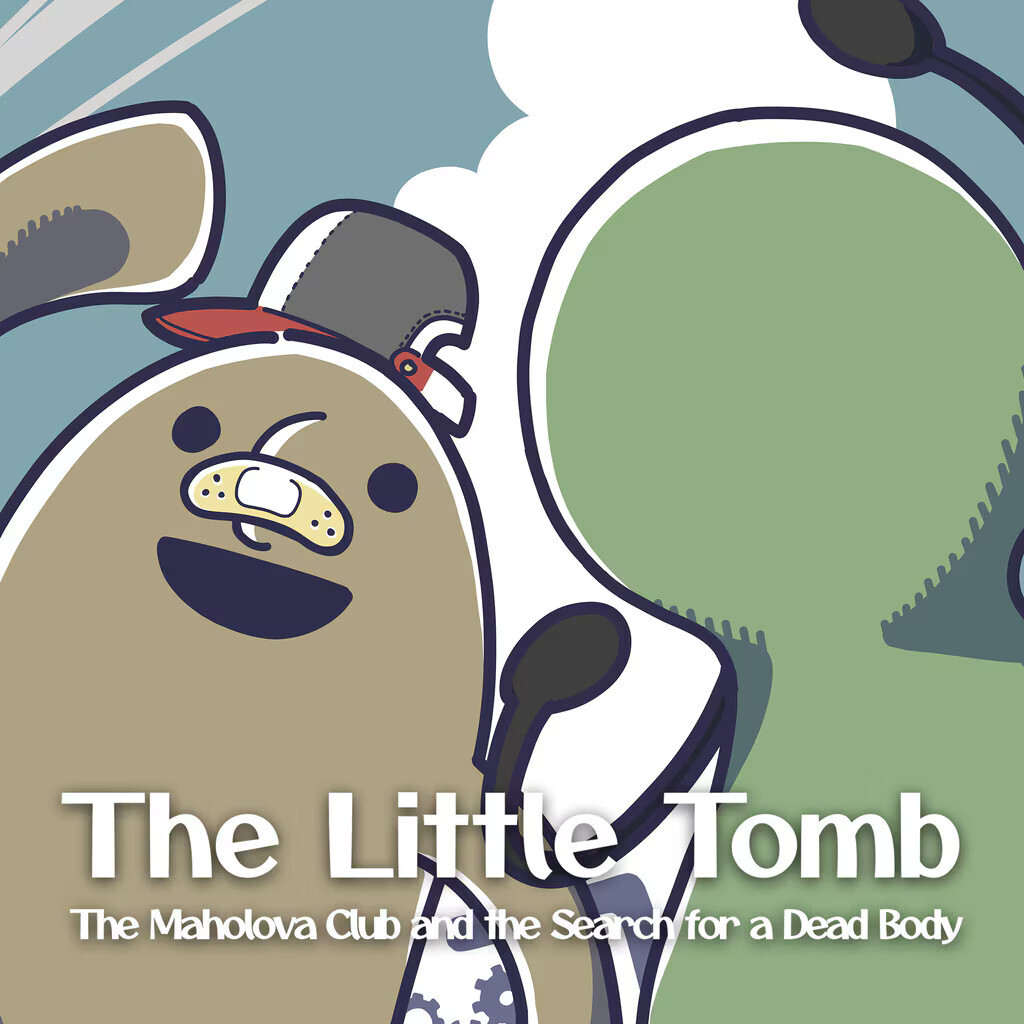
Developed by CAVYHOUSE and published by PLAYISM, this quirky narrative-driven game introduces us to Kofun—a small, soft-spoken boy who believes he is a literal burial mound. His dream? To one day find the perfect body to be buried within him so he can fulfil his purpose.
It’s weird. It’s uncomfortable. It’s also… somewhat beautiful.
A World That Shouldn’t Work—But Does
The game is set in the city of Friendly, a place inhabited mostly by members of the Haniwa Clan—beings inspired by ancient Japanese clay figures. Visually, the world maintains a delicate balance between playful and melancholic tones. Characters are rounded, expressive, and almost toy-like, yet there’s a subtle stillness to the environments that lends everything a dreamlike, slightly uncanny quality.
Kofun himself immediately stands out. Neither human nor Haniwa, his mound-like shape is simple yet striking, and his calm demeanour sharply contrasts with the more energetic personalities around him.
The true strength of the game lies in its tone. It continually walks a fine line between lighthearted absurdity and introspective storytelling. One moment you’re helping a quirky character with a trivial problem; the next, you’re faced with questions about identity, purpose, and belonging.
And somehow, it never feels forced.
The Story: Absurd Premise, Sincere Heart
At its core, The Little Tomb is about self-discovery.
Kofun’s journey begins when he meets Haniwa, a lively and outgoing boy who encourages him to step outside his comfort zone. Together, they form the Maholova Club—a loosely organised group of friends who spend their days exploring the city, meeting its residents, and, occasionally, searching for a suitable “resident” for Kofun.
Yes, that means finding a dead body.
What could easily have been played for shock value is instead handled with surprising sensitivity. The game treats Kofun’s goal not as something grotesque, but as a metaphor for his desire to find purpose and connection. He doesn’t fully understand what he is, and his quest becomes a way of grappling with that uncertainty.
As you progress, the narrative unfolds through a series of episodic encounters. Each character you meet adds a new layer to the world—and to Kofun’s understanding of himself. Some stories are humorous, others are quietly tragic, but all contribute to a larger emotional arc that builds steadily toward a meaningful conclusion.
It’s not a fast-paced narrative, but it’s a deeply considered one.
Gameplay: Simple, but Purposeful
From a mechanical perspective, The Little Tomb is quite straightforward. This is primarily a narrative adventure, with gameplay focused on exploration, conversation, and light puzzle-solving.
You’ll spend most of your time wandering through Friendly, interacting with characters, and completing minor tasks that progress the story. These range from fetching items to solving environmental puzzles, none of which are particularly difficult.
And that’s intentional.
The simplicity of the gameplay allows the story and characters to take centre stage. There’s a gentle rhythm to the experience—one that encourages you to slow down, pay attention, and engage with the world on its own terms.
That said, players seeking deep mechanics or complex systems might find the gameplay lacking. There’s little in the way of progression systems or skill-based challenges. The focus remains solely on the narrative journey.
Writing & Characters: Where the Game Shines
If there’s one area where The Little Tomb truly shines, it’s in its writing.
The dialogue is natural and often remarkably witty, with each character possessing a distinct voice. The humour is subtle but impactful, often stemming from the contrast between the game’s bizarre premise and the grounded reactions of the characters.
Kofun himself is a compelling protagonist. His quiet curiosity and vulnerability make him easy to relate to, even as his goal remains unconventional. Watching him develop—gaining confidence, questioning his beliefs, and forming meaningful connections—is the emotional core of the game.
The supporting cast is equally impressive. From eccentric townsfolk to more introspective figures, each character feels intentional. Even minor interactions enhance the overall tone and themes.
Presentation: Soft, Strange, and Memorable
Visually, the game features a minimalist, almost storybook-like aesthetic. Colours are soft, environments are uncluttered, and character designs are deliberately simple. It’s not technically impressive, but it’s cohesive and effective.
The art style perfectly complements the narrative, reinforcing the game’s combination of innocence and introspection.
The soundtrack deserves special recognition. It’s subtle, often fading into the background, but it plays a vital role in setting the atmosphere. Gentle melodies accompany quieter moments, while more whimsical tracks highlight the game’s lighter aspects.
Sound design is similarly restrained, concentrating on small details that enhance immersion without diverting attention from the story.
Pacing & Longevity
The Little Tomb isn’t a lengthy game, usually taking around 5–7 hours depending on your level of exploration. Its pacing is intentional, sometimes nearing sluggish, but it seldom feels like it wastes your time.
The episodic format keeps things moving, with each chapter introducing new characters and scenarios. However, players used to more lively gameplay loops might find the pace a bit too laid-back.
Replay value is limited. While there are different dialogue options and optional interactions, the main story remains mostly the same. This is a game best experienced once and then reflected upon.
Pros & Cons
Pros
- Unique and deeply memorable premise
- Strong, heartfelt writing with meaningful themes
- Charming world and distinctive characters
- Cohesive art style and atmospheric soundtrack
- Thoughtful exploration of identity and purpose
Cons
- Very limited gameplay depth
- Slow pacing may not appeal to all players
- Minimal replay value
- Occasional tonal awkwardness due to premise
- Some players may struggle to connect with the concept
Final Verdict
The Little Tomb: The Maholova Club and the Search for a Dead Body is a rare kind of game—one that takes a deeply strange idea and treats it with sincerity, care, and emotional intelligence.
It’s not for everyone. Its slow pace and minimal gameplay may deter those seeking action or complexity. But for players willing to embrace its quirks, it offers a touching and quietly powerful story about identity, belonging, and the courage to venture into the unknown.
In a medium often driven by spectacle, The Little Tomb stands out by doing something far more challenging: making you feel something authentic.