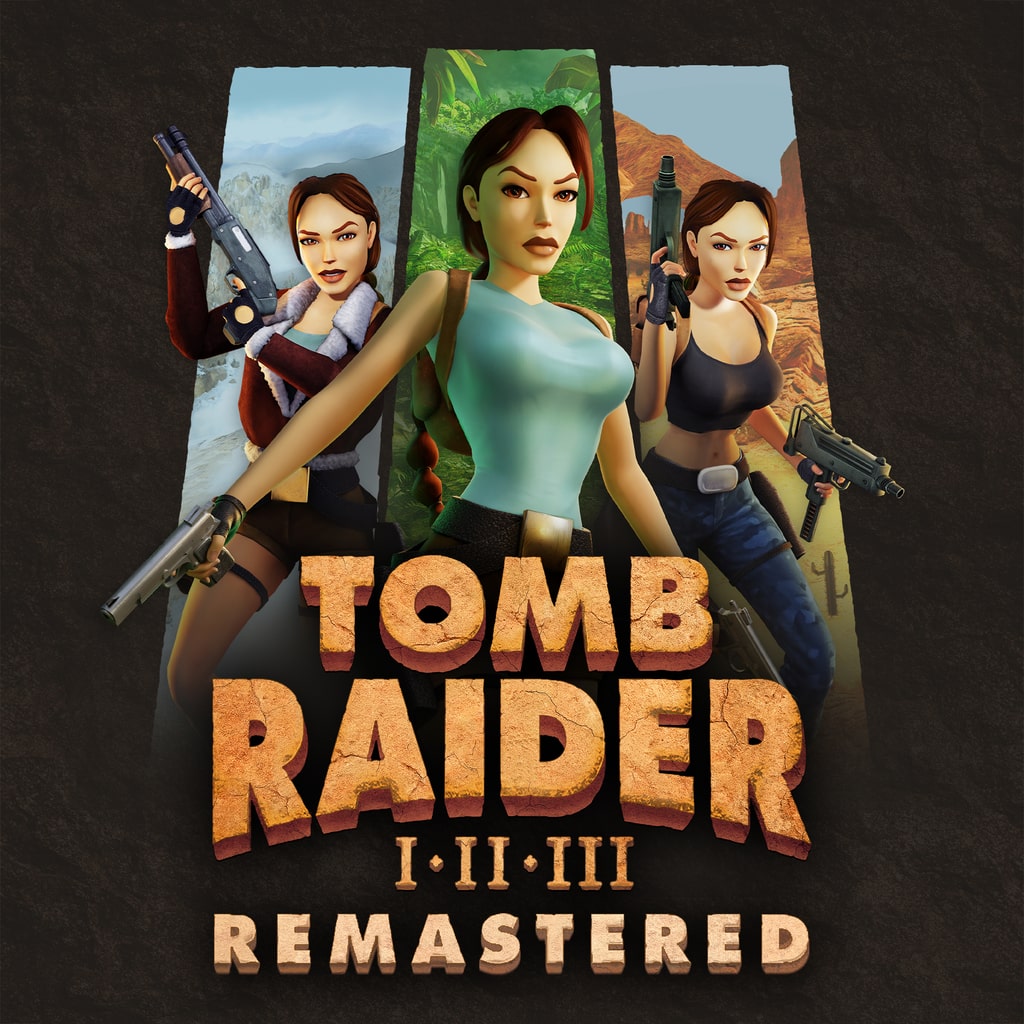
Few characters in gaming history are as instantly recognisable as Lara Croft. When the original Tomb Raider launched in 1996, it didn’t just introduce players to a daring archaeologist—it helped define the entire 3D adventure genre.
The first three entries in the series—Tomb Raider, Tomb Raider II, and Tomb Raider III—remain some of the most influential titles of the PlayStation era. Their blend of exploration, environmental puzzles, and deliberate platforming created a blueprint that countless action-adventure games would follow.
Now, Tomb Raider I–III Remastered Starring Lara Croft brings those classics together in one package, complete with graphical upgrades, modern control options, and all previously released expansions. The collection originally launched in 2024, but the 2026 update—which adds a new Challenge Mode and expands the game to additional platforms including Nintendo Switch 2 and mobile devices—cements this release as the definitive way to experience Lara Croft’s earliest adventures.
The result is both a loving preservation of gaming history and a reminder that some classics still hold up remarkably well—provided players are willing to embrace their old-school design philosophy.
Three Legendary Adventures in One Package
At its core, Tomb Raider I–III Remastered is exactly what the title promises: a faithful restoration of the first three games in the series.
The collection includes:
- Tomb Raider + Unfinished Business
- Tomb Raider II + Golden Mask
- Tomb Raider III + The Lost Artifact
These expansions were initially exclusive to PC, adding extra levels and challenges to the games. Their inclusion here means players are now experiencing the complete versions of each title on modern consoles for the first time.
Collectively, the three games form a globe-trotting trilogy that sees Lara Croft exploring ancient ruins, hidden temples, underwater caverns, and perilous archaeological sites.
From the snowy peaks of Tibet to the jungles of South America and the canals of Venice, the sense of adventure remains one of the series’ strongest features.
Puzzle-Solving and Platforming the Old-School Way
Players familiar with modern action-adventure games might be surprised by how methodical these early Tomb Raider titles are.
Combat does exist, but it’s rarely the main focus.
Instead, gameplay centres around environmental puzzles, careful platforming, and exploration.
Each level functions almost like a giant mechanical puzzle box. Players must search for keys, pull switches, manipulate platforms, and decipher the layout of sprawling ruins.
Progress often requires patience and keen observation.
Miss a jump, overlook a hidden lever, or misinterpret a puzzle, and you may find yourself wandering the level in search of the correct path forward.
This deliberate pacing starkly contrasts with the cinematic style of modern Tomb Raider games developed by Crystal Dynamics.
But for many fans, that slower, more reflective gameplay is exactly what makes the originals special.
A Remaster That Respects Its Roots
The most prominent visual feature of the remastered collection is its instant graphical toggle.
With just one button press, players can switch between:
- The original 1990s polygonal graphics
- The modernised remastered visuals
The updated graphics feature enhanced lighting, higher-resolution textures, and more detailed environments, all while maintaining the original level layouts.
This toggle isn’t just a novelty—it’s an intriguing way to observe how much visual design has advanced over the decades.
Certain environments appear vastly different with modern textures, whereas others demonstrate how cleverly the original developers used limited technology to create atmosphere.
It’s both a history lesson and a technical showcase.
Tank Controls vs. Modern Movement
One of the most debated aspects of the original Tomb Raider games is their “tank control” system.
In the 1990s, this movement style—where characters rotate before moving forward—was common in 3D games. It allowed for precise platforming in environments designed around grid-based movement.
However, modern players often find these controls awkward.
To address this, the remastered collection includes a new “Modern Controls” option, inspired by later Tomb Raider titles such as Tomb Raider: Legend and Tomb Raider: Anniversary.
This updated scheme enables players to move Lara more smoothly using analogue sticks.
While purists may still prefer the original controls for accuracy in platforming, the modern option makes the experience far more accessible for newcomers.
The 2026 Challenge Mode
The latest update introduces an entirely new Challenge Mode, which provides additional replay value for players who have already completed the trilogy.
This mode enables players to customise several gameplay elements including:
- Player health levels
- Enemy damage
- Enemy density
- Overall difficulty
Additionally, completing specific challenges unlocks ten new outfits for Lara Croft, each offering unique gameplay bonuses.
Although this addition doesn’t significantly change the core experience, it gives veteran players fresh ways to revisit the classic levels with new challenges.
It’s a clever method to extend the lifespan of games many fans have already completed multiple times over the years.
Atmosphere That Still Holds Up
Despite their age, the original Tomb Raider games still evoke an incredible atmosphere.
Many levels are surprisingly quiet, with long stretches of exploration accompanied only by ambient sound effects.
This design creates moments of genuine tension.
Entering a massive underground chamber or discovering a hidden tomb can feel both thrilling and unsettling.
Even today, few games capture the essence of exploring ancient ruins quite like these early adventures.
Where the Age Shows
Of course, not everything has aged perfectly.
The camera can still feel awkward during certain platforming sections, and the game’s puzzle design occasionally relies on trial and error rather than clear logic.
Combat encounters also feel somewhat basic compared to modern action games.
However, these issues are part of the historical context of the trilogy.
Instead of rewriting the games entirely, the remaster wisely retains their original design while providing modern conveniences as optional extras.
Pros
- Three legendary Tomb Raider games with all expansions included
- Instant graphical toggle between classic and remastered visuals
- Optional modern control scheme improves accessibility
- New Challenge Mode adds replayability
Cons
- Tank controls and camera can feel dated
- Some puzzles rely on obscure solutions
- Combat feels basic compared to modern standards
Final Verdict
Tomb Raider I–III Remastered Starring Lara Croft is a thoughtful and respectful revival of three of gaming’s most influential adventures.
By maintaining the original gameplay while adding modern control options and visual improvements, developers at Aspyr have crafted a collection that appeals to both nostalgic fans and curious newcomers.
The inclusion of the 2026 Challenge Mode further enriches the package, providing new reasons to revisit Lara Croft’s earliest escapades.
Although the games’ old-school design might require patience, the thrill of discovery and adventure remains as captivating as ever.
For anyone eager to explore the origins of one of gaming’s most iconic heroes, this remastered trilogy offers an essential journey into the past.