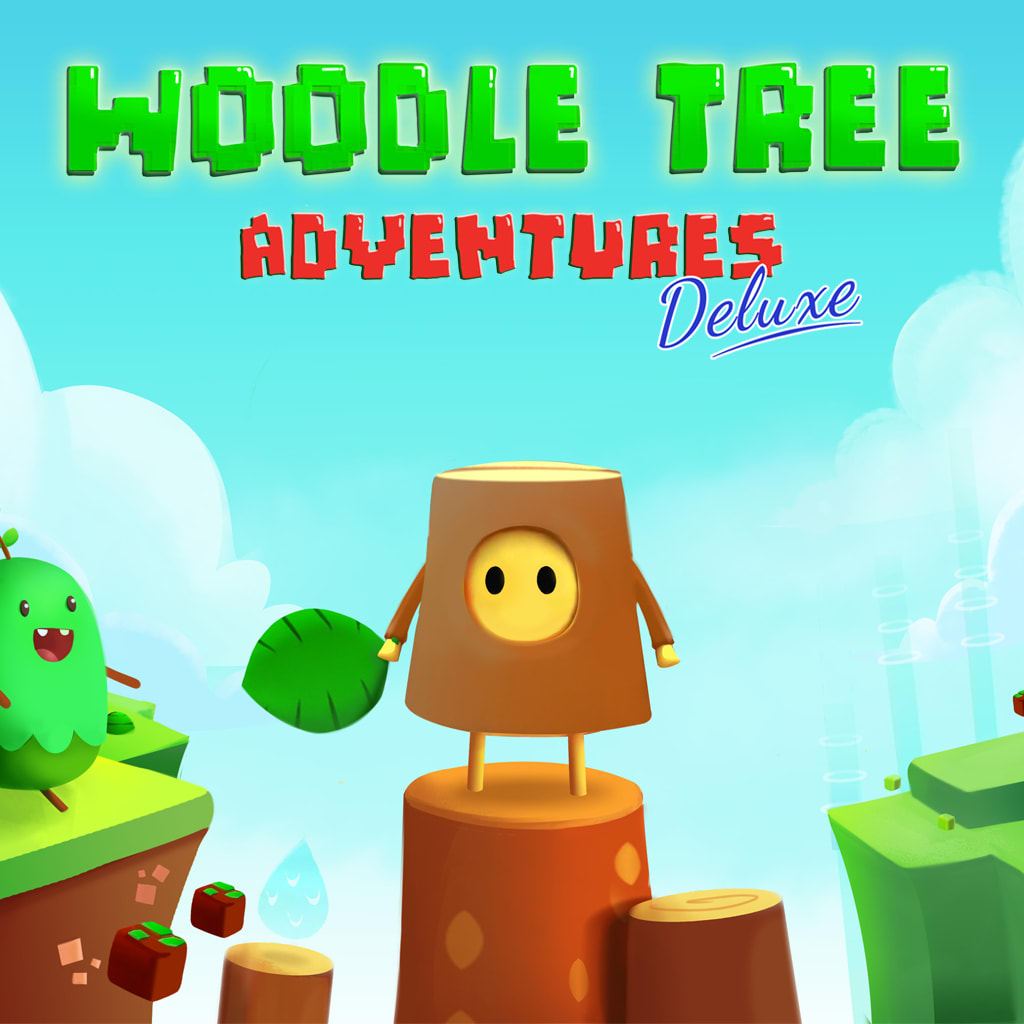
Woodle Tree Bundle brings together two light-hearted 3D platforming adventures under one package, offering a nostalgic throwback to an earlier era of colourful, collectathon-style games. Designed with accessibility and charm in mind, the bundle is clearly aimed at players who enjoy relaxed exploration, simple objectives, and a family-friendly tone rather than demanding mechanics or technical spectacle.
Across both included titles, the focus is on guiding Woodle, a wooden hero, through a series of whimsical environments filled with collectibles, light combat encounters, and environmental puzzles. While the ambition behind the bundle is commendable, the overall experience is a mixed one—pleasant and approachable in moments, but held back by uneven execution and limited depth.
The Bundle Experience
The key appeal of Woodle Tree Bundle lies in its value proposition. By combining two related adventures, the package offers a longer overall experience than either title alone. The first game delivers a more traditional, linear platforming structure, while the second expands the formula with broader environments and a more open-ended sense of exploration.
Together, they present a clear evolution of ideas rather than two radically different experiences. Players familiar with one entry will immediately understand the other, for better and for worse. This consistency makes the bundle approachable, but it also highlights recurring issues that persist across both games.
Core Gameplay Mechanics
At its foundation, Woodle Tree Bundle relies on classic 3D platforming mechanics: running, jumping, collecting items, and interacting with simple environmental elements. Controls are intentionally straightforward, making it easy for new players to pick up and understand how Woodle moves and interacts with the world.
Jumping and traversal form the backbone of gameplay, with platforms, ledges, and environmental hazards arranged to encourage exploration rather than precision. Combat, where present, is extremely light, typically involving basic attacks against simple enemies. These encounters serve more as obstacles than meaningful challenges.
While the simplicity helps accessibility, it also limits engagement for experienced players. Movement lacks the responsiveness and refinement expected from modern platformers, and the overall feel can be sluggish at times, particularly during swimming or airborne sections.
Level Design and Exploration
Level design varies noticeably across the bundle. The earlier title features more structured, linear stages, each built around a clear theme. These levels encourage exploration within defined boundaries, rewarding players who search for hidden collectibles or optional routes.
The later entry shifts toward a more open design philosophy, offering larger spaces and more freedom in how players approach objectives. This change introduces a sense of scale and ambition, but it also exposes weaknesses in pacing and focus. Some areas feel underutilised, lacking meaningful interaction or challenge beyond traversal.
Exploration is generally pleasant but rarely surprising. Collectibles are plentiful, yet their placement often feels predictable, reducing the sense of discovery. There is satisfaction in gradually clearing an area, but few moments that genuinely surprise or challenge the player’s understanding of the environment.
Visual Presentation
Visually, Woodle Tree Bundle adopts a bright, cartoon-inspired aesthetic that prioritises colour and approachability. Environments are cheerful and readable, making it easy to identify platforms, hazards, and interactive objects. The art direction leans heavily into simplicity, which suits the game’s tone but also contributes to a somewhat dated appearance.
Character models and animations are serviceable but basic. Woodle himself is expressive enough to carry the game’s friendly tone, yet animations can feel stiff or repetitive over time. Environmental detail is modest, and while worlds are distinct in theme, they rarely feel rich or immersive.
Performance is generally stable, but technical rough edges—such as camera behaviour and occasional awkward angles—can disrupt the flow of platforming. These issues don’t completely undermine the experience, but they do detract from overall polish.
Audio and Atmosphere
Audio design in Woodle Tree Bundle is understated. The soundtrack leans toward soft, whimsical melodies that complement the game’s relaxed tone. While pleasant, the music rarely stands out or evolves significantly over time, which can make longer sessions feel repetitive.
Sound effects are functional, providing clear feedback for actions like jumping, collecting items, or defeating enemies. However, they lack impact, reinforcing the sense that the game is content with adequacy rather than striving for memorability.
Atmospherically, the game succeeds in creating a safe, friendly world. There is no tension or urgency, and failure carries minimal penalty. This reinforces accessibility but also reduces emotional highs and lows.
Difficulty and Accessibility
Difficulty in Woodle Tree Bundle is consistently low. There are no demanding platforming sequences, tight time limits, or punishing fail states. This makes the game highly accessible, particularly for younger players or those new to 3D platformers.
Checkpoints are frequent, and progress is rarely blocked by skill-based challenges. While this design choice ensures broad appeal, it also limits the sense of accomplishment. Players looking for mastery-driven gameplay or meaningful challenge will likely find the experience too forgiving.
Accessibility is one of the bundle’s strongest points, but it comes at the cost of depth and long-term engagement.
Progression and Motivation
Progression is driven primarily by collectibles and area completion. Gathering items unlocks new paths or areas, encouraging players to fully explore each level. However, rewards are largely cosmetic or incremental, offering little mechanical evolution.
There is no deep progression system or meaningful upgrades that change how Woodle plays. As a result, gameplay remains largely consistent from start to finish. While this consistency can be comforting, it also contributes to a sense of repetition.
Motivation comes more from completionism than from narrative or mechanical growth. Players who enjoy ticking off objectives may find satisfaction here, but others may struggle to stay invested.
Replayability and Longevity
Replayability is limited. Once levels are completed and collectibles gathered, there is little incentive to return beyond personal enjoyment. The absence of alternative modes, time challenges, or meaningful variation reduces long-term appeal.
The second game’s broader environments offer slightly more replay potential through exploration, but the core mechanics remain unchanged. Woodle Tree Bundle is best viewed as a one-and-done experience, particularly for experienced players.
Strengths and Weaknesses
Strengths
- Friendly, accessible design suitable for beginners
- Colourful, family-friendly presentation
- Simple mechanics that are easy to understand
- Decent value as a bundled package
Weaknesses
- Dated visuals and uneven polish
- Sluggish movement and camera issues
- Limited challenge and mechanical depth
- Repetitive objectives and low replay value
Final Verdict
Woodle Tree Bundle is an earnest, accessible platforming collection that delivers a gentle, nostalgic experience aimed squarely at casual audiences. Its charm and simplicity make it approachable, particularly for younger players or those seeking a low-pressure adventure. However, technical rough edges, limited depth, and dated design prevent it from standing alongside stronger entries in the modern platforming space.
As a budget-friendly bundle, it offers reasonable value, but players should approach with measured expectations. Woodle Tree Bundle is pleasant rather than memorable—a comfortable stroll through familiar ideas rather than a bold or refined platforming showcase.