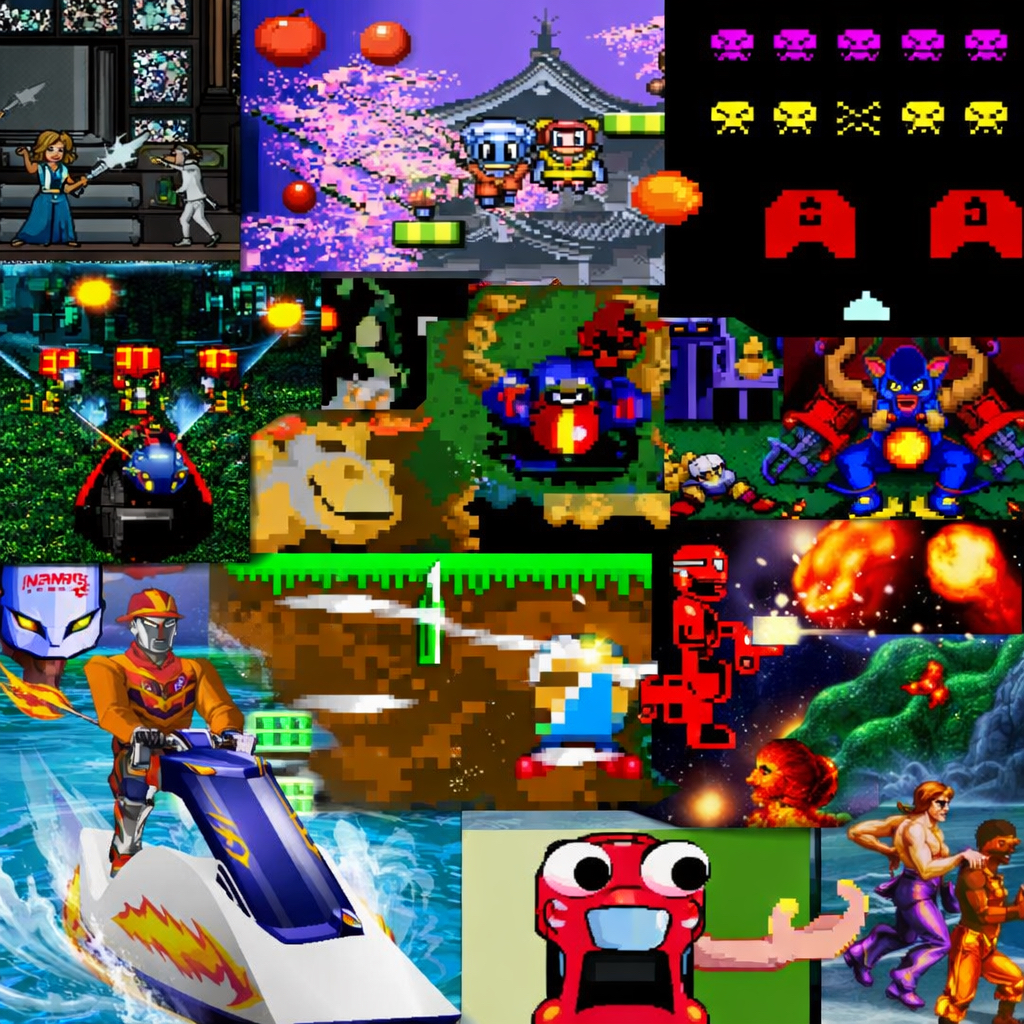
For years, retro gaming has thrived on nostalgia, but too often that nostalgia has been flattened into novelty. Classic games are reissued, briefly celebrated, then forgotten again. What Arcade Archives 2 is doing differently — and far more importantly — is treating arcade history not as a museum exhibit, but as a living, playable archive.
The result is a growing catalogue that doesn’t just preserve games, but re-contextualises them for modern audiences — while also expanding into home console preservation with Hamster’s newly launched Console Archives line.
More Than Nostalgia: A Timeline You Can Play
What makes Arcade Archives 2 compelling is the sheer range of experiences it offers. This isn’t a greatest-hits collection cherry-picking only the most famous names. Instead, it presents arcade history in all its weird, experimental glory.
Early titles like:
- Arcade Archives 2 GEE BEE Review
- Arcade Archives 2 BOMB BEE Review
- Arcade Archives 2 ADVENTURE CANOE Review
showcase a time when arcade games were still finding their identity, borrowing from pinball logic, mechanical toys, and abstract score-chasing. They may feel primitive now, but playing them today highlights how much creativity flourished under strict technical limits.
Move forward and the evolution becomes clear:
- Arcade Archives 2 MEGA ZONE Review
- Arcade Archives 2 SCRAMBLED EGG Review
- Arcade Archives 2 Roc’n Rope Review
- Arcade Archives 2 LABYRINTH RUNNER Review
By the time you reach more mechanically ambitious or technically advanced releases such as:
- Arcade Archives 2 MACH BREAKERS Review
- Arcade Archives 2 THE OUTFOXIES Review
- Arcade Archives 2 AIR COMBAT 22 Review
- Arcade Archives 2 RIDGE RACER Review
you’re not just playing ports — you’re experiencing an interactive timeline of arcade innovation.
Skill-Based Design That Feels Radical Today
Modern games often emphasise progression systems, unlock trees, cosmetics, and persistent rewards. Arcade Archives 2 titles remind us of a time when games demanded immediate mastery.
Consider:
- Arcade Archives 2 CHOPPER 1 Review
- Arcade Archives 2 STEEL WORKER Review
- Arcade Archives 2 GALACTIC WARRIORS Review
- Arcade Archives 2 TOP SPEED Review
These games expect players to learn through repetition, failure, and incremental improvement. There are no safety nets, no onboarding tutorials cushioning every mistake.
Even deceptively simple experiences like:
- Arcade Archives 2 MUNCH MOBILE Review
- Arcade Archives 2 QUESTER Review
- Arcade Archives 2 VIDEO HUSTLER Review
reveal surprising depth once you begin dissecting scoring systems and enemy patterns. In 2026, that kind of uncompromising clarity feels almost radical.
Genre Diversity You Rarely See Anymore
One of the strongest arguments for Arcade Archives 2’s importance is its refusal to settle into a single niche. Its catalogue spans racing, shooters, sports, oddball experiments, and mechanical curiosities.
You’ll find:
- High-speed racing in Arcade Archives 2 RIDGE RACER Review
- American football action in Arcade Archives 2 TOUCHDOWN FEVER Review
- Nautical thrills in Arcade Archives 2 AQUA JET Review
- Airborne spectacle in Arcade Archives 2 MIDNIGHT LANDING Review
- Abstract experimentation in Arcade Archives 2 BERMUDA TRIANGLE Review
- Platform intensity in Arcade Archives KARATE BLAZERS Review
- Strategic chaos in Arcade Archives 2 BATTLANTIS Review
- Vehicular combat scale in Arcade Archives 2 TOKYO WARS Review
This breadth highlights something modern gaming often lacks: risk-taking. Many of these games feel like developers asking “what if?” instead of “what sells best?”
Seeing the DNA of Modern Games
Revisiting these titles reveals how foundational arcade design truly is.
- Arcade Archives 2 SPACE INVADERS Review and Arcade Archives 2 SPACE INVADERS PART II Review remain pillars of shooter design.
- Arcade Archives 2 BOMB JACK TWIN Review showcases risk-reward scoring systems that modern indie developers still emulate.
- Arcade Archives 2 AIR COMBAT 22 foreshadows the cinematic ambition of later 3D flight titles.
- Arcade Archives 2 THE OUTFOXIES anticipates chaotic arena fighters years before they became mainstream.
Playing them back-to-back is like peeling away layers of design history.
Preservation Done Right
Arcade Archives 2 doesn’t simply dump ROMs onto modern platforms. Presentation respects original hardware while offering essential modern conveniences — display options, control remapping, performance accuracy, and leaderboards.
This careful balance keeps authenticity intact while removing barriers that once required ageing cabinets or complicated emulation setups.
For veterans, it’s respectful preservation. For newcomers, it’s accessible history.
Expanding Beyond Arcades: Console Archives Begins
Importantly, Hamster Corp isn’t stopping with arcades.
The newly launched Console Archives series expands preservation to home console history. The first wave of releases already shows the initiative’s range:
- Console Archives Cool Boarders Review
- Console Archives NINJA GAIDEN II: THE DARK SWORD OF CHAOS Review
- Console Archives: Dezaemon Review
Particularly fascinating is Dezaemon, a 1991 shooter-creation toolkit that demonstrates how console players were experimenting with game design decades before modern creation platforms existed. Signalling that this initiative is about broader gaming heritage — not just coin-operated cabinets, but the experimental and formative years of home console design as well.
If Arcade Archives 2 is about preserving the competitive, skill-driven DNA of arcades, Console Archives suggests Hamster understands that console-era design evolution deserves equal care. Together, these lines could become one of the most important long-term preservation efforts in modern gaming.
Why This Matters Now
As gaming shifts toward digital-only ecosystems, live-service models, and subscription libraries, there’s a real risk that older titles quietly disappear.
Arcade Archives 2 pushes back against that erosion.
Whether you’re revisiting Arcade Archives 2 SPACE INVADERS out of reverence, discovering Arcade Archives 2 THE OUTFOXIES for the first time, or appreciating the technical leap documented in Arcade Archives 2 RIDGE RACER, you’re engaging with design lessons that still shape the medium.
These are not curiosities. They are playable history.
Final Thoughts
Arcade Archives 2 may not dominate headlines, but it is quietly performing cultural preservation at a time when that work matters most. It protects the raw, uncompromising heart of arcade design while presenting it in a way that modern audiences can meaningfully engage with.
With the launch of Console Archives alongside it, HAMSTER Corporation appears committed to safeguarding gaming’s past across both arcades and home systems.
In an industry obsessed with what comes next, Arcade Archives 2 reminds us that understanding where we came from is just as important.
If you care about gaming history, pure skill-based design, or seeing the evolutionary roots of today’s biggest ideas, Arcade Archives 2 isn’t just retro comfort food.
It’s essential playing.