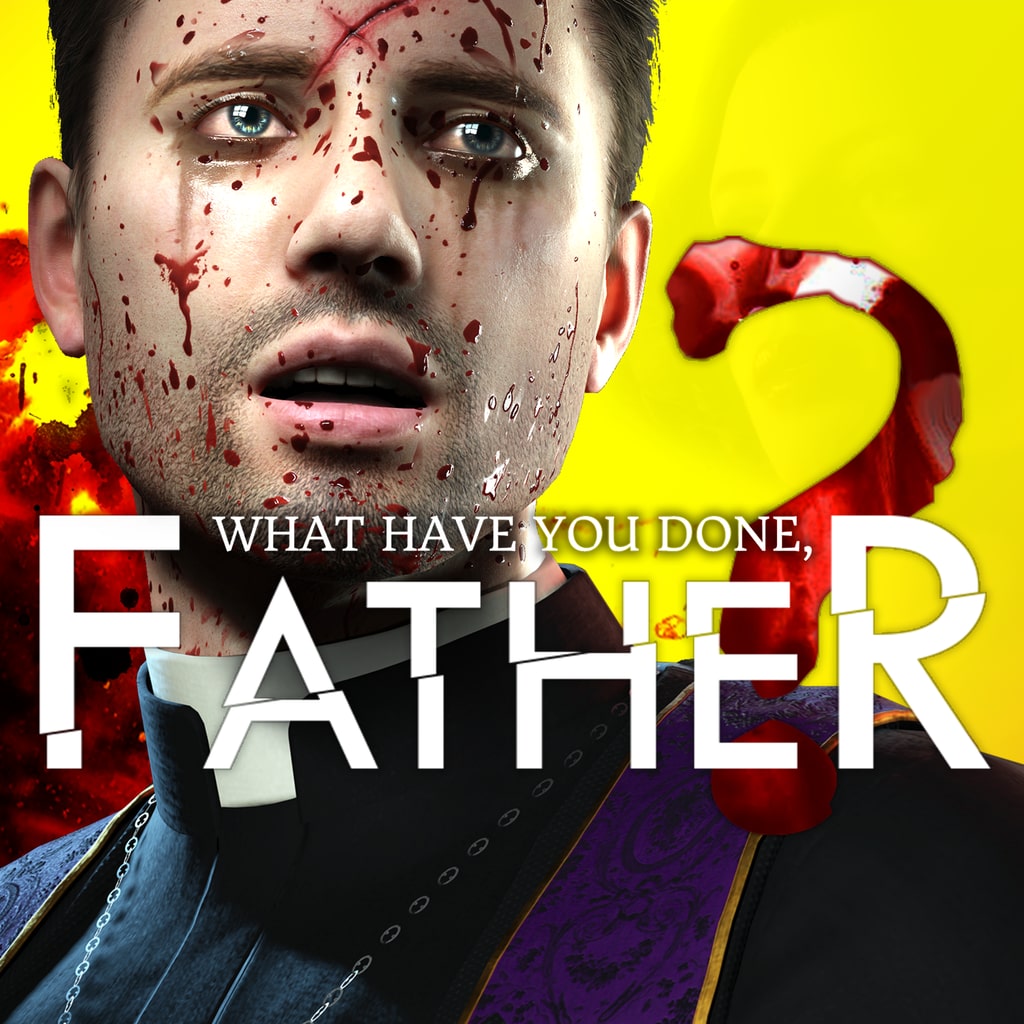
Horror games often ask us to survive monsters, escape killers, or uncover ancient curses. What Have You Done, Father? takes a different path. It places players inside the mind of a man who may harbour a darkness far more frightening than anything lurking in the shadows.
Developed and published by Darkania Works, this first-person narrative horror experience unfolds in a gloomy rectory in 1940s Transylvania. The setting immediately establishes a sense of isolation and unease. Thick stone walls, dim candlelight, and endless corridors create an environment that feels trapped between reality and nightmare. Every room seems to hide a secret, while every conversation feels weighted with unspoken truths.
You play as Father Mathias Marton, a respected priest whose life begins to unravel after the mysterious death of a young woman named Marina. As questions mount and strange events unfold around the rectory, Mathias is forced to confront not only what happened but also who he has become. The result is less a traditional horror story and more a slow descent into guilt, obsession, and self-destruction.
A Mystery Driven by Human Weakness
What Have You Done, Father? excels by recognising that genuine horror often stems from human flaws rather than supernatural threats. The game’s central mystery unfolds gradually through exploration, conversations, diary entries, hidden notes, and environmental storytelling. Each clue feels like another piece of a larger puzzle, yet the answers remain frustratingly out of reach for much of the journey. Questions pile upon questions. Who was Marina? Why does her presence continue to linger throughout the rectory? What role did Father Mathias truly play in the tragedy?
Rather than rushing towards answers, the narrative takes its time. This deliberate pacing allows tension to build naturally as players begin to suspect the truth may be far more disturbing than initially imagined.
The writing frequently explores themes of temptation, shame, faith, hypocrisy, and redemption. These are difficult subjects to handle effectively, yet Darkania Works approaches them with surprising confidence. The game never seems interested in offering easy moral judgements. Instead, it presents a deeply flawed protagonist and allows players to wrestle with the consequences of his choices. By the time the story reaches its final revelations, the emotional weight feels earned.
The Rectory as a Character
Many horror games feature memorable locations, but few make their environments feel as alive as the rectory in What Have You Done, Father? Every hallway, chapel, bedroom, and forgotten storage room contributes to the atmosphere. The building feels ancient, burdened by decades of secrets and regrets. Even when nothing explicitly frightening is happening, there is a constant sense that something is wrong.
The developers wisely avoid endless jump scares. Instead, tension emerges through subtle details. A strange sound in another room. A photograph that seems slightly out of place. A diary entry revealing an uncomfortable truth. A shadow that lingers just a little too long.
This slow-burn approach proves remarkably effective. Players are encouraged to absorb their surroundings rather than simply rushing from objective to objective.
The result is an environment that feels oppressive without becoming exhausting. You never quite feel safe, yet the game rarely resorts to cheap tricks to sustain that discomfort.
Walking the Line Between Reality and Madness
One of the game’s greatest strengths is its ability to blur the boundary between psychological horror and supernatural terror. Throughout the experience, strange manifestations begin to appear around Father Mathias. Some seem impossible to explain. Others may simply be symptoms of a mind buckling under overwhelming guilt and emotional strain.
The ambiguity works beautifully because the game refuses to provide immediate answers. Players are constantly questioning what they see. Is something genuinely haunting the rectory, or is Mathias slowly losing his grip on reality?
This uncertainty creates an atmosphere of paranoia that intensifies as the story progresses. Every encounter feels layered with multiple possible interpretations.
By refusing to commit fully to either explanation until much later, the game maintains a compelling sense of mystery that keeps players engaged throughout its relatively short runtime.
Strong Atmosphere Carries the Experience
Visually, What Have You Done, Father? demonstrates a clear grasp of mood and presentation. The lighting deserves particular praise. Candlelit corridors cast long shadows across worn stone surfaces, while dark corners seem capable of concealing almost anything. The art direction effectively captures the feeling of a forgotten religious institution slowly decaying under the weight of its own secrets.
The sound design is equally effective. Ambient noises consistently reinforce the sense of unease. Distant creaks, subtle whispers, footsteps echoing through empty halls, and an understated musical score combine to create a deeply unsettling atmosphere.
Voice acting in key cinematic moments is generally strong. Several performances lend genuine emotional weight to the narrative, particularly when characters confront painful truths or buried memories. The game’s presentation never relies on spectacle. Instead, it builds tension through restraint, allowing players’ imaginations to do much of the work.
Where the Experience Stumbles
While the storytelling remains compelling throughout, the gameplay occasionally struggles to maintain momentum. Most of the experience revolves around exploration and puzzle-solving. In theory, this fits perfectly with the investigative structure. In practice, some objectives can be frustrating due to unclear item placement or obscure progression requirements.
At times, players may spend more time searching for a small object than engaging with the narrative. These interruptions can break immersion and slow the pacing considerably.
The puzzles themselves are generally light and accessible, which suits the game’s story-focused design. However, they rarely match the narrative’s creativity or emotional impact.
Some dialogue exchanges outside major story scenes also feel less polished than the strongest parts of the script. While never disastrous, occasional repetition and awkward phrasing prevent certain supporting characters from feeling fully realised.
A handful of technical issues further remind players of the game’s indie origins. Minor visual glitches and clipping problems appear from time to time, though none are severe enough to derail the overall experience.
A Short Journey That Knows When to End
One aspect that strongly works in the game’s favour is its relatively concise length. Many modern horror games stretch their narratives beyond the point where tension can be sustained. What Have You Done, Father? avoids this trap. The experience lasts roughly two hours, providing enough time to develop its mystery without introducing unnecessary filler.
Every chapter feels purposeful, and every revelation pushes the narrative forward. By the time the credits roll, the game has explored its themes thoroughly without exhausting the player’s patience.
The optional collectables provide additional context for those willing to search every corner of the rectory. Hidden magazines, old photographs, and historical documents offer fascinating glimpses into the building’s troubled past and deepen the overall narrative. These additions reward exploration without making completion feel mandatory.
Final Verdict
What Have You Done, Father? is an impressive example of psychological horror done right. Rather than relying on endless jump scares or relentless monster encounters, it focuses on guilt, temptation, and the devastating consequences of human weakness.
Its strongest moments come from its writing, atmosphere, and willingness to explore uncomfortable themes. Father Mathias is not an easy protagonist to root for, yet his journey remains compelling from beginning to end. The mystery unfolds at a satisfying pace, while the rectory itself stands as one of the game’s most memorable achievements.
The gameplay occasionally slows the experience with obscure item hunts and simplistic puzzles, and a few technical rough edges remind you of its modest budget. Even so, these issues rarely overshadow the power of the narrative.
For players who appreciate slow-burn psychological horror, What Have You Done, Father? delivers a chilling and thought-provoking experience. It may be brief, but its exploration of sin, guilt, and redemption lingers long after the final confession has been heard.