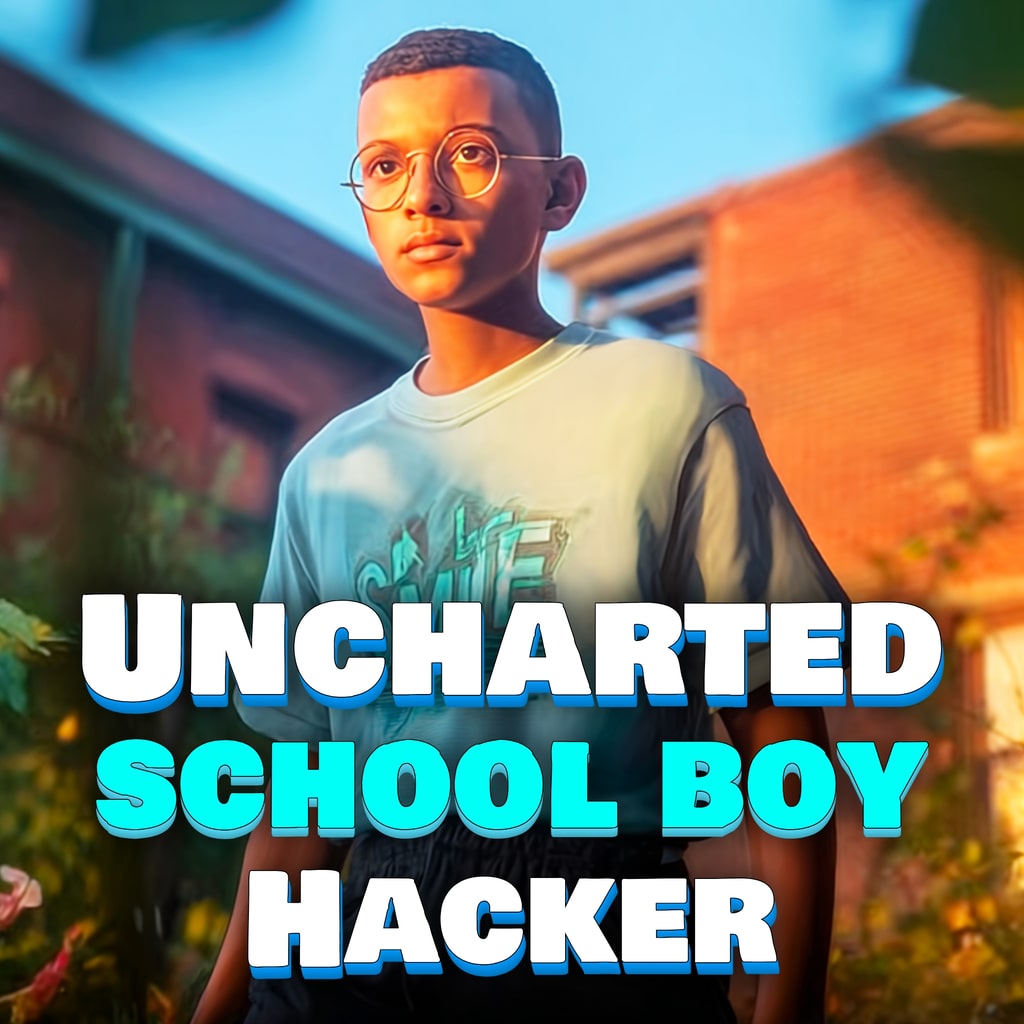
Indie gaming has always thrived on unusual ideas — concepts too strange, experimental, or niche for mainstream publishers. Uncharted SchoolBoy Hacker comfortably fits that category. Originally released on Android in late 2024, it arrived on PlayStation consoles this week. This budget-priced stealth-hacking adventure aims to turn teenage rebellion into interactive gameplay.
At just under five pounds and barely over 200 MB, expectations should be calibrated accordingly. This is not a sprawling cyber-thriller or a narrative epic. Instead, LONGSHOT Project delivers a compact experience focused on stealth puzzles, timing mechanics, and a surprisingly relatable premise: being young, frustrated, and convinced you’re smarter than the rules imposed on you.
What emerges is a quirky, uneven, but occasionally charming indie experiment that feels more like a playable concept than a fully evolved game — and yet, that scrappy identity is part of its appeal.
Story: Teenage Rebellion Meets Digital Fantasy
The premise is simple but effective. You play as a runaway schoolboy hacker — a gifted teenager tired of authority figures, rigid expectations, and a suffocating home life. Armed with little more than a smartphone and ambition, he dives into underground hacking culture, gradually building a reputation through increasingly risky digital exploits.
The narrative delivery is minimalist. Dialogue appears mostly through text prompts and mission briefings rather than cinematic storytelling. While this keeps production scope realistic for an indie project, it also means emotional beats sometimes feel underdeveloped.
Still, there’s a sincerity to the writing. The protagonist’s motivations — impatience with adults, desire for independence, and fascination with technology — resonate more than expected. The story works best when it leans into small, grounded scenarios rather than grand hacker fantasies. Sneaking around your own home while avoiding parents proves oddly more tense than later missions involving abstract digital targets.
It’s less Mr. Robot and more a teenage daydream — and that distinction defines the tone throughout.
Gameplay: Stealth First, Hacking Second
Despite the title, Uncharted SchoolBoy Hacker is fundamentally a stealth game wrapped in a hacking theme.
Most missions follow a familiar loop:
- Observe NPC patterns (parents, teachers, guards).
- Avoid detection.
- Access devices or restricted areas.
- Complete hacking mini-games before time or battery runs out.
- Escape unnoticed.
The early “Home Hack” missions are standout examples of the game’s strengths. Waiting for your in-game father to fall asleep before stealing keys or accessing locked rooms creates genuine tension. These sequences cleverly transform ordinary domestic spaces into stealth playgrounds.
Hacking is represented through lightweight puzzle mechanics — timing-based inputs, pattern matching, and short decryption challenges. They’re accessible rather than complex, prioritising pacing over realism. While seasoned puzzle players may find them shallow, they successfully reinforce urgency when combined with stealth pressure.
One clever mechanic is the phone battery system. Every action drains power, forcing players to plan carefully. Idle too long and you may fail a mission simply because your device dies mid-hack. It’s a small touch that adds surprising strategic depth.
However, repetition becomes noticeable after several missions. Objectives rarely evolve beyond variations on sneaking and interacting, and new mechanics arrive slowly. The game introduces ideas faster than it meaningfully expands them.
Console Transition: From Mobile Roots to DualSense
The PlayStation release is essentially a polished port of the mobile version, and that origin is impossible to ignore.
Controls adapt reasonably well to DualShock and DualSense controllers, though movement occasionally feels designed for touch input rather than analog precision. Menus retain a mobile-style simplicity, sometimes resulting in awkward navigation on larger screens.
On the positive side, performance is stable. Load times are short, crashes appear minimal, and visuals are cleaner than the early Android build. The console version benefits from sharper presentation and smoother frame pacing, making stealth sequences easier to read.
Still, this is unmistakably a mobile-first game. Environments are small, animations basic, and interaction systems minimalistic. Players expecting a full console-scale experience may struggle with the transition.
Presentation: Functional but Endearingly Rough
Visually, Uncharted SchoolBoy Hacker adopts a low-budget aesthetic. Character models are simple, environments are sparse, and lighting is basic. Yet the clean design improves readability during stealth segments, which ultimately matters more than graphical fidelity.
Sound design is modest but effective. Ambient noises — footsteps, doors, subtle background hums — provide useful gameplay feedback. Music leans towards electronic loops that reinforce the hacking theme without overstaying its welcome.
There’s a certain DIY charm throughout. Rather than feeling unfinished, the presentation feels handmade — closer to early indie PC experiments than to modern console productions.
Longevity and Value
At roughly 2–4 hours, depending on skill level, the game is brief. Replayability comes from mission retries and optimisation, but narrative incentives to return are limited.
However, the low price point shifts the conversation significantly. As a micro-title, Uncharted SchoolBoy Hacker succeeds more often than it fails. It delivers a focused idea, executes it competently, and doesn’t overstay its welcome.
This is the gaming equivalent of an experimental short film — imperfect but interesting.
Pros & Cons
Pros
- Unique premise with relatable teenage perspective
- Tense stealth moments in everyday environments
- Battery mechanic adds meaningful strategy
- Stable console performance
- Excellent value for price
Cons
- Repetitive mission structure
- Shallow hacking mechanics
- Clearly mobile-origin design limitations
- Minimal narrative depth
- Basic visuals and animations
Final Verdict
Uncharted SchoolBoy Hacker is not trying to compete with blockbuster stealth games, and judging it by those standards would miss the point entirely. Instead, it succeeds as a small-scale indie curiosity — a focused concept exploring rebellion, technology, and stealth through a distinctly youthful lens.
Its biggest strength lies in how it transforms mundane scenarios into suspenseful gameplay. Sneaking past parents or timing a hack before your phone battery dies captures a grounded tension rarely explored in games. Unfortunately, the experience struggles to evolve beyond its initial ideas, leading to repetition before the credits roll.
The PlayStation version benefits from stability and improved presentation but cannot fully escape its mobile roots. Players looking for deep systems or narrative complexity may leave disappointed. Those open to experimental indie experiences, however, will likely find something memorable in its scrappy ambition.
At £4.99, the game feels appropriately priced — a short but creative diversion that rewards curiosity more than mastery.