There are few developers as consistent as Kairosoft. For well over a decade, the Japanese studio has quietly built a catalogue of management simulators that rarely chase trends or reinvent themselves. Instead, each release takes a familiar formula and applies it to a different profession, whether you’re managing restaurants, shopping centres, schools or hot springs. The result is a library of games that feel instantly recognisable yet continue to find new ways to hook players for dozens of hours.
TV Studio Story adheres to the same philosophy, doing so with remarkable confidence. Rather than asking players to conquer galaxies or save fantasy kingdoms, it invites them to build the ultimate television empire from the ground up. Starting with a modest local station and a handful of eager employees, your task is to create programmes that capture audiences, attract sponsors, and transform a tiny studio into a household name.
It is a premise that perfectly suits Kairosoft’s strengths. Television production is full of creative experimentation, careful planning and constant juggling of resources, all elements that naturally translate into the studio’s signature management style. The result is another wonderfully absorbing simulation that is hard to put down once the cameras start rolling.
Every Great Show Starts With an Idea
At the heart of TV Studio Story is programme creation, and this is easily the game’s greatest achievement. Rather than simply selecting a finished product from a menu, players actively shape each production by combining themes, genres and studio sets. It sounds straightforward at first, but the deeper you delve, the more fascinating the system becomes.
Choosing a theme is only the beginning. As your studio expands, cooking, travel, mystery, fitness, history and dozens of other possibilities gradually become available. These themes then need to be paired with an appropriate genre, such as documentaries, game shows, talk shows or reality television. Finally, your carefully chosen concept must be matched with a suitable set that reinforces the tone you are aiming for.
The combinations are often entertaining in their own right. Pairing a family-friendly game show with a colourful set might generate enthusiastic audience reactions, while staging a serious political discussion inside an over-decorated children’s studio usually produces disappointing ratings. Much of the enjoyment comes from experimenting with these unlikely pairings, learning through trial and error which ideas resonate with viewers and which deserve to be quietly forgotten.
There is a wonderful sense of satisfaction whenever an experimental concept unexpectedly becomes a ratings success. Suddenly, your tiny station has its own breakout programme, sponsors take an interest, and new opportunities quickly follow. It perfectly captures the unpredictable excitement of the television industry without becoming overly complicated.
Building More Than Just Sets
Creating successful programmes is only one side of running a television network. Behind every popular presenter stands an entire production team, and TV Studio Story does an excellent job of making those supporting roles feel meaningful. Directors, producers, writers and technical staff all contribute to the quality of your broadcasts, gradually honing their skills through experience and careful management.
Recruiting presenters is equally rewarding. Building relationships with talent agencies unlocks access to performers who specialise in different genres, encouraging players to think carefully about casting decisions rather than simply hiring the most expensive celebrity available. Finding the perfect host for a programme is often just as important as designing the show itself.
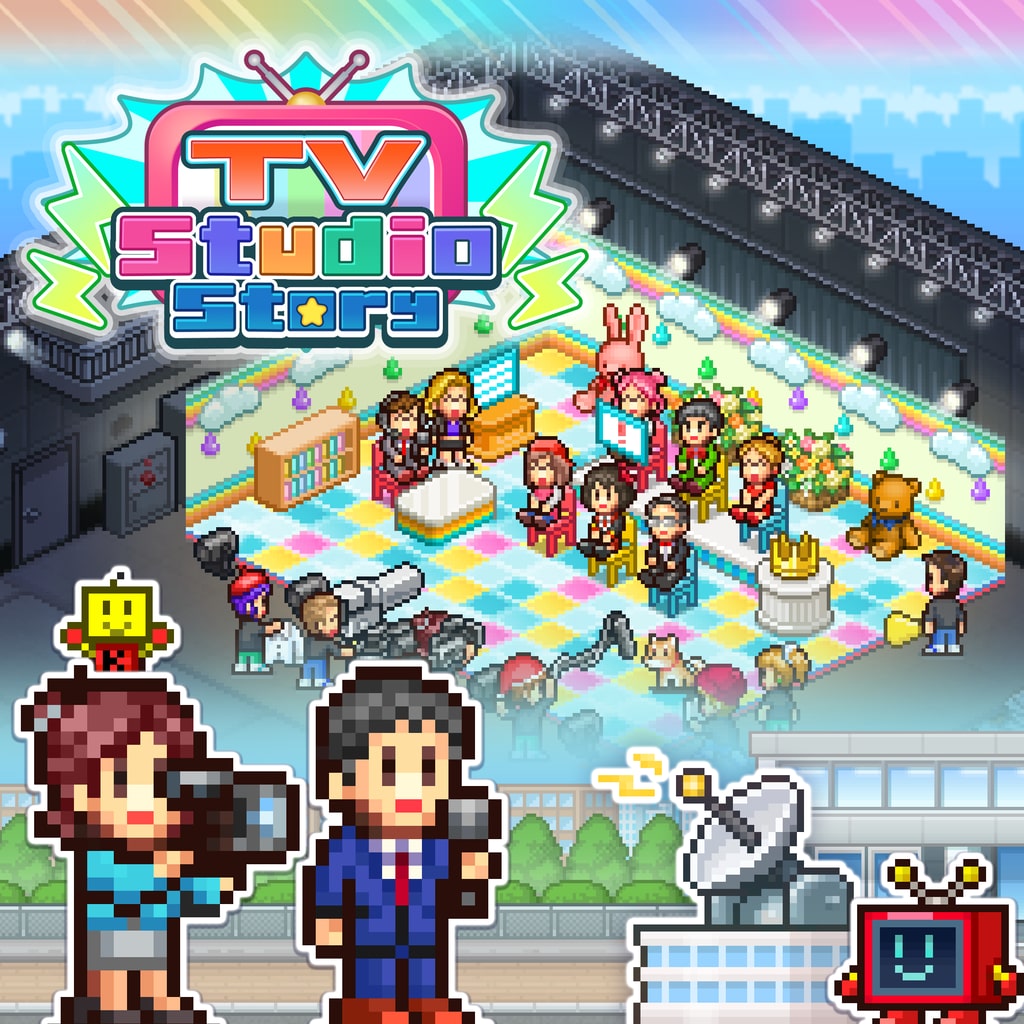
The physical expansion of your studio also provides a constant sense of progress. As profits rise, new rooms become available, allowing you to build larger sound stages, staff break rooms and agency offices that improve overall efficiency. Watching the once modest workplace gradually transform into a bustling entertainment complex filled with busy employees gives each financial success tangible meaning.
Kairosoft’s charming pixel art beautifully sells this progression. Tiny staff members rush between departments, carrying equipment, chatting with colleagues and preparing for the next production. Even in quieter moments, there is always something happening on screen, giving the studio an infectious sense of life.
Exploration Keeps Creativity Flowing
One of TV Studio Story’s smartest additions is its location-scouting system. Rather than confining inspiration to the studio, staff members can travel beyond the studio in search of fresh ideas. These expeditions unlock entirely new themes, props and production possibilities, ensuring creativity never stagnates for too long.
Each successful scouting trip expands your catalogue of options, making later productions feel increasingly ambitious. New decorations breathe fresh life into existing sets, while additional genres encourage players to revisit concepts they may have abandoned. There is something undeniably satisfying about sending a team into the field and eagerly awaiting the unusual inspiration they return with.
This mechanic also reinforces the sense that your television network exists within a wider world rather than operating within an isolated menu system. Programmes evolve because your employees continue to learn and explore, not simply because arbitrary upgrades become available. It is a subtle touch, but one that adds considerable personality to the overall experience.
Familiar Problems Behind the Camera
As enjoyable as TV Studio Story is, it stumbles in a few familiar areas. Kairosoft has never been known for producing the most intuitive interfaces, and this release occasionally struggles beneath layers of menus and management screens. Performing relatively simple tasks, particularly rearranging studio decorations, can be more awkward than they need to be.
Controller navigation also lacks the smooth precision of the game’s core management systems. Selecting individual props or making small adjustments to studio layouts can feel unnecessarily fiddly, briefly interrupting the otherwise relaxing rhythm of building your television empire.
Progression can also become slightly confusing at certain stages of the campaign. While the tutorial explains the basics well, some later mechanics, particularly broadcast scheduling and unlock conditions, are introduced with minimal guidance. Experienced Kairosoft players will probably adapt without much trouble, but newcomers may spend a little time working out exactly what the game expects them to do next.
Fortunately, these frustrations remain relatively minor because the central gameplay loop is so compelling. Even after wrestling with a clumsy menu, it rarely takes long before another production idea pulls you straight back into planning your next ratings winner.
One More Episode Becomes One More Hour
Like the very best Kairosoft titles, TV Studio Story has an almost dangerous ability to consume your free time without you noticing. Every successful broadcast generates enough income to fund another expansion. Every new room unlocks another possibility. Every fresh theme sparks another programme idea that simply has to be tested.
Hours disappear remarkably quickly because the game constantly rewards curiosity. There is always another combination to experiment with, another celebrity to recruit, or another studio upgrade waiting just beyond your current budget. It captures the addictive satisfaction of incremental progress while maintaining a wonderfully cosy atmosphere throughout.
The cheerful soundtrack and vibrant pixel art further reinforce the relaxing mood. Even when a programme fails or ratings disappoint, the experience rarely feels punishing. Instead, failure simply becomes another lesson that informs your next creative gamble.
Final Verdict
TV Studio Story is another excellent addition to Kairosoft’s ever-expanding catalogue of management simulators. It builds on the familiar foundations of classics like Game Dev Story and adapts them to the unpredictable world of television production, creating a gameplay loop that is both wonderfully accessible and surprisingly strategic. Experimenting with programme ideas, discovering talented presenters, and gradually transforming a modest local broadcaster into a national powerhouse prove consistently rewarding from beginning to end.
Although the occasionally awkward interface and vague progression systems interrupt the flow now and then, they are minor blemishes on an otherwise thoroughly enjoyable experience. The charm of the pixel art, the satisfying depth of programme creation and the irresistible urge to produce just one more hit easily outweigh those frustrations. For long-time Kairosoft fans, this is another winner. For newcomers, it serves as an excellent introduction to one of gaming’s most quietly addictive developers.