Before online multiplayer shooters dominated gaming, there was a simpler thrill: standing in front of an arcade cabinet, plastic light gun in hand, blasting pop-up targets as fast as human reflexes allowed. Games like Time Crisis, Virtua Cop, and House of the Dead turned precision shooting into pure adrenaline.
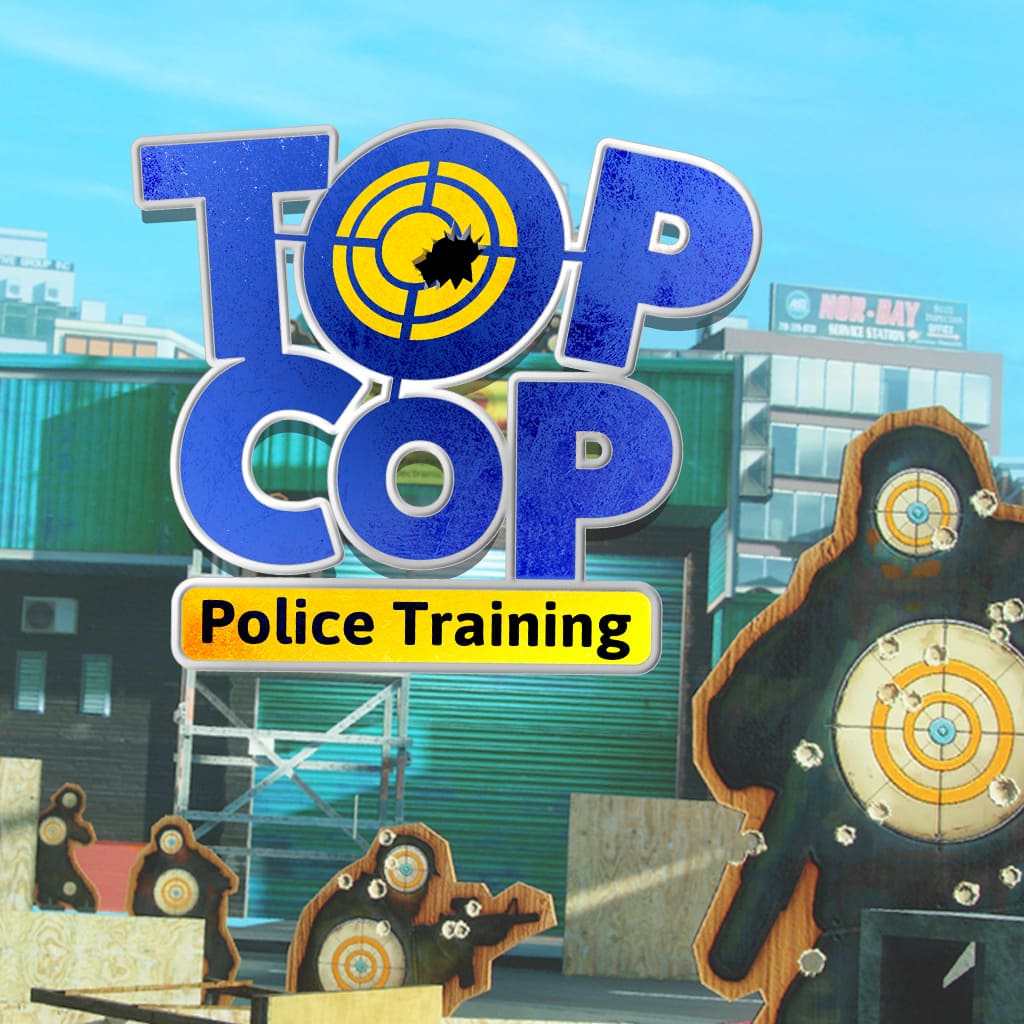
Top Cop – Police Training, released today on Nintendo Switch and PlayStation platforms, openly embraces that legacy. Developed by Maxx Tech as a spiritual successor to classic light-gun shooters, it abandons realism in favour of reflex-based action, score-chasing, and chaotic training scenarios designed to test accuracy above all else.
It’s not a police simulator in the modern sense — understanding that distinction is essential. This isn’t about patrol duty or investigation. It’s about speed, precision, and arcade-style fun distilled into bite-sized challenges.
And when approached with the right expectations, Top Cop proves surprisingly addictive.
The Academy as an Arcade Playground
The premise is straightforward: you are a recruit undergoing increasingly absurd police training exercises. Each level presents an on-rails shooting gallery where targets appear rapidly across the screen.
Your job is simple:
- Shoot hostile targets quickly
- Avoid civilians
- Hit bonus objects
- Chain combos for higher scores
Movement is automatic, mimicking classic arcade design. You don’t explore environments; instead, the game guides you through sequences, so you can focus entirely on aiming and reaction time.
This structure makes the experience immediately accessible. Within seconds, players understand the rules — and within minutes, they’re chasing better scores.
The training theme cleverly justifies the game’s varied environments, allowing locations to shift wildly without narrative constraints.
Light-Gun Gameplay Without the Gun
Despite lacking physical light-gun peripherals, Top Cop recreates the feel remarkably well through controller aiming.
Using analog sticks or motion controls (particularly effective on Switch), aiming feels responsive and precise. Targets snap into view quickly, encouraging fast tracking and instinctive reactions.
Enemy pop-ups come from every direction:
- Windows burst open suddenly
- Targets slide across the screen
- Civilians appear at the worst possible moment
- Bonus items reward risky shots
The pacing escalates quickly, transforming early accuracy tests into chaotic reflex gauntlets.
It captures the arcade rhythm perfectly — easy to learn, difficult to master.
Level Variety and Structured Progression
The game features:
- 9 unique locations
- 60 levels
- 3 minigames
- 180+ objectives
Locations range from urban training grounds to exaggerated themed environments, each introducing new target patterns and hazards.
Objectives add replay value beyond simple completion. Players may be tasked with:
- Achieving specific accuracy percentages
- Completing levels under time limits
- Maintaining combo streaks
- Avoiding civilian penalties entirely
These challenges transform levels into score-attack puzzles rather than one-and-done experiences.
Success depends not just on shooting fast, but shooting smart.
Hectic Humour and Arcade Energy
Unlike gritty modern shooters, Top Cop adopts a playful tone.
Targets often appear in humorous ways, and minigames lean into exaggerated scenarios that feel closer to carnival attractions than to police training. The visual design uses bright colours and exaggerated animations to keep the energy high.
This lighter presentation helps distinguish it from realistic law enforcement games. It’s less about immersion and more about entertainment — a conscious throwback to arcade design philosophy.
The humour may not always land, but the energetic pacing keeps the momentum strong.
Couch Multiplayer: Where the Game Shines
Local two-player co-op is arguably the game’s strongest feature.
Playing side-by-side transforms the experience instantly. Friendly competition emerges naturally as players compare accuracy, combos, and reaction times.
Arcade shooters have always thrived socially, and Top Cop recognises this. Levels become louder, faster, and far more engaging when shared with another player.
In an era increasingly dominated by online multiplayer, local co-op feels refreshingly old-school.
Score Attack and Replayability
The inclusion of leaderboards and objective tracking gives Top Cop longevity beyond its modest campaign length.
Players chasing perfection will replay stages repeatedly to improve:
- Accuracy ratings
- Reaction times
- Combo chains
- Overall scores
The game’s design encourages mastery through repetition, much like classic arcade titles built around high-score competition.
Sessions naturally become “just one more run” experiences — a hallmark of successful arcade design.
Presentation and Performance
Visually, Top Cop – Police Training adopts a stylised arcade aesthetic rather than realism. Environments are colourful and readable, prioritising clarity so players can quickly identify targets.
Performance remains smooth across platforms, which is crucial for a reflex-driven shooter. Frame drops would ruin timing-based gameplay, and thankfully the game maintains consistent responsiveness.
Audio design emphasizes arcade energy:
- Punchy sound effects reinforce successful hits
- Fast-paced music maintains urgency
- Feedback cues help track performance rhythmically
While production values are modest, everything serves gameplay clarity effectively.
Where Training Hits Its Limits
Despite its strengths, the game’s simplicity eventually reveals limitations.
Gameplay variety, while initially exciting, doesn’t evolve much beyond faster target patterns and new environments. Players seeking deeper mechanics or narrative progression may find repetition setting in after extended sessions.
Additionally, aiming with analog sticks can feel less precise than with true light-gun hardware, particularly for players nostalgic for arcade cabinets.
The humour and presentation also lean towards novelty rather than depth, which may divide audiences depending on expectations.
A Game Built for Short Bursts
Top Cop – Police Training works best in short sessions.
Play for 15–20 minutes, chase a few objectives, and beat a friend’s score — the experience feels perfectly paced. Longer marathons expose repetition more clearly.
This design isn’t a flaw so much as a reflection of arcade heritage. Like classic cabinets, the game thrives on replayable bursts rather than extended campaigns.
Pros & Cons
Pros
- Faithful recreation of light-gun arcade gameplay
- Fast, responsive shooting mechanics
- Strong replay value through objectives and scoring
- Excellent local co-op experience
- Easy to pick up and play
- Perfect for short gaming sessions
Cons
- Limited gameplay evolution over time
- Repetition becomes noticeable in long sessions
- Lacks depth beyond score chasing
- Analog aiming can’t fully replace real light guns
Final Verdict
Top Cop – Police Training knows exactly what it wants to be — and wisely avoids trying to be anything else. By focusing on reflex-driven shooting and arcade-style fun, it delivers a focused experience that captures the spirit of classic light-gun games remarkably well.
It won’t replace deep shooters or modern simulations, but it fills a nostalgic niche with confidence. Fast-paced gameplay, strong replayability, and local multiplayer charm make it a solid addition to the growing wave of arcade-inspired indie releases.
For players craving the thrill of old-school shooting galleries without leaving the couch, Top Cop hits its target more often than not.