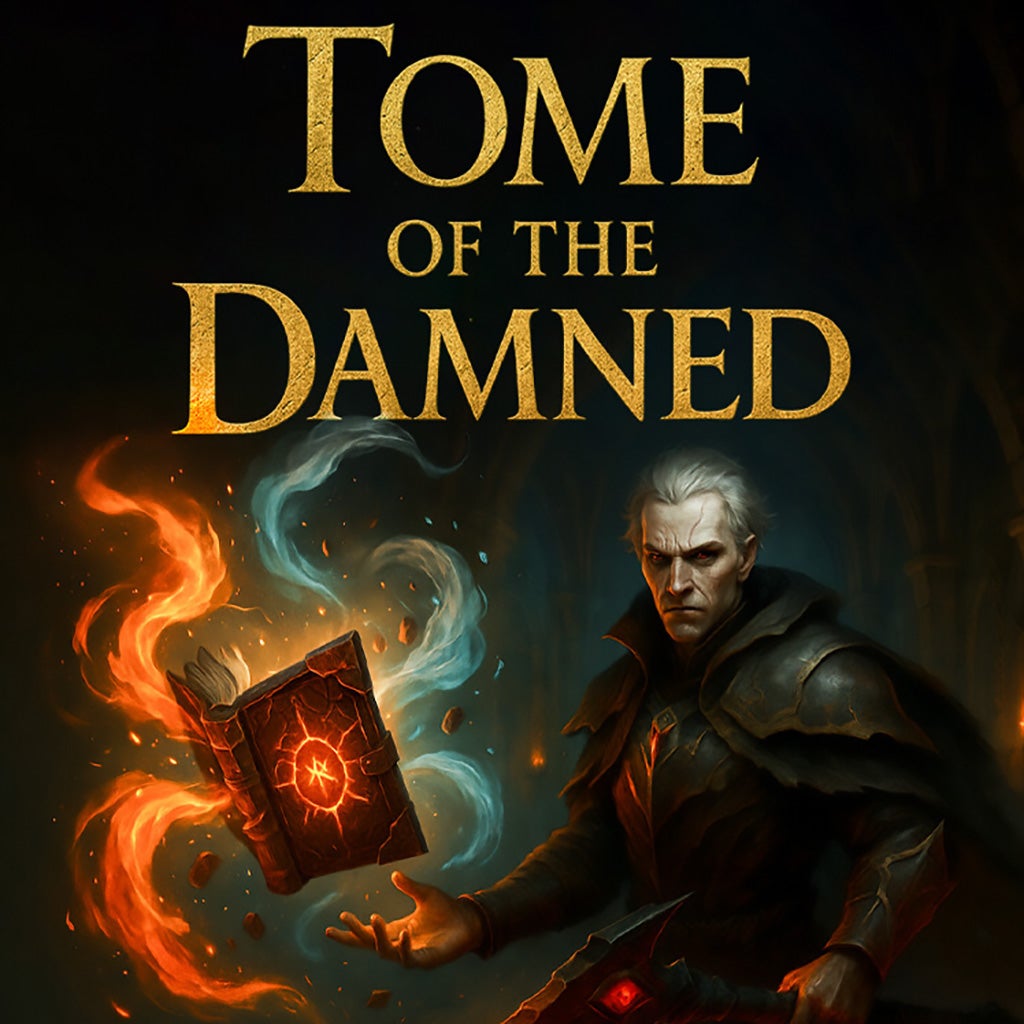
Few genres embrace failure quite like the roguelike. Every defeat becomes a lesson, every restart another chance to experiment with a new build or a different strategy. Tome of the Damned embodies this philosophy from the very first moment. Rather than treating death as the end, it weaves it directly into the story, casting you as a once-brilliant mage whose obsession with forbidden magic has left him trapped in an endless cycle of possessing the dead. It is an intriguing setup that immediately gives purpose to the familiar cycle of dying and trying again.
The result is a dark fantasy adventure that blends hack-and-slash combat with magical experimentation. While it doesn’t reinvent the roguelike formula, it builds enough personality around its cursed protagonist and oppressive castle setting to stand out from the crowd. The question is whether that atmosphere can carry the experience beyond its well-worn foundations.
Gameplay
The heart of Tome of the Damned lies in its fast-paced, top-down combat. Armed with a choice of enchanted weapons and powerful grimoires, every encounter becomes a frantic dance between aggressive melee and carefully timed spells. Enemies rarely give you room to breathe, encouraging constant movement and forcing you to think as much about positioning as about raw damage output.
Combat feels responsive throughout. Swinging a heavy weapon into a cluster of guards carries satisfying weight, while unleashing elemental magic across crowded corridors creates moments of controlled chaos. Success comes from learning enemy patterns, recognising when to dodge, and understanding how your chosen abilities complement one another. It is approachable enough for newcomers yet leaves room for experienced players to optimise increasingly powerful builds.
One of the game’s stronger mechanics is its collection of ancient altars hidden throughout each run. These temporary sanctuaries allow you to strengthen your attributes, enhance weapons, or unlock new magical abilities before pushing deeper into the castle. Deciding whether to improve raw damage, increase survivability, or invest in spellcasting creates meaningful choices that shape every expedition.
The reincarnation mechanic also deserves praise. Rather than treating each death as a complete failure, the game frames every fallen body as another vessel ready to continue the journey. It is a clever narrative device that softens the frustration of repeated defeats while reinforcing the protagonist’s cursed existence. Mechanically, it functions much like other roguelites, but thematically it feels far more cohesive.
Five weapon types and four magical grimoires provide welcome variety across multiple runs. Some combinations favour relentless close-quarters aggression, while others encourage a more cautious style built around ranged spell attacks and crowd control. Discovering pairings that suit your own playstyle becomes one of the game’s greatest pleasures, giving each run its own identity.
Presentation
Tome of the Damned embraces a grim fantasy aesthetic that suits its premise perfectly. Dark stone corridors, flickering torchlight and blood-stained halls create an atmosphere of decay that rarely lets up. Although the environments occasionally lack visual variety, they consistently reinforce the oppressive mood of a castle consumed by corruption.
Character designs are equally effective. The undead protagonist looks appropriately tragic rather than monstrous, while heavily armoured guards, sinister mages and grotesque bosses provide memorable opposition throughout the campaign. Enemy silhouettes remain easy to distinguish during frantic battles, an important detail for a game that often fills the screen with magical effects.
Spell animations offer satisfying bursts of colour against otherwise muted surroundings. Elemental attacks crackle with energy without overwhelming the action, making combat easy to follow even during larger encounters. The visual clarity helps maintain the game’s fast pace and avoids the clutter that sometimes affects similar top-down action games.
The soundtrack quietly supports the experience rather than dominating it. Sombre orchestral themes and eerie ambient tracks reinforce the castle’s lonely atmosphere, while combat music subtly increases the tension without becoming repetitive. Sound effects also carry enough impact to make every successful strike and magical explosion feel rewarding.
Progression That Encourages Experimentation
Like any strong roguelike, Tome of the Damned constantly tempts you to play one more run. Every failed attempt unlocks new possibilities through persistent progression systems that gradually strengthen future characters. Rather than trivialising later challenges, these upgrades simply provide additional tools that encourage experimentation.
The balance between permanent progression and in-run decision-making feels well judged. Long-term unlocks provide motivation to continue playing, while altar upgrades ensure no two expeditions unfold exactly the same way. Some runs become spell-focused power fantasies, while others reward careful melee combat and defensive positioning.
Boss encounters serve as effective milestones throughout the journey. Each presents unique attack patterns that demand adaptation rather than simple stat increases. Defeating one after several failed attempts delivers exactly the kind of satisfaction the genre thrives on, reinforcing the sense that player skill remains as important as character progression.
Where It Falls Short
While Tome of the Damned executes its core ideas competently, it occasionally struggles to surprise. Veterans of the roguelike genre will recognise many familiar systems beneath its undead premise. The progression loop remains enjoyable, but it rarely introduces mechanics that fundamentally distinguish it from its contemporaries.
Environmental repetition also becomes apparent during longer sessions. The castle setting establishes a wonderfully bleak atmosphere, yet many areas blend together after repeated runs. Greater visual diversity between regions would have helped reinforce the feeling of pushing ever closer towards freedom.
Narrative development is similarly restrained. The tragic story of the fallen mage provides an engaging foundation, but the plot rarely evolves beyond brief moments between gameplay. Players hoping for rich character interactions or significant storytelling may find themselves wishing the game explored its fascinating premise in greater depth.
Final Verdict
Tome of the Damned succeeds by recognising the appeal of the roguelike genre without losing its own identity. The cursed reincarnation mechanic gives familiar gameplay systems a compelling narrative framework, while responsive combat and flexible build options make every run feel worthwhile. It never overwhelms players with unnecessary complexity, instead focusing on a satisfying cycle of combat, experimentation and steady progression.
Although it doesn’t match the innovation or scale of the genre’s biggest names, it offers enough quality to earn its place among enjoyable indie roguelikes. Strong combat, atmospheric presentation and meaningful build variety keep the action engaging, even when certain environments and mechanics begin to feel familiar after extended play.
For players who enjoy carving through dark fantasy worlds, experimenting with different weapon combinations and gradually mastering increasingly difficult encounters, Tome of the Damned delivers an entertaining adventure with plenty of replay value. It may not rewrite the spellbook for roguelikes, but it casts its own dark magic effectively enough to keep you returning for another run.