The point-and-click adventure genre has experienced something of a renaissance over the past decade. Yet while many modern entries chase nostalgia with quirky humour and deliberately obtuse puzzles, few capture the razor-sharp tension of a genuinely compelling thriller. The Drifter, developed by Australian studio Powerhoof, takes a very different route. It embraces the foundations of classic adventure gaming while ruthlessly cutting away the baggage that often makes the genre feel dated.
What emerges is a fast-paced narrative experience that feels less like a traditional point-and-click adventure and more like a binge-worthy crime thriller you happen to control. Packed with conspiracy, murder, mystery, and supernatural intrigue, The Drifter delivers a rollercoaster ride that rarely pauses long enough for you to catch your breath. It is a game that understands momentum, and that understanding elevates every aspect of the experience.
A Man Already Marked for Death
The story follows Mick Carter, a drifter who has spent years moving from place to place, never settling down or truly confronting the ghosts of his past. Returning to his hometown for a funeral, Mick expects an uncomfortable reunion with old memories. Instead, he stumbles straight into a nightmare.
After witnessing a brutal murder, Mick quickly finds himself hunted by mysterious operatives willing to kill anyone standing in their way. Unfortunately for him, they succeed. Within a remarkably short time, Mick is captured, murdered, and dumped like yesterday’s rubbish. Then he wakes up. Not in a hospital bed. Not rescued by a stranger. He wakes up seconds before his own death, retaining every memory of what happened.
That opening premise immediately grabs your attention and refuses to let go. The Drifter wastes no time establishing its central mystery, and from that moment onward the story charges forward with remarkable confidence. Every answer seems to raise two new questions, pulling Mick deeper into a conspiracy involving strange technology, corporate secrets, missing people, and forces that may not belong entirely to this world.
What makes the narrative so effective is its restraint. Rather than drowning players in exposition, the game trusts them to piece things together naturally. The result feels far more engaging than simply being told what is happening. You are constantly trying to stay one step ahead of the plot, even as the plot seems determined to stay several steps ahead of you.
Adventure Gaming Without the Frustration
Perhaps The Drifter’s greatest achievement is how successfully it modernises classic point-and-click design without losing its identity. Veterans of the genre will remember spending hours wandering between locations, desperately trying every inventory item on every object in sight. Those moments certainly left a mark, though not always a pleasant one. Powerhoof clearly understands that distinction.
Puzzles in The Drifter are grounded, logical, and tightly integrated with the unfolding story. Mick is not solving bizarre moon-logic riddles. He is investigating crime scenes, gathering evidence, escaping dangerous situations, and improvising solutions under pressure. The puzzles feel like natural extensions of the narrative rather than artificial roadblocks designed solely to slow progress.
This streamlined approach keeps the pace flowing beautifully. Rarely does the game leave you feeling lost or directionless. Instead, each challenge pushes you naturally towards the next revelation. There is enough interaction to keep you involved, but never so much that the momentum stalls. That balance is surprisingly difficult to achieve, yet The Drifter manages it with remarkable consistency from beginning to end.
Pixel Art With Cinematic Ambition
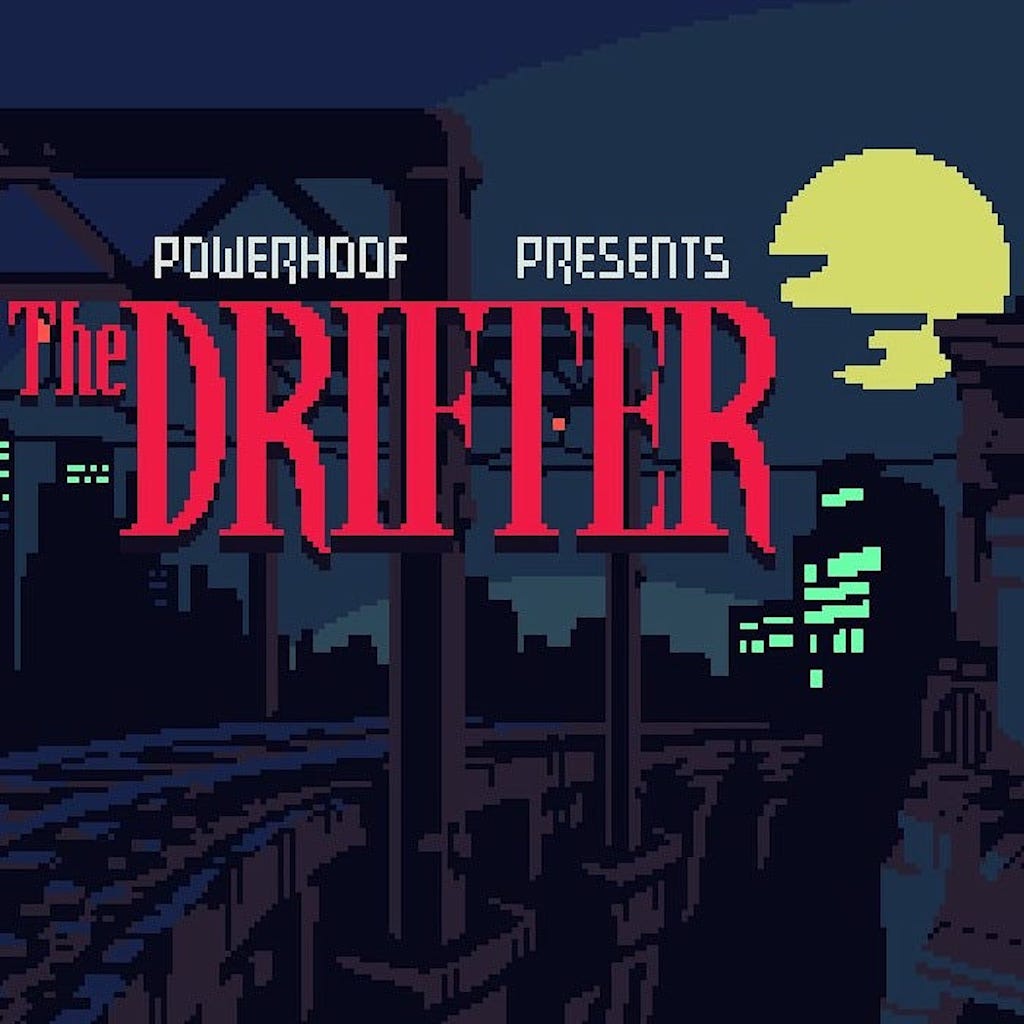
Visually, The Drifter is stunning. Pixel art has become increasingly common in the indie space, but Powerhoof shows how powerful the medium can be when paired with exceptional artistic direction. Every environment feels carefully crafted, from grimy alleyways and abandoned industrial sites to rain-soaked streets lit by neon reflections.
The game’s lighting deserves particular praise. Shadows stretch across scenes with dramatic intensity, reinforcing the sense of danger and paranoia surrounding Mick’s journey. It evokes memories of classic thriller films while maintaining its own distinctive identity.
Animation quality is equally impressive. Characters move with a fluidity that gives them genuine presence, while action sequences carry surprising impact despite the deliberately retro presentation. The world feels alive, detailed, and rich with personality.
There are moments when the visuals communicate more than dialogue ever could. A glance, a pause, or a subtle environmental detail often tells its own story. Those touches demonstrate an impressive level of confidence in the game’s presentation.
An Outstanding Audio Experience
The Drifter would not be nearly as effective without its exceptional sound design. From the opening moments, the soundtrack establishes a dark, synth-heavy mood that perfectly complements the game’s noir influences. The music frequently recalls classic thriller and horror cinema, creating a constant undercurrent of tension even in quieter scenes.
What truly elevates the presentation, however, is the voice acting. Mick Carter’s performance anchors the entire experience. His weary, gravelly delivery perfectly captures a man who has spent years carrying emotional scars he would rather ignore. As events spiral out of control, the performance evolves naturally, allowing players to connect with Mick on a surprisingly personal level.
The supporting cast is equally strong, helping transform the game’s world from a collection of interesting locations into a believable network of flawed, desperate people. Every conversation feels authentic, adding weight to the unfolding mystery.
It is increasingly common for indie games to feature professional voice acting, but The Drifter stands out because every performance feels purposeful. Nothing sounds phoned-in. Every line contributes to the atmosphere.
A Thriller That Refuses to Slow Down
One of the most refreshing aspects of The Drifter is its commitment to pacing. Many narrative adventures struggle to maintain momentum. They build intrigue early, only to bog down in filler sections or overly complex puzzles. The Drifter avoids that trap entirely.
The story remains focused throughout its relatively concise runtime. New locations, revelations, and twists arrive at a steady pace, ensuring there is always something pulling you forward. The game understands that suspense thrives on momentum, and it leverages that insight brilliantly.
This approach may disappoint players seeking sprawling adventures with dozens of hours of exploration. The Drifter is not interested in becoming an endless epic. It wants to tell a specific story, and it does so with admirable discipline. The result is an experience that feels lean, confident, and remarkably difficult to put down once it gets its hooks into you.
Final Verdict
The Drifter is a masterclass in focused adventure game design. By stripping away outdated genre frustrations and concentrating on narrative momentum, Powerhoof has crafted a thriller that feels both refreshingly modern and deeply respectful of its roots.
Its blend of gripping storytelling, exceptional voice acting, atmospheric pixel art, and elegantly streamlined puzzle design keeps you consistently invested. While hardcore puzzle enthusiasts may wish for greater complexity, the game’s commitment to pacing ultimately serves the story far better than convoluted challenges ever could.
Few adventure games balance cinematic storytelling and player interaction so effectively. Fewer still maintain that balance from beginning to end. The Drifter succeeds because it knows exactly what it wants to be and executes that vision with remarkable confidence. For fans of mystery, science fiction, psychological thrillers, and narrative-driven adventures, this is a journey well worth taking.