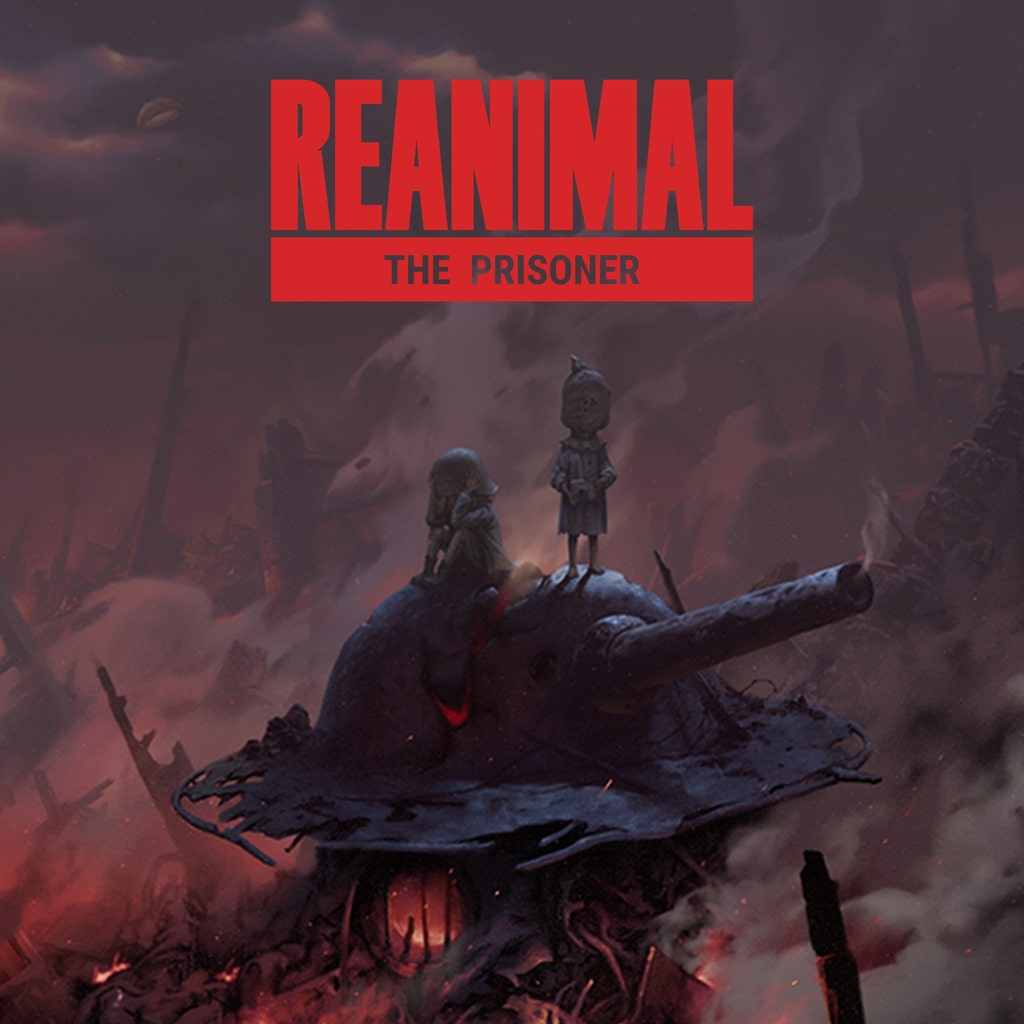
Tarsier Studios has always understood that horror does not need to shout to get under your skin. Sometimes it is the silence between footsteps, the shape moving beyond the edge of the screen, or the horrible feeling that something is watching you when you cannot quite see it. REANIMAL: The Prisoner understands this beautifully, taking the oppressive atmosphere of REANIMAL and moving it into a new corner of its nightmare world. This first chapter of the three-part Expanded World DLC campaign introduces two new characters, The Soldier and The Prisoner, and puts them through a story that feels every bit as bleak, strange and uncomfortable as you would expect from Tarsier.
What makes this expansion particularly interesting is that it does not simply feel like additional content bolted onto the original adventure. It offers another perspective on the world, shifting attention away from the main protagonists and towards two people attempting to survive an altogether different nightmare. War has already torn apart the world around them, but the horrors waiting beneath the surface prove that bullets and battlefields are not necessarily the worst things a person can face. The result is a short but potent horror experience that thrives on atmosphere, uncertainty and Tarsier’s peculiar ability to make even the most ordinary places feel deeply wrong.
A Different Kind of Nightmare
The Prisoner begins with a simple premise. The Soldier and The Prisoner find themselves moving through a world already ravaged by conflict, surrounded by ruins, trenches and remnants of places that once felt familiar. Their journey quickly becomes something far more terrifying than simply escaping a war zone.
There is a deliberate sense of disorientation throughout the experience. You are never entirely certain where the journey is taking you, and the game does not always explain what you are seeing. Tarsier trusts the player to interpret its imagery and piece together meaning from the environment, the characters and the events around them.
That approach works particularly well here because the DLC is not interested in giving you easy answers. Instead, it leaves enough unanswered questions to make you think about what you have witnessed long after you have put the controller down.
Two New Survivors
The introduction of The Soldier and The Prisoner gives the DLC a distinct identity. They are not simply replacements for the characters from the main game. Their circumstances, relationship and journey create a different emotional dynamic, particularly because neither feels fully equipped to face what awaits.
Their relationship becomes increasingly important as the story progresses. Survival is not about being a lone hero who can solve every problem, but about relying on another person when fear and uncertainty begin to take over.
That dynamic is especially effective in co-op. With another player beside you, every dark corridor becomes a shared problem, and every sudden noise becomes something you both react to. There is a natural tension in knowing that your survival depends partly on someone else making the right decision at the right moment.
Tarsier’s Language of Horror
Few developers create atmosphere quite like Tarsier Studios. The studio’s visual language is built around distorted proportions, uncomfortable spaces, and characters that look almost human but not quite enough to make you comfortable.
The Prisoner continues that tradition, with environments that constantly seem to shift between recognisable and grotesque. A ruined street can initially appear harmless before the lighting, architecture, or distant movement reveals something far more sinister.
The horror often lies in what the game refuses to show you. Rather than throwing monsters into every room, Tarsier allows anticipation to do much of the work. You hear something before you see it, and that moment of uncertainty can be considerably more frightening than a creature jumping directly into view.
War Is Only the Beginning
The war-ravaged setting gives The Prisoner an appropriately grim foundation. Trenches, ruined buildings and devastated streets tell their own story without lengthy exposition.
There is an uncomfortable contrast between the familiar imagery of warfare and the supernatural horror that gradually encroaches on it. The battlefield is already a place of suffering, yet the world of REANIMAL suggests something far worse is lurking beyond the human conflict.
That contrast gives the DLC a strong thematic identity. The characters are not simply escaping an enemy army. They are moving through a world where the rules of reality appear to be breaking down.
Meet the Flamethrower Soldier
Every good horror expansion needs a threat that lingers in the player’s mind, and The Prisoner has one in the Flamethrower Soldier. The design immediately signals danger, but it is how the game uses the creature that makes it particularly effective.
This is not an enemy you simply run towards and defeat. The Flamethrower Soldier is a persistent threat that forces you to consider visibility, positioning and escape routes.
Its presence alters the atmosphere of an area. Suddenly, a location that felt safe becomes somewhere you need to cross quickly and carefully. The sound of approaching danger can be enough to make you tense up before you even know exactly where the threat is.
Stealth and Survival
The gameplay continues to favour environmental puzzles, exploration and avoidance over conventional combat. You are often encouraged to observe your surroundings rather than charge forward.
Stealth is particularly important during encounters with the Flamethrower Soldier. You need to understand the environment, watch sightlines and decide when it is safer to move and when it is wiser to remain hidden.
This makes the player feel vulnerable in exactly the way a horror game should. You are not powerful. You are not carrying an arsenal capable of solving every problem. You are simply trying to survive.
The Art of the Chase
Chase sequences are among the most effective moments in The Prisoner. Tarsier knows how to build tension gradually, giving you time to become familiar with an environment before suddenly turning it into a place you need to escape.
There is a physicality to these sequences that makes them particularly uncomfortable. You are not simply watching a cinematic unfold. You are actively navigating obstacles, searching for the correct route and trying not to panic.
That last point is important. Horror often works best when it interferes with your ability to think clearly, and The Prisoner repeatedly puts you in situations where fear itself becomes an obstacle.
Environmental Puzzles
The puzzles are relatively restrained, which suits the overall experience. You are not presented with enormous logic problems that halt the horror. Instead, the environment itself becomes something you need to understand.
You may need to find a route through a damaged building, manipulate objects, or work with another character to progress. The solutions generally feel like natural extensions of the world rather than arbitrary puzzles placed in your path.
That is especially important in co-op. Working together creates moments when communication becomes part of the puzzle. One player may need to distract something while the other searches for a way forward, turning what might otherwise be a simple interaction into a shared experience.
Playing Together
The Friend’s Pass is an excellent fit for REANIMAL. Horror is often more memorable when shared with another person, particularly when neither player knows exactly what is about to happen.
There is a strange contradiction at the heart of co-op horror. Having another person beside you should make things less frightening, yet in The Prisoner it can sometimes make the experience even more stressful. You become responsible for each other, and watching your partner disappear around a corner can be surprisingly unsettling.
Communication also becomes part of the fun. You will warn each other about sounds, point out possible routes, and occasionally panic at exactly the same time. Those moments are difficult to manufacture, and they are part of what makes co-op such a natural fit for the series.
A World Worth Exploring
One of the DLC’s greatest strengths is that it expands the world without feeling like it is explaining everything. You are given glimpses of places and events that suggest a much larger story unfolding beyond the immediate journey.
The unseen corners of the world are often more interesting than straightforward exposition because they invite speculation. What happened here? Who lived in these places? Why has everything become so distorted?
The game rarely gives you a complete answer, and that is deliberate. REANIMAL works best when the player is left with questions.
The Minimalist Story
The narrative approach will not suit everyone. Players who want extensive dialogue, detailed character histories and clearly explained lore may find the minimalist storytelling frustrating.
Personally, though, the restraint suits the world. Horror loses some of its power when everything is explained, and Tarsier understands that mystery can be far more effective.
The Soldier and The Prisoner do not need pages of exposition to make their situation matter. Their body language, surroundings and reactions communicate enough to make you care about what happens to them.
Where It Could Do More
The biggest limitation is also one of its defining characteristics. The Prisoner is deliberately restrained, and some players may wish the expansion had explored its new characters and locations in greater depth.
There are also moments when the gameplay can feel familiar to anyone who has already experienced REANIMAL. Environmental puzzles, stealth and chase sequences form the core of the experience, so anyone hoping for a dramatic mechanical departure may be disappointed.
Yet this consistency is not necessarily a flaw. The DLC feels like a genuine extension of the game’s identity rather than an attempt to reinvent it for novelty’s sake.
Final Verdict
REANIMAL: The Prisoner is a wonderfully grim first chapter in Tarsier Studios’ Expanded World DLC campaign. It takes the unsettling foundations of the main game and explores them from a different perspective, introducing two new characters whose desperate journey through a war-ravaged world quickly becomes something far more horrifying.
The Flamethrower Soldier is an effective new threat, particularly because the game uses stealth and pursuit rather than straightforward combat to make encounters frightening. The environments are beautifully bleak, the minimalist storytelling encourages interpretation, and the co-op structure remains one of the strongest reasons to experience the game with another player.
It is not a dramatic reinvention. Those expecting completely new gameplay systems may find the expansion familiar, and its restrained narrative will not satisfy everyone looking for explicit answers. But that restraint is part of what makes it work.
Tarsier understands that horror is often about uncertainty. It is about the door you do not want to open, the sound you cannot identify, and the creature you desperately hope is not standing behind you. The Prisoner embraces those ideas without constantly reaching for cheap shocks. More importantly, it suggests this is only the beginning.
There are clearly more stories to tell in this strange and broken world, and if the remaining chapters sustain the same atmosphere and unease, the Expanded World campaign could become a compelling companion to the main adventure.
For horror fans who value atmosphere over action, environmental storytelling over exposition, and genuine tension over endless jump scares, REANIMAL: The Prisoner is a dark little journey worth taking. Just do not expect the war to be the worst thing you encounter.