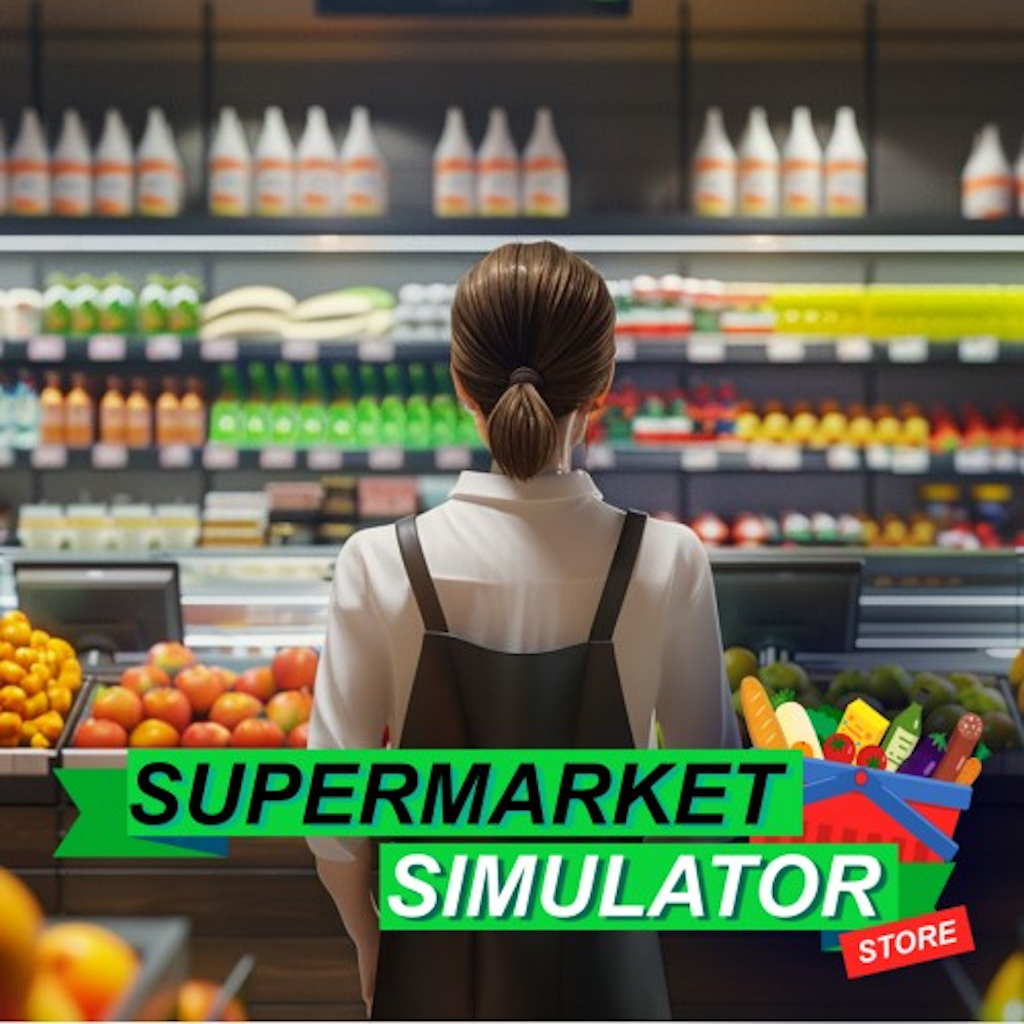
Supermarket Simulator Store enters the management sim genre with a deceptively simple premise: build and operate your own supermarket, balance customer needs with inventory and staffing demands, and optimise your store for profit and long-term growth. In a landscape populated by city builders, restaurant sims, and business management games, a supermarket setting feels familiar yet under-explored—offering both a grounded subject matter and rich systems possibilities. The question at the core of Supermarket Simulator Store is whether it translates everyday commercial complexity into engaging gameplay rather than mundane busywork.
The short answer is: it mostly succeeds. The game thrives when it leans into emergent systems, customer behaviour, and strategic optimisation. It stumbles—but never fails—when its pacing and variety struggle to sustain engagement over extended play. For players who enjoy thoughtful micro-management, pattern recognition, and incremental progression, this title offers a solid simulation experience. If you crave narrative depth or dramatic events, you may find its rhythms too measured.
Concept and World — Everyday Commerce as Strategy
Supermarket Simulator Store opens with a premise that feels immediately relatable: you inherit or purchase a modest supermarket and must turn it into a thriving business. This setting allows the game to focus on mechanics that hinge on everyday decisions—stocking shelves, managing checkout lines, tracking sales trends, arranging aisles, and optimising product placement for maximum revenue.
Right from the tutorial, the game treats its systems seriously without overwhelming the player with data. Early guidance introduces core concepts—inventory, pricing, customer types, and staff—you need without inundating you with menus and stats. The simulation feels intentional, trusting players to learn by doing rather than drowning them in manuals. This approach pays dividends; within a few hours, even players unfamiliar with management sims will grasp the rhythm of the supermarket ecosystem.
Gameplay Loop — Balancing Act of Priorities
The beating heart of Supermarket Simulator Store lies in its gameplay loop: purchase inventory, manage staff, serve customers, analyse feedback, and adjust operations. The systems involved are interconnected and occasionally delightfully complex.
Inventory and Supply
Stocking shelves isn’t just about ordering products. Each item has variable demand, storage costs, shelf life, and supplier reliability. Popular items sell fast, but overstocking reduces capital liquidity and increases waste. When an unexpected shortage hits, you scramble to reorder before customer dissatisfaction rises. The trade-offs here are meaningful: you are not simply clicking “restock” but weighing forecasts and budget constraints. This tension becomes more engaging when seasonal trends or promotions alter demand curves unexpectedly.
Customer Behaviour
Customers in Supermarket Simulator Store are not passive participants. They have distinct needs, patience levels, and preferences based on demographics, loyalty, and store presentation. A busy aisle with crowded shelves may frustrate some, while others abandon carts when queue times exceed tolerance. These behaviours feed back into satisfaction metrics that affect revenue, bonus payouts, and reputation. Watching customer patterns evolve is one of the game’s subtler pleasures—especially when a small tweak (like rearranging produce near the entrance) yields measurable gains.
Staff and Checkout
Hiring, training, and scheduling staff is a rich sub-system. Cashiers with higher skill ratings serve customers faster, but demand higher wages. Floor attendants reduce stock spoilage but require breaks. Balance matters: understaff a busy shift and queues lengthen; overstaff and profits slip. Navigating these decisions becomes more strategic as store complexity increases.
Progression — Growth With Challenges
Progression in Supermarket Simulator Store is steady and rewarding. As profits climb, upgrades unlock: automated inventory systems, advanced shelving units, loyalty programs, new product lines, and even aesthetic options like décor that improve customer mood. These upgrades don’t just add numbers—they unlock strategic pathways.
However, progression pacing can feel uneven. Early promotions and upgrades arrive rapidly, giving players frequent moments of improvement and decision-making satisfaction. In later stages, new unlocks come more slowly, and the challenge shifts primarily to optimisation. For fans of meticulous fine-tuning, this transition works. Others may find later progression stages less compelling, as significant milestones become rarer.
Presentation — Clarity Over Bombast
Visually, Supermarket Simulator Store adopts a clean, readable aesthetic. Shelves, products, staff, and customers are all distinct, which is crucial in a title that asks you to interpret patterns at a glance. The UI prioritises clarity; information density is high, but not overwhelming. Reports, dashboards, and tooltips help break down complex systems without obscuring meaning.
While functional, the visual presentation lacks personality. Stores in different regions look broadly similar, and décor choices, while flavourful, don’t contribute substantially to store identity. A more expressive aesthetic or richer animation could have amplified the emotional connection to your supermarket’s evolution.
Audio design mirrors this pattern. Background music is mellow and unobtrusive—appropriate for a management game—but rarely elevates the experience. Ambient store sounds add immersion, but sound cues for major events (like inventory shortages or customer dissatisfaction) could be more pronounced to reinforce stakes.
Challenge and Accessibility
One of the game’s strengths is its accessibility. Tutorials are clear, incremental, and integrated into gameplay, allowing newcomers to gradually absorb deeper systems. The learning curve builds naturally, with complexity introduced only when players have demonstrated competence at foundational mechanics.
Difficulty toggles accommodate different playstyles. A relaxed mode streamlines economic pressure without removing strategic systems entirely, while harder modes increase financial volatility, tighter customer patience thresholds, and more volatile supply chains. This flexibility expands potential appeal—from casual players seeking a soothing management experience to simulation veterans craving a stern challenge.
Despite its accessibility, some systems—particularly supply forecasting and pricing algorithms—can feel opaque at first. More contextual guidance or trend visualisation tools would ease the mental load for players who prefer theory-driven optimisation over trial-and-error strategies.
Replayability and Longevity
Replay value in Supermarket Simulator Store comes from emergent stories spawned by your decisions rather than scripted narrative arcs. Each playthrough feels distinct because product demand, customer types, and financial conditions vary. You may start one session navigating drought-induced supply issues and another pushing seasonal promotions to capitalise on holiday demand.
However, the experience doesn’t radically change across playthroughs. There are no branching campaign goals or dramatic shifts (like franchise mode, management competitions, or large-scale corporate strategy layers). For players looking for variety beyond incremental optimisation, the game can start to feel familiar over extended hours.
That said, the joy of transforming a modest store into a bustling marketplace—and the satisfaction of uncovering efficient systems and seeing customer satisfaction climb—provides substantial motivation for repeated engagement.
Verdict
Supermarket Simulator Store is a thoughtful, methodical management sim that turns everyday commercial operations into engaging strategic systems. It thrives when rewarding incremental progress, strategic planning, and responsiveness to customer behaviour. Its clarity, accessibility, and emergent systems make it highly satisfying for players who enjoy optimisation and simulation depth.
While its presentation remains functional rather than charismatic and its progression can plateau in later stages, the game’s core loop delivers consistent satisfaction. The supermarket setting proves to be fertile ground for nuanced strategic play, and its systems reward patience, planning, and adaptation.
For fans of business simulators who enjoy thoughtful, systemic gameplay more than narrative drama or spectacle, Supermarket Simulator Store is a solid and rewarding journey.