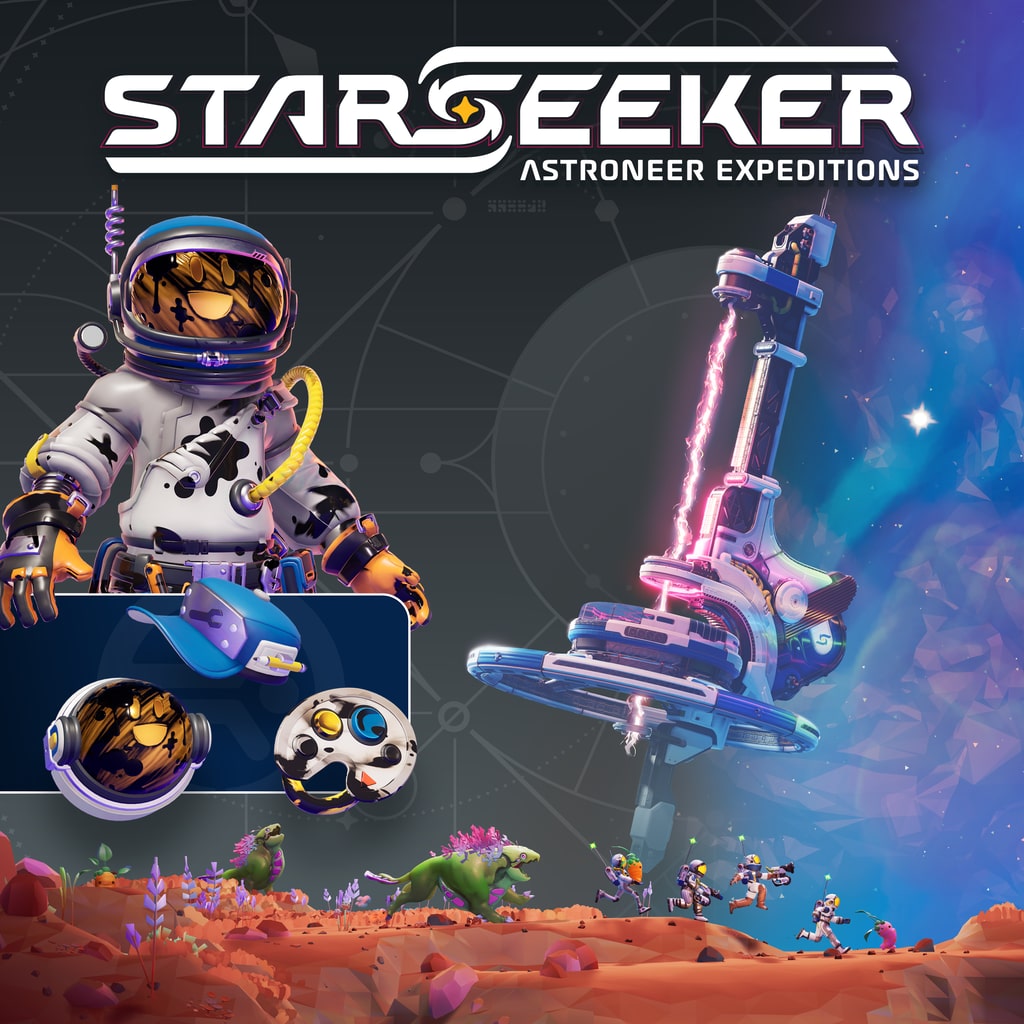
There are few games that capture the wonder of exploration quite like Astroneer. Since its original release, System Era Softworks’ colourful sandbox has carved out a loyal audience, offering players a relaxing journey through alien worlds filled with discovery, creativity, and curiosity. It was never about rushing. It was about taking your time, building sprawling bases, and getting pleasantly distracted by whatever strange rock formation or hidden resource happened to be over the next hill.
STARSEEKER: Astroneer Expeditions takes that familiar universe and steers it in a different direction. Rather than another open-ended sandbox, this spin-off embraces structured cooperative missions, timed objectives, and squad-based progression. The result is a game that feels both familiar and surprisingly different. It retains Astroneer’s visual charm and optimistic spirit while introducing a layer of urgency that changes how players approach every journey.
The transition is not flawless, and some long-time fans may struggle with the shift in philosophy. Yet despite a few growing pains, STARSEEKER succeeds in creating an exciting new chapter for the franchise.
A New Frontier
The adventure begins aboard the ESS Starseeker, a bustling orbital station that serves as the heart of the experience. Unlike the lonely outposts of the original game, the station feels alive. NPC crew members hand out assignments, share story details, and help create the sense that you are part of something larger than yourself.
The station gradually becomes a home away from home. Between expeditions, players return to craft equipment, upgrade tools, unlock new technologies, and prepare for increasingly dangerous missions. It is a satisfying loop that constantly gives you something to work towards.
Narratively, STARSEEKER takes a more direct approach than its predecessor. The story unfolds through interactions with the crew and discoveries on planetary surfaces. While it never becomes overly dramatic, there is enough mystery surrounding the planets, the failed expeditions that came before, and the strange forces lurking beneath the surface to keep curiosity high.
The writing embraces the same hopeful tone that made Astroneer appealing. Even when facing danger, a sense of optimism permeates the entire experience.
Discovery Under Pressure
The biggest change arrives once boots hit the ground. Expeditions are built around timed missions that task players with gathering resources, investigating anomalies, securing objectives, and surviving hostile environments. Every deployment carries an oxygen deadline over the squad, creating constant pressure that fundamentally alters the pace of exploration. For some players, this will be exhilarating.
The timer transforms routine resource gathering into tense decision-making. Do you push deeper into an unexplored region in search of rare materials, or play it safe and head back to extraction? Do you risk engaging dangerous wildlife for better rewards, or avoid unnecessary conflict entirely? These choices lend expeditions a thrilling sense of unpredictability.
Planet Tephra serves as an excellent showcase for the game’s design philosophy. Dense jungles, sprawling wetlands, towering vegetation, and the remains of a long-forgotten expedition create an environment that constantly rewards exploration. Every new region feels handcrafted, packed with secrets and environmental storytelling. Even after several hours, there remains a genuine sense of anticipation whenever a new landing site becomes available.
Stronger Together
Although solo play is supported, STARSEEKER shines brightest when experienced with friends. Squad cooperation sits at the centre of almost every major system. Team members often specialise in different roles, carrying tools and equipment tailored to specific objectives. One player might focus on terrain manipulation and resource extraction, while another handles defensive duties against hostile creatures. This collaborative structure creates memorable moments that simply would not exist in a traditional sandbox.
Scrambling to complete an objective while a teammate races back towards extraction with precious resources creates genuine tension. Likewise, narrowly escaping a dangerous situation together delivers the sort of stories that players will happily recount long after the mission ends.
The risk of losing valuable resources if squad members fail to extract adds another layer of excitement. Success feels earned because mistakes have meaningful consequences. Importantly, cooperation rarely feels restrictive. Missions can often be approached in multiple ways, encouraging creativity rather than enforcing a single solution.
Familiar Tools, Fresh Challenges
One area where STARSEEKER remains firmly connected to its roots is progression. Customisable tools remain a cornerstone of gameplay. Unlocking new blueprints and experimenting with loadouts provide a satisfying sense of advancement throughout the campaign. The familiar terrain-manipulation mechanics return as well, now integrated into mission objectives rather than serving as the focus of the entire experience.
The crafting systems strike a good balance between accessibility and depth. New equipment arrives at a steady pace, ensuring players always have fresh toys to experiment with without becoming overwhelmed by complexity.
Hazardous wildlife and environmental dangers also add welcome variety. Hostile plants, aggressive creatures, and strange alien phenomena force players to adapt constantly. Some encounters feel genuinely unpredictable, requiring quick thinking and teamwork to overcome. While combat is not the primary focus, it serves its purpose effectively and adds extra tension to expeditions.
A Beautiful Universe Reimagined
Visually, STARSEEKER is stunning. The move to Unreal Engine 5 lets the game retain Astroneer’s iconic toy-like aesthetic while dramatically enhancing lighting, environmental detail, and atmosphere. The colourful worlds remain instantly recognisable, yet they now feel more vibrant and alive than ever.
Watching sunlight filter through dense jungle canopies or distant storms sweep across an alien horizon creates moments of genuine beauty. The art direction remains one of the franchise’s strongest aspects, and STARSEEKER continues that tradition with confidence.
Performance is equally impressive. During testing, frame rates stayed stable even during chaotic multiplayer encounters filled with particle effects, environmental hazards, and large-scale objectives. Given the complexity of some missions, that consistency deserves praise.
The audio design complements the visuals perfectly. Ambient sounds help sell the sense of exploring unknown worlds, while the soundtrack quietly supports the adventure without ever overwhelming it.
Not Every Change Lands
Despite its many strengths, STARSEEKER is not without issues. The most divisive aspect will undoubtedly be the expedition timer. For players who fell in love with Astroneer’s relaxed pace, the constant pressure can feel at odds with the series’ identity. There are moments when you discover an intriguing location only to realise there is no time to investigate properly before extraction becomes necessary. That sense of urgency undoubtedly creates excitement, but it can also occasionally limit the sense of wonder that made the original game special.
Some early progression systems can also feel a little grind-heavy. Unlocking certain upgrades requires repeating similar objectives more often than ideal, particularly for players trying to maximise their equipment options.
As an Early Access title, there are also areas that clearly have room to grow. Additional planets, mission variety, and expanded narrative content will be important if the game hopes to maintain long-term engagement. Fortunately, the foundation is exceptionally strong.
Final Verdict
STARSEEKER: Astroneer Expeditions is not Astroneer 2, and it never tries to be. Instead, it takes the colourful universe fans already love and reshapes it into a cooperative expedition experience centred on teamwork, risk, and discovery. The shift from peaceful sandbox to structured adventure may surprise some players, but it yields a game that feels fresh without abandoning the charm that made the franchise memorable.
The expedition structure introduces genuine tension, the cooperative gameplay creates unforgettable moments, and the beautifully realised alien worlds remain a joy to explore. While the timer-based design occasionally clashes with the series’ traditionally relaxed nature, the overall package delivers an exciting new perspective on a beloved universe.
For players willing to embrace its faster pace, STARSEEKER: Astroneer Expeditions offers a rewarding journey into the unknown and is one of the more intriguing cooperative experiences currently available in Early Access.