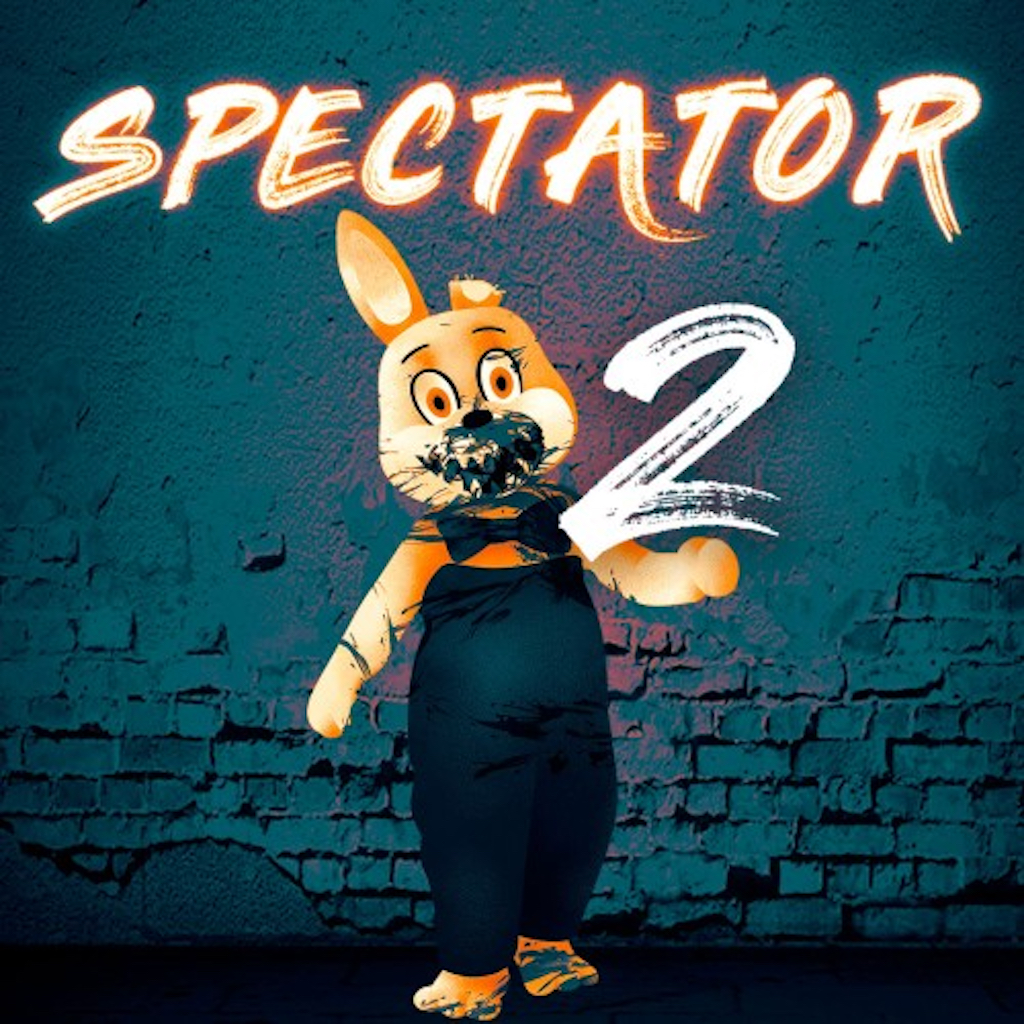
Spectator 2 builds upon the unsettling foundation of its predecessor, refining its core concept while expanding its scope in smart, meaningful ways. Once again, players are placed in the role of a silent observer, tasked with monitoring a series of security camera feeds and identifying subtle — and sometimes not-so-subtle — anomalies that signal something has gone terribly wrong. It’s a simple idea, but one that Spectator 2 executes with a confidence and clarity that elevates it beyond novelty.
Rather than reinventing the formula, the sequel focuses on depth and tension, leaning heavily into psychological horror and environmental storytelling. The result is an experience that rewards attentiveness, pattern recognition, and nerves of steel, delivering some of the most effective slow-burn horror the genre has to offer.
The Power of Observation
At its core, Spectator 2 is a game about noticing the wrongness in familiar spaces. Players monitor multiple camera feeds in real time, scanning rooms for changes: a door that wasn’t open before, an object that has shifted position, a figure appearing where it shouldn’t be. When an anomaly is spotted, it must be reported correctly and promptly to prevent escalation.
This gameplay loop is deceptively simple, but Spectator 2 understands how to extract tension from restraint. The game rarely relies on sudden jumps or loud shocks. Instead, it builds unease through uncertainty. Was that shadow always there? Did that painting just turn its head? Doubt becomes the real antagonist, forcing players to second-guess their own memory.
The sequel introduces more complex anomaly types and a wider variety of environments, ensuring that the act of observation never grows stale. Some changes are immediately obvious, while others are so subtle that they test the limits of human perception. This careful balance keeps players constantly engaged.
Level Design and Environmental Storytelling
One of Spectator 2’s most notable improvements is its expanded range of locations. Each environment tells its own story through layout, decoration, and gradual decay. From domestic interiors to more unsettling, unconventional spaces, the settings feel intentionally designed to support the game’s mechanics.
Environmental storytelling plays a significant role. Small details hint at prior events, unseen inhabitants, and lingering presences. While the game avoids explicit narrative exposition, these spaces feel lived-in — or abandoned for reasons best left unexplored. This ambiguity enhances immersion, allowing players to project their own interpretations onto what they see.
Level layouts are carefully structured to avoid overwhelming the player while still providing enough visual information to monitor. Camera placement is deliberate, ensuring that every angle feels important. As difficulty increases, the number of feeds and the pace of anomalies ramp up, creating a steady escalation of tension.
Difficulty That Demands Focus
Spectator 2 is not a game you can play casually. Success requires sustained attention and a strong memory for detail. Early stages serve as effective tutorials, easing players into the mechanics and teaching them how to categorise and report anomalies correctly.
As the game progresses, the difficulty curve becomes more demanding. Anomalies occur more frequently, multiple changes may happen simultaneously, and the margin for error narrows considerably. Incorrect reports or missed events can quickly snowball into failure, reinforcing the high-stakes nature of the experience.
Importantly, the difficulty feels fair. The game rarely tricks the player with impossible-to-detect changes. Instead, failure usually stems from distraction, fatigue, or overconfidence. This design philosophy respects the player’s intelligence and reinforces the idea that vigilance is the ultimate skill.
Atmosphere Over Excess
Visually, Spectator 2 adopts a grounded, realistic aesthetic that enhances its horror. Environments are detailed without being cluttered, ensuring that anomalies stand out when they occur. Lighting plays a crucial role, with shadows and low visibility heightening tension without obscuring vital information.
Animations are subtle but effective. Objects don’t simply disappear or explode into motion; they drift, twitch, or reposition themselves in ways that feel unnervingly plausible. When more overt horror elements appear, they do so sparingly, making those moments far more impactful.
The restrained visual approach allows imagination to fill in the gaps — a hallmark of effective psychological horror. Spectator 2 understands that what you think you saw is often scarier than what the game explicitly shows you.
Sound Design: Quietly Unsettling
Sound design is one of Spectator 2’s strongest assets. Ambient audio hums in the background, punctuated by distant noises, creaks, and indistinct sounds that suggest movement just beyond the frame. These auditory cues often serve as subtle hints, drawing attention to areas where anomalies may be occurring.
Music is minimal, used primarily to signal escalation or impending failure. When it does appear, it heightens anxiety rather than overwhelming the senses. Silence is used just as effectively, creating stretches of quiet that make every small sound feel significant.
The careful integration of sound and gameplay reinforces immersion, keeping players locked into the experience and heightening the emotional impact of each discovery.
Replayability and Longevity
Despite its focused design, Spectator 2 offers solid replay value. Randomised anomaly selection ensures that no two playthroughs are exactly alike, even within the same environment. This unpredictability keeps returning sessions tense and engaging.
Completionists will find satisfaction in mastering each location, learning the layouts intimately, and improving reaction times. While there are no extensive progression systems or unlockables, the inherent challenge of perfect observation provides its own incentive to replay.
That said, the experience remains tightly scoped. Players looking for a long-form horror adventure may find Spectator 2 relatively brief, but its concentrated design ensures that it never overstays its welcome.
Final Thoughts
Spectator 2 is a confident evolution of a compelling concept, delivering psychological horror through restraint, precision, and player engagement. Its focus on observation, atmosphere, and subtlety results in an experience that is consistently tense and deeply immersive.
While it won’t appeal to those seeking action-heavy horror or explicit storytelling, it excels within its niche. By trusting players to notice, remember, and interpret the world around them, Spectator 2 creates fear through participation rather than spectacle.
For fans of slow-burn horror and games that reward attention to detail, Spectator 2 stands as a polished and effective entry in the genre.