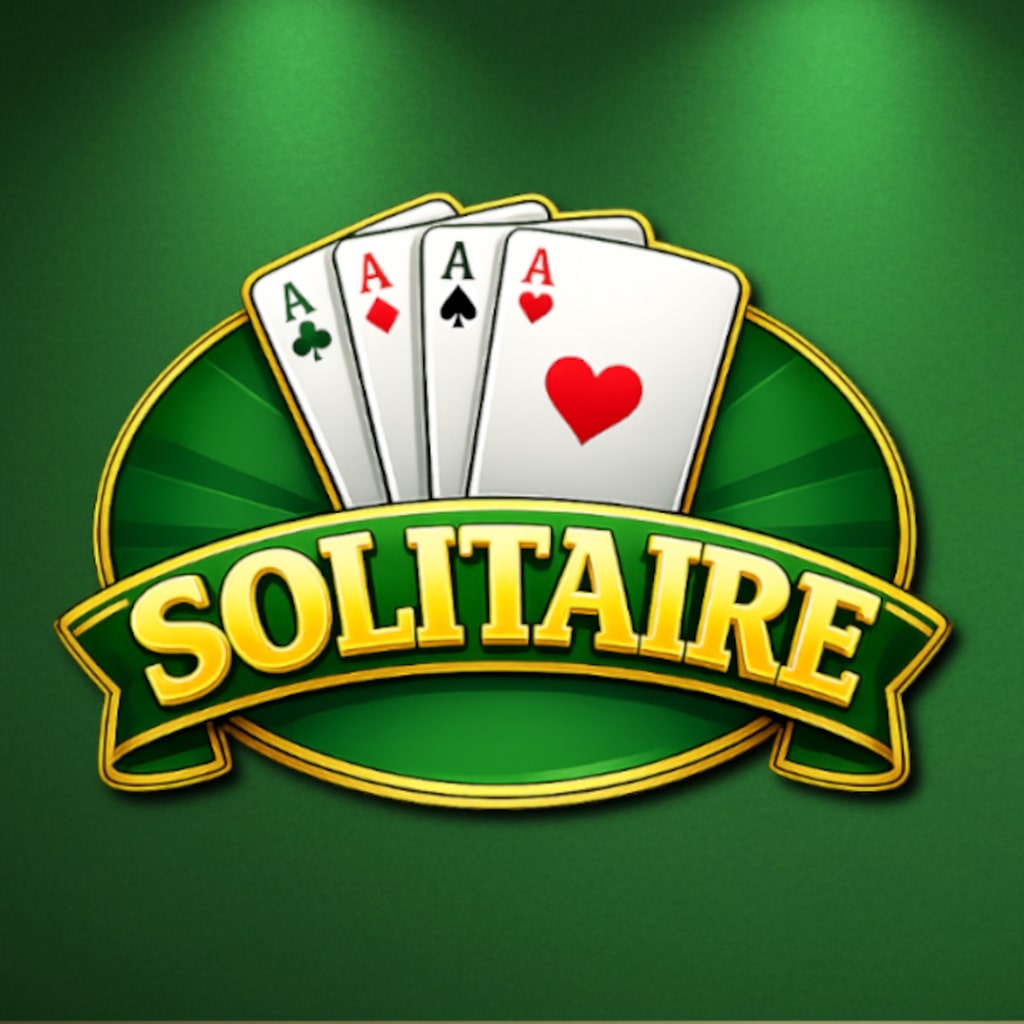
There’s a certain inevitability to Solitaire. Not just as a game, but as a presence—quietly embedded in the fabric of digital gaming itself. For decades, it has served as the go-to time-filler, the background companion, the game you play without consciously thinking about playing. So when Solitaire, published by Sabec, arrives on the Nintendo Switch, the question isn’t whether it functions.
It’s whether it needs to exist at all—and if it does, whether it provides enough to justify your time.
The answer, perhaps unsurprisingly, is both straightforward and complex.
The Game You Already Know
Let’s begin with the obvious: this is Klondike Solitaire.
No twists, no reinterpretations, no added mechanics. You’re sorting a standard 52-card deck into four foundation piles, building from Ace to King, while managing the familiar tableau of seven columns.
If you’ve ever used a computer, you already know how this works.
And to Sabec’s credit, the implementation is faithful. Rules are consistent, controls are intuitive, and there are no unnecessary complications. It’s Solitaire exactly as you remember it.
For some players, that’s the entire appeal.
A Clean, Minimalist Approach
Where this version stands out—albeit subtly—is in its presentation.
Sabec has chosen a clean, distraction-free interface. There are no flashy animations, no intrusive effects, and no attempt to gamify the experience with rewards, currencies, or progression systems.
It’s refreshingly straightforward.
Menus are minimal, the card designs are clear, and the overall aesthetic prioritises readability over flair. It’s the kind of design that fades into the background, allowing the gameplay to take centre stage.
In an era where even the simplest games are often overloaded with features, this restraint feels almost deliberate.
Touch vs. Traditional Controls
One of the main strengths of this Switch version is its flexibility.
In handheld mode, the touchscreen permits direct interaction—dragging and dropping cards just as you would on a mobile device. It’s responsive, accurate, and arguably the best way to play.
Docked mode, on the other hand, relies on a cursor controlled by the Joy-Con or controller. This works sufficiently, although it lacks the immediacy of touch input.
The switch between the two modes is smooth, and having both options ensures accessibility for different playstyles.
It’s a small detail, but an important one—especially for a game built on simplicity.
The Comfort of Repetition
Solitaire has always been about rhythm.
There’s a meditative quality to flipping cards, uncovering sequences, and gradually working towards a solution. It’s not about excitement or spectacle — it’s about flow.
This version captures that feeling well.
Games are quick to start, easy to restart, and perfectly suited for short sessions. Whether you’re filling a few minutes or settling in for a longer spell, it adapts effortlessly.
It’s comfort gaming in its purest form.
The Absence of Innovation
Of course, that purity comes at a price.
This is a very basic package.
There are no extra modes, no alternative rule sets, no daily challenges, and no meaningful system for progression. Once you’ve played a few rounds, you’ve essentially seen everything the game has to offer.
For players familiar with modern Solitaire apps—with their layered features and constant incentives—this version might feel barebones.
Even simple additions, such as customisation options or stat tracking, could have added a sense of longevity.
As it stands, the game is content to do the minimum—and nothing more.
A Question of Value
This leads us to the most important factor: value.
Solitaire is one of the most widely available games worldwide. It can be found on phones, tablets, PCs, and even web browsers—often at no cost.
So why opt for this version?
The answer depends on what you’re seeking.
If you desire a dedicated, offline Solitaire experience on your Switch, free from ads and interruptions, this delivers precisely that. It’s dependable, accessible, and simple to start playing at any moment.
However, if you expect something more—anything that enhances the experience beyond the basics—you might find it lacking.
Sabec’s Signature Style
For those familiar with Sabec’s catalogue, this approach will seem familiar.
The publisher has built a reputation for delivering straightforward, no-frills versions of classic games and utilities. These are products designed for accessibility and simplicity rather than innovation.
Solitaire aligns well with that philosophy.
It’s not attempting to compete with feature-rich alternatives. Instead, it offers a clean, functional version of a timeless game—and leaves it at that.
Whether that suffices depends entirely on your expectations.
Who Is This For?
This game is aimed at a very specific audience.
If you appreciate simplicity, desire a distraction-free experience, and are content with the basic mechanics of Klondike Solitaire, you’ll likely find it satisfying.
It also suits players who prefer offline play or want a consistent experience whether portable or docked.
However, if you seek variety, progress, or modern features, this version probably isn’t suitable for you.
Where It Falls Short
The biggest problem with Solitaire on Switch isn’t its faults—it’s what it entirely lacks.
There’s a lack of ambition here. No effort to expand, refine, or reimagine the formula. No extra content to justify its presence in a crowded market.
It’s capable, but unremarkable.
And in a genre defined by its ubiquity, being unremarkable might be the greatest challenge of all.
Final Verdict
Solitaire by Sabec is exactly what it claims to be: a neat, faithful adaptation of the classic Klondike card game.
It performs well, controls smoothly, and provides a distraction-free experience that captures the quiet satisfaction of the original.
However, it also fails to stand out.
In a world where Solitaire is everywhere—and often free—this version finds it hard to justify itself beyond convenience and simplicity.
It’s not a bad game. It’s just a very basic one.