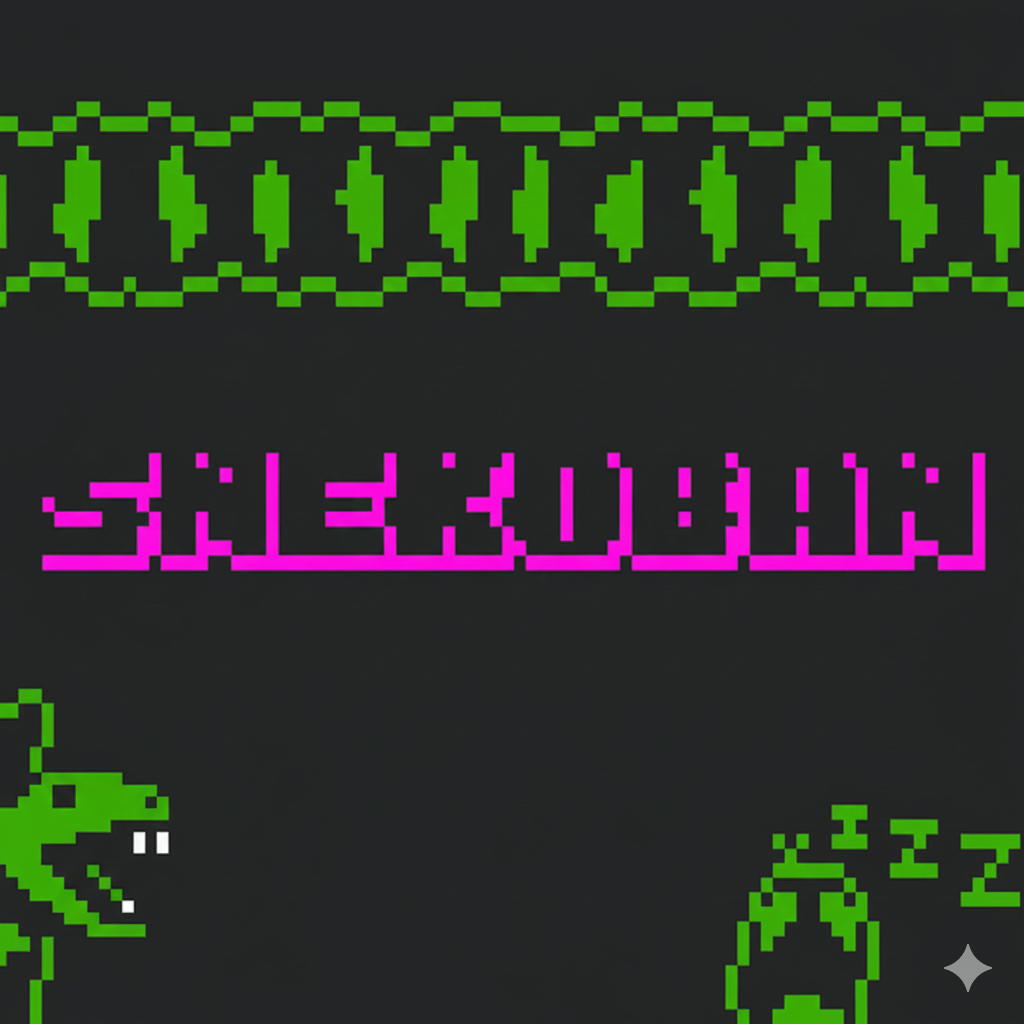
Puzzle games hold a unique spot in gaming: small rule sets, simple visuals, and elegantly escalating challenges can produce intensely satisfying mental workouts. Snekoban sits proudly within that lineage, drawing clear inspiration from the classic Sokoban box-pushing puzzles but adding its own serpentine twist. The result is a deceptively modest game that rewards pattern recognition, spatial reasoning, and incremental mastery with crisp mechanics and thoughtful level design.
After extensive engagement with Snekoban’s early puzzles, mid-game conundrums, and advanced challenges, it becomes clear that this is far more than a mere homage. The game reshapes a familiar puzzle template into something fresh, methodical, and consistently engaging. Its aesthetic simplicity belies a depth that will delight logic puzzle fans and newcomers alike.
Concept and Core Mechanics
On paper, Snekoban is easy to describe: you control a snake-like entity that must push blocks to designated goal spaces within a confined grid. But this summary omits the two intertwined mechanics that make the game compelling:
- Snek movement dynamics: Unlike traditional grid pushers, the “snake” occupies multiple tiles and elongates as the game progresses, meaning every turn affects not just the head but the entire body. Movement becomes an intricate balance of forward planning and spatial restraint.
- Block interactions: Rather than simply pushing boxes one square at a time, Snekoban’s blocks can interact differently based on position, sequence, and blockade architecture. This adds a layer of strategy that transcends simple mechanics.
These mechanics combine to create a game that rewards deep thought rather than reflexes. There is no time pressure and no random elements — every puzzle is a logic construct awaiting methodical decoding.
Visual and Audio Presentation
Visually, Snekoban embraces minimalist design with clarity. Grids are clean and easily readable, blocks contrast sharply with background tiles, and the snake — while simply rendered — is expressive enough to convey position and direction without visual confusion.
Minimalist colour coding helps players instantly differentiate goals, obstacles, and interactive elements. This clarity reinforces the game’s core identity: puzzle logic should be the focus, not visual noise.
Audio design follows a similar philosophy. There’s a light, unobtrusive soundtrack that supports concentration without distracting from mental engagement. Sound effects — sliding blocks, movement chimes, completion cues — are crisp and informative, reinforcing mechanical feedback without overstaying their welcome.
The overall aesthetic is unassuming but functional — precisely what a puzzle game should strive for.
Level Design and Progression
The sine qua non of any good puzzle game is progression. Snekoban excels here by pacing complexity with care. Early puzzles act as de facto tutorials, introducing single-element problems that let the player internalise movement constraints. These initial stages are not trivial, but they feel calculated: each one teaches a principle you will need soon.
As the game advances, new layers are added: longer snakes, more blocks, tighter spaces, and environmental constraints such as immovable walls or narrow passageways. The difficulty curve is not linear, but neither is it jarringly steep. Instead, challenges escalate in waves — consolidating prior mastery before introducing new wrinkles.
The introduction of multi-phase puzzles — where solving one section opens or reshapes the next — is a highlight. These sequences demand not just local optimisation (“how do I move this block?”) but global planning (“what will this chain of moves commit me to ten steps later?”). Solving a later puzzle often feels like cracking a beautifully engineered logic problem rather than brute-forcing through trial and error.
Gameplay Depth and Strategy
At its surface level, Snekoban may resemble other grid-based block pushers, but its movement dynamics make strategy far richer. The snake’s length — which grows as levels progress — transforms space into a constrained resource rather than a neutral grid. This subtle twist elevates puzzles from static encounters to living spatial systems.
The best puzzles in Snekoban hinge on conditional reasoning and bootstrapping solutions: you execute a set of moves not because they immediately solve the puzzle, but because they set up a later resolution. These are the puzzles that linger in the player’s mind — the ones that require a temporary concession to gain leverage deeper in the challenge.
Importantly, the game avoids punishing exploration. Moves can be reset, undone in sequence, or restarted without penalty. This design choice encourages experimentation, reduces frustration, and turns every mistake into insight rather than discouragement.
Accessibility and Approachability
Accessibility is a strong facet of Snekoban. It invites players into its world with gentle onboarding and intuitive controls that feel natural even for those unfamiliar with grid puzzle games. The absence of time constraints or penalty timers places emphasis on contemplation rather than reflexes or pressure.
The UI is simple and clear. Tile interactions, completion indicators, and movement cues are visually distinct. The lack of clutter is intentional and appreciated — clarity in puzzle games is not just aesthetic but functional.
Control schemes are intuitive across input devices. Whether using keyboard, controller, or touch interface (where supported), movement and interactions remain responsive and predictable. This fluid control enhances the sense that Snekoban is a space for pure thinking rather than mechanical dexterity.
Replayability and Longevity
With over 80+ handcrafted puzzles and additional challenge modes, Snekoban has substantial longevity for a puzzle title. Optional difficulty tiers and time-based leaderboards (for players who enjoy optimisation) extend replay appeal without compromising the game’s core integrity.
Replayability is further deepened by the satisfaction players derive from squeezing out more efficient solutions. Some puzzles can be solved in multiple ways, and discovering the most elegant one is often more rewarding than simply reaching completion. This layered depth fosters individual creativity and keeps the experience fresh even after repeated runs.
Critiques and Limitations
Although Snekoban shines as a puzzle experience, it has a few limitations worth noting:
- Niche appeal: As a logic-focused title, it will naturally appeal more to players who enjoy cerebral gameplay over narrative or action. Those seeking story or spectacle may find it minimalist.
- Visual simplicity: While intentional, the aesthetic may feel too stark for players accustomed to richer visual worlds. Enhanced visual themes or optional skins could broaden appeal.
- Late difficulty spikes: Some puzzles in later stages introduce complexity that can feel cryptic rather than clever. While not unfair, these spikes may frustrate players who prefer steady incremental innovation.
These limitations are not dealbreakers, but they do temper the game’s accessibility to broader audiences.
Final Verdict
The best puzzle games make the mind feel alive. Snekoban does exactly that — taking a simple set of mechanics and weaving them into a series of escalating challenges that reward curiosity, patience, and strategy. Its elegant design, clear presentation, and deep mechanical twists make it one of the more compelling puzzle titles in recent memory.
This is not a game that dazzles with visuals or action. Instead, it thrills where it matters most: in the quiet hum of thought, the spark of insight when a solution clicks, and the steady progression from confusion to clarity.
For lovers of logic puzzles and spatial reasoning, Snekoban is essential.