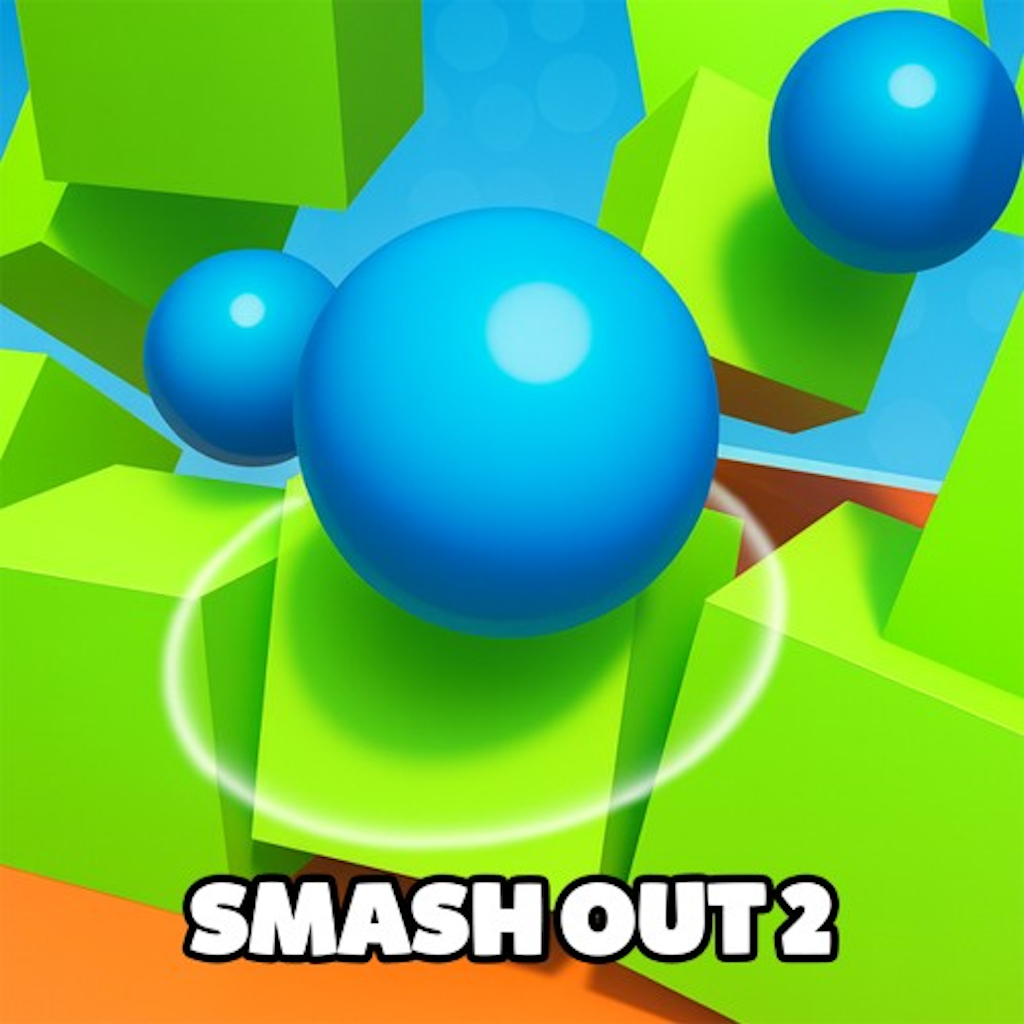
Hyper-casual games occupy a strange but increasingly important corner of the modern gaming landscape. Designed around simplicity, immediacy, and short bursts of satisfaction, they live or die by how well a single mechanic can sustain player interest. Smash Out 2, developed and published by Entity3 and released on February 7, 2026, on the Nintendo Switch eShop, understands this philosophy completely.
As a direct sequel to the original Smash Out, the game doesn’t attempt to reinvent its formula. Instead, it sharpens it — faster pacing, cleaner visuals, and tighter physics wrapped into a package that costs less than a cup of coffee. The question isn’t whether Smash Out 2 is ambitious; it’s whether its refined simplicity is enough to keep players engaged beyond its initial novelty.
Surprisingly, the answer is often yes.
The Beauty of a Simple Goal
At its core, Smash Out 2 is built around a single directive:
Knock every green block off the platform.
That’s it. No narrative framing, no elaborate progression systems, and no complicated tutorials. Within seconds of starting, you understand exactly what you’re supposed to do — launch your ball, smash blocks, clear the stage.
The brilliance lies in how much mileage Entity3 extracts from that basic concept.
Each level places you on a floating platform populated by colored structures, glass panels, and moving hazards. Only green blocks count toward victory, but everything else affects how you reach them. Angles matter. Momentum matters. Timing matters.
One well-placed shot can cascade into a chain reaction that clears half the board. A poorly timed launch can send your ball ricocheting uselessly into space.
The result is a gameplay loop that feels immediately intuitive yet gradually reveals surprising depth.
Physics That Carry the Experience
Physics-driven gameplay lives or dies on consistency, and Smash Out 2 mostly nails it. Balls bounce with predictable energy, surfaces behave logically, and collisions feel satisfying rather than random.
You quickly learn to think ahead:
- Banking shots off walls.
- Using glass panels to redirect momentum.
- Waiting for moving barriers to open safe paths.
- Triggering collapses that knock multiple blocks away at once.
Later stages introduce shifting obstacles and rotating elements that transform puzzles into timing challenges. These additions prevent the game from becoming purely mechanical repetition.
What stands out most is how tactile everything feels. Even without advanced haptics, each successful hit produces a visual and auditory payoff that makes every shot satisfying. Blocks shatter into colorful fragments, platforms shake slightly, and the screen bursts with motion.
It’s arcade design distilled to its purest form: action → feedback → reward.
Wave-Based Structure Keeps Things Moving
Rather than traditional levels, Smash Out 2 organizes gameplay into waves, each containing three quick challenges. This structure perfectly complements the hyper-casual identity.
Individual challenges rarely last more than a minute or two, creating a strong “just one more round” effect. Failures never feel punishing because retries are instant.
The pacing becomes one of the game’s greatest strengths. You can play for:
- 3 minutes while waiting for something,
- 20 minutes chasing better performance,
- or an hour unlocking cosmetics without realizing time has passed.
This bite-sized design makes Smash Out 2 ideal for handheld play — arguably where the Switch still shines brightest.
Progression Without Pressure
While gameplay remains minimalist, Smash Out 2 introduces light progression through a gem currency earned by completing waves.
Gems unlock new ball designs in the in-game shop. These are purely cosmetic, but they serve an important psychological function: they give players a reason to keep playing without introducing grind-heavy systems.
Customization options range from sleek neon spheres to playful stylized designs, adding personality without altering gameplay balance.
Importantly, nothing feels locked behind excessive repetition. Rewards arrive frequently enough to maintain momentum, reinforcing the game’s relaxed tone.
This approach reflects smart restraint — Entity3 understands that hyper-casual players want motivation, not obligation.
A Visual Upgrade Over the Original
One of the most noticeable improvements over the first Smash Out is presentation. The sequel embraces a brighter, more geometric aesthetic that feels modern and clean.
Key visual strengths include:
- Bold color contrasts that improve readability.
- Smooth particle effects during impacts.
- Minimalist environments that keep focus on gameplay.
- Clear visual hierarchy between targets and obstacles.
The aesthetic walks a fine line between arcade nostalgia and mobile-era polish. Nothing feels cluttered, and every element serves gameplay clarity first.
Performance is equally solid. Load times are nearly nonexistent, and frame rates remain stable even during chaotic chain reactions — particularly noticeable when running on Nintendo Switch 2 hardware.
Sound Design: Subtle but Effective
Audio design in Smash Out 2 follows the same minimalist philosophy as its visuals.
The soundtrack features upbeat electronic loops that fade into the background rather than demand attention. Sound effects, however, carry weight:
- Glass shatters sharply.
- Blocks pop with satisfying impact.
- Successful clears trigger celebratory audio cues.
The combination creates a gentle dopamine loop without becoming overwhelming — ideal for extended casual sessions.
Difficulty Curve and Longevity
Early waves act as a tutorial without explicitly stating so, gradually teaching mechanics through level design. New players will find onboarding effortless.
Later waves increase complexity through:
- Smaller platforms.
- Faster obstacle patterns.
- More precise angle requirements.
The challenge spike never becomes punishing, but it does demand patience and observation. Rushing shots almost always leads to failure — a clever contrast to the game’s otherwise fast pacing.
Longevity ultimately depends on player mindset. Completionists chasing perfect clears or cosmetic unlocks will find several hours of enjoyment. Others may treat it as a recurring “comfort game” rather than a one-time playthrough.
For a £0.99 title, the content feels generous.
The Hyper-Casual Identity
Smash Out 2 succeeds because it understands exactly what it wants to be.
It is not:
- A deep physics puzzler.
- A competitive arcade leaderboard experience.
- A narrative-driven indie project.
Instead, it exists as a digital fidget toy — something satisfying, responsive, and endlessly replayable in small doses.
That clarity of purpose prevents disappointment. Entity3 isn’t chasing trends or bloating the game with unnecessary systems. Every design choice reinforces accessibility and immediacy.
Where It Falls Short
Despite its strengths, Smash Out 2 does show limitations:
- Level themes lack environmental variety.
- Mechanics evolve slowly after the midpoint.
- No multiplayer or leaderboard features reduce long-term competition.
- Some players may crave deeper progression systems.
These aren’t fatal flaws, but they highlight the boundaries of the hyper-casual format.
Final Verdict
Smash Out 2 is a perfect example of focused design done right. It takes a simple concept, refines the mechanics, improves presentation, and delivers a polished experience that respects players’ time and expectations.
It won’t replace larger arcade titles or physics puzzlers, but it doesn’t need to. Instead, it thrives as a quick-hit, endlessly replayable distraction — the kind of game you launch for five minutes and accidentally play for thirty.
At its ultra-budget price, it’s easy to recommend for Switch owners looking for a satisfying, low-commitment experience.