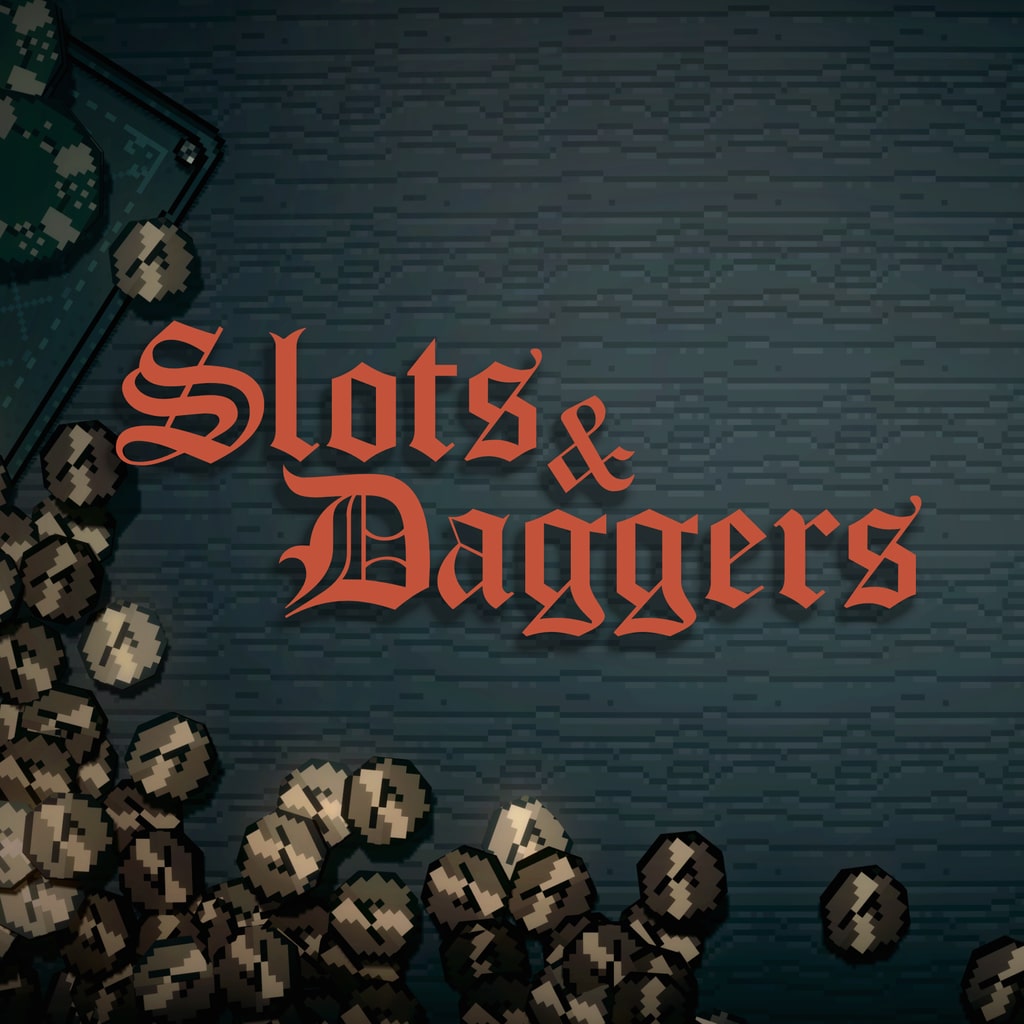
Slots & Daggers begins with a concept that sounds almost like a joke until you play it. A roguelike RPG where combat is controlled entirely through a slot machine interface should, in theory, collapse under its own randomness. Instead, it finds a surprising rhythm in which chance becomes something you learn to read, influence, and eventually fear. Every action you take, whether attacking, defending, casting a spell or healing, is determined by a spin of the reels, and that simple idea becomes the backbone of everything.
What makes it work is not just the novelty, but the way it reframes control. You are not directly choosing outcomes in the traditional sense. Instead, you are shaping probability, nudging fate through careful reel customisation and build planning. Each run becomes an exercise in understanding risk, as you constantly ask yourself whether your current setup will hold when the screen lights up and the machine starts spinning. It is chaotic, but not mindless. There is structure hidden within the randomness, and learning to see it is part of the game’s appeal.
The Core Loop and Moment to Moment Tension
The moment-to-moment gameplay in Slots & Daggers is built on anticipation. You prepare for a spin, watch the reels turn, and then hold your breath as symbols align or refuse to cooperate. That brief pause between action and outcome becomes the emotional centre of the experience. A successful spin can completely shift the momentum of a fight, turning a near defeat into a sudden victory, while a poor result can leave you scrambling to recover from what felt like a safe position seconds earlier.
This creates a rhythm unlike most roguelikes. Instead of constant execution and reaction, you are often waiting, watching, and interpreting probability. It slows time in a strange way, making each decision feel heavier because its outcome is partially out of your hands. Even when you understand the system deeply, there is always that lingering uncertainty, that small tension that refuses to fully disappear. It is exactly that tension that gives the game its identity.
Reel Building and Strategic Depth
Beneath the surface chaos lies a surprisingly intricate system of reel-building and probability manipulation. As you progress, you collect symbols, modifiers, and passive effects that you slot into your machine, effectively shaping the odds of your future. This is where Slots & Daggers reveals its strategic backbone. You are not just hoping for good luck; you are engineering conditions in which good luck becomes more likely, or at least less punishing when it does not arrive.
The satisfaction comes from synergy. When your reels align just right and a single spin triggers a cascade of attacks, buffs, and damage multipliers, the payoff feels immense. It is the kind of moment that sticks with you, not because it is guaranteed, but because it feels earned through planning and persistence. Even though randomness is always present, the sense of agency comes from how you build your machine over time. You begin to recognise patterns, probabilities, and potential combinations that tilt the odds in your favour.
However, this system is also where the game shows its sharpest edge. No matter how carefully you construct your build, there will be moments when the reels simply refuse to cooperate. A critical spin at the wrong time can undo several minutes of careful progress, and while that is part of the intended tension, it can occasionally tip into frustration. The game walks a fine line between controlled unpredictability and outright sabotage, and not every player will feel comfortable balancing on it.
World, Style and Personality
Visually and tonally, Slots & Daggers embraces a deliberately rough, eccentric aesthetic. The world is strange, almost crude in its presentation, filled with odd little creatures and environments that feel sketched rather than polished. This works in its favour, giving the game a handmade quality that aligns perfectly with its solo development roots. There is charm in its imperfection, a sense that everything you see was built with intent rather than excess polish.
The fantasy setting itself is equally unconventional. It does not aim for grandeur or epic storytelling, but instead focuses on smaller, weirder moments that give the world character. Goblins, strange machines, and absurd encounters populate the journey, reinforcing the idea that this is not a traditional heroic adventure. Instead, it feels like wandering through someone’s imagination, where logic bends slightly and the rules are always just a bit off.
The soundtrack adds another layer of personality, leaning into crunchy, retro-inspired hip-hop drum patterns that give battles a strange sense of rhythm. It should not necessarily fit a fantasy roguelike on paper, but it does, because the entire game is built on unexpected combinations that somehow click into place.
Progression and Replayability
As a roguelike, Slots & Daggers naturally leans into replayability, and it largely succeeds in making each run feel distinct. The variety of symbols, upgrades, and build paths ensures that no two machines feel identical. Some runs push you towards aggressive burst-damage setups, while others encourage defensive stability or long-term scaling strategies. The randomness of reel outcomes means even familiar builds can behave differently depending on how the spins land.
The campaign itself is relatively compact, designed to be experienced over a handful of hours rather than stretched into something endless. This suits the game’s design philosophy well. It does not overstay its welcome, and instead focuses on delivering dense, replayable systems within a contained experience. For players who enjoy optimisation and experimentation, there is enough depth to keep returning long after the initial completion.
That said, long-term engagement still depends heavily on how much tolerance you have for randomness. While build crafting is meaningful, the outcome of individual runs can still feel heavily influenced by chance, and not everyone will enjoy that level of unpredictability as a core pillar of progression.
Critiques and Limitations
The biggest criticism facing Slots & Daggers is also the one it cannot fully escape. RNG is not just part of the experience; it is its foundation. While the game does an admirable job of giving players tools to influence outcomes, it never fully removes the possibility of bad luck derailing a run. For some players, this creates excitement. For others, it introduces frustration that no amount of strategy can completely mitigate.
There are also moments when the simplicity of the presentation can feel limiting. While the game’s rough aesthetic is part of its charm, it may not appeal to those seeking more elaborate visual or narrative depth. Its focus is firmly on systems rather than storytelling, and that trade-off will not suit everyone.
Final Verdict
Slots & Daggers is a bold and unusual roguelike that makes randomness its central mechanic and somehow renders it strategic rather than chaotic. It is a game about probability, patience, and learning to live with uncertainty, set in a strange, charming world unlike most other entries in the genre. While its reliance on RNG can occasionally frustrate, its creativity and mechanical originality more than compensate for its rough edges.
It is not a game about perfect control. It is a game about adaptation, acceptance, and finding meaning in the spin of a machine that rarely behaves exactly as you want it to. When it works, it delivers moments of genuine excitement that feel unpredictable in the best possible way.