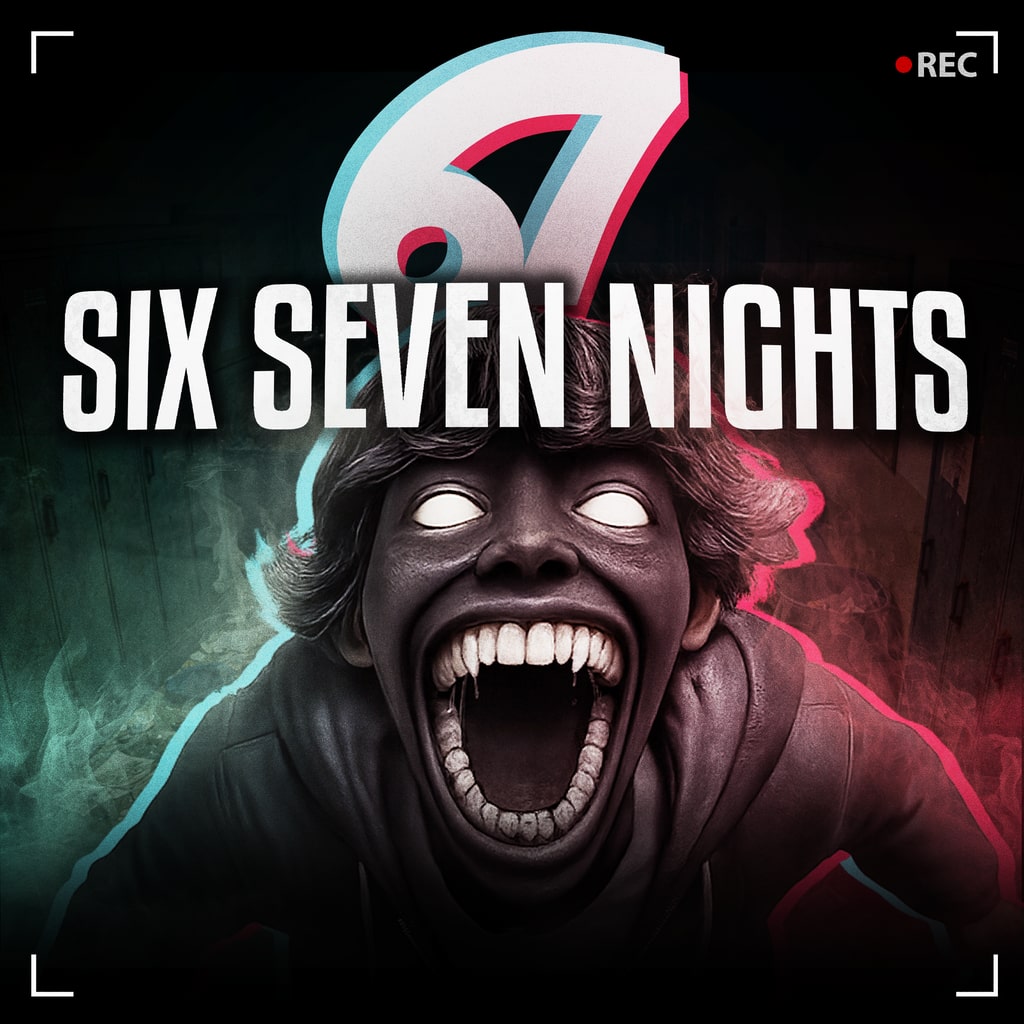
Survival horror often flourishes through isolation, mystery, and the growing sensation that something is observing just beyond the player’s sight. Six Seven Nights, developed and published by RandomSpin Games, strongly embraces this approach. Instead of relying on combat or large-scale action scenes, the game creates tension through slow exploration, environmental storytelling, and a persistent supernatural threat within a cursed school.
Released on 12 March 2026 for PlayStation and Nintendo Switch, the game provides a compact first-person horror experience focused on investigation and survival under pressure. Across six increasingly perilous nights, players must uncover the truth behind the strange occurrences at an abandoned school before authorities demolish the building — an act that could release something far worse.
Although Six Seven Nights does not revolutionise the survival horror genre, its focused design and atmospheric style offer a tense and memorable experience for players willing to embrace its slower pace.
A School With a Dark Reputation
The premise of Six Seven Nights is deceptively straightforward. Players take on the role of an investigator sent by a mysterious Bureau to examine a school believed by locals to be cursed. After months of unexplained incidents, strange sightings, and psychological breakdowns among staff and residents, the building has been shut down and is scheduled for demolition.
However, your employer believes that destroying the structure could trigger an even greater disaster.
As the investigation unfolds, it becomes evident that the school is more than just an abandoned building. Notes scattered throughout classrooms, damaged corridors, and collapsed sections of the structure suggest a slow descent into paranoia and fear among those who once worked there.
The game’s narrative progresses gradually through environmental storytelling. Instead of relying on lengthy cutscenes to deliver exposition, Six Seven Nights encourages players to uncover the truth through observation and careful exploration.
This approach fits perfectly within the horror genre. The less the game explicitly explains, the more unsettling the mystery becomes.
Six Nights to Solve the Problem
The game’s structure focuses on six playable nights, each representing a new stage in the investigation.
During the first night, exploration is limited to a small part of the building. Players familiarise themselves with the layout, clear debris blocking doorways, and begin gathering initial clues about what might be happening inside the school.
With each subsequent night, new areas become accessible. Previously locked classrooms open, stairwells leading to forgotten sections of the building are revealed, and environmental hazards start to appear more often.
This gradual expansion maintains the experience’s freshness while reinforcing the idea that the building itself is evolving.
The school begins to feel less like a static location and more like a living entity responding to the player’s presence.
By the later nights, navigating the environment becomes considerably more dangerous, with unpredictable supernatural behaviour adding layers of tension to every step.
Survival Without Combat
Unlike many survival horror titles, Six Seven Nights completely eliminates traditional combat.
Players cannot fight any supernatural presence inhabiting the school. Instead, survival relies on awareness, timing, and understanding how the environment reacts to specific actions.
This design choice significantly alters how players approach exploration.
Opening doors, moving objects, or interacting with certain parts of the environment might attract unwanted attention. Some actions increase the entity’s aggression, while others may diminish its interest in your presence.
The game rarely explains these mechanics directly. Instead, players must learn through observation and experimentation — an approach that strengthens the investigative aspect of the experience.
The result is an ongoing sense of vulnerability. Without weapons or defensive tools, every encounter becomes a test of patience and strategy rather than reflexes.
Environmental Puzzles With Classic Horror Roots
While the supernatural threat creates the tension, the game’s progression mainly relies on environmental puzzles.
Players must explore the building for clues, decipher strange markings, and unlock sealed rooms that may hold vital information about the school’s history.
These puzzles feel inspired by classic survival horror titles, where exploration and problem-solving often go hand in hand. Keys hidden in obscure spots, coded messages on walls, and unusual environmental interactions encourage players to think carefully about their surroundings.
Most puzzles find a satisfying balance between challenge and accessibility. They rarely become overly complicated but do demand close attention to detail.
Solving them also involves a constant risk — lingering too long in one area might attract the roaming entity.
A Reactive Presence That Changes Everything
The most captivating aspect of Six Seven Nights is the hostile presence that roams the building.
Instead of acting as a predictable foe, this supernatural entity behaves dynamically, responding to the player’s actions in subtle ways.
Some behaviours may draw attention, while others might help you stay hidden.
The game never offers a clear set of rules, forcing players to interpret environmental cues and audio signals to judge whether they are safe.
This unpredictability maintains high tension throughout the experience. Even familiar areas of the school can become perilous if the entity’s behaviour shifts.
The lack of combat makes each encounter feel personal. Escaping unnoticed often feels like a small victory.
Atmosphere and Sound Design
Atmosphere is where Six Seven Nights truly shines.
The abandoned school setting is filled with unsettling details — flickering lights, distant noises echoing through empty corridors, and classrooms left in disarray after the mysterious incidents that shut the building down.
The visual design emphasises decay and neglect. Cracked walls, broken furniture, and partially collapsed hallways create a constant sense of unease.
However, the game’s sound design may be its most powerful element. Subtle audio cues often signal changes in the entity’s behaviour or suggest that something unusual is happening nearby.
Footsteps echo through corridors, objects shift slightly in nearby rooms, and faint whispers occasionally drift through the building.
These details keep players constantly alert, reinforcing the tension even during quieter exploration segments.
Where the Game Struggles
Despite its captivating atmosphere, Six Seven Nights is not without flaws.
The game’s compact scope means the experience can feel relatively brief. While the six-night structure offers a clear narrative arc, some players might wish for more locations or extended storylines.
Movement and interaction can also seem slightly stiff at times. Navigating confined spaces or engaging with environmental objects may occasionally lack the smoothness seen in larger horror titles.
Additionally, the story’s deliberately vague approach might frustrate players who prefer a clearer narrative resolution. Much of the lore is hinted at rather than fully explained.
Nevertheless, these issues rarely detract from the core experience.
Pros
- Strong atmospheric horror and sound design
- Dynamic supernatural entity creates constant tension
- Environmental storytelling encourages exploration
- Puzzle design inspired by classic survival horror
Cons
- Relatively short overall experience
- Some stiff movement and interactions
- Story remains deliberately ambiguous
Final Verdict
Six Seven Nights is a focused survival horror experience that prioritises atmosphere, investigation, and tension over action. Developed by RandomSpin Games with additional PlayStation collaboration from Welding Byte S.R.L., the game provides a chilling journey through a cursed school gradually revealing its secrets.
Its decision to eliminate combat entirely helps emphasise vulnerability and careful exploration, while the reactive supernatural presence keeps players constantly on edge.
Although the experience is relatively short and some mechanics feel slightly rough around the edges, the game succeeds in delivering a memorable horror atmosphere rooted in uncertainty and dread.
For players who enjoy slow-burning survival horror centred on mystery and environmental storytelling, Six Seven Nights offers a tense and immersive investigation worth undertaking — provided you can survive until morning.