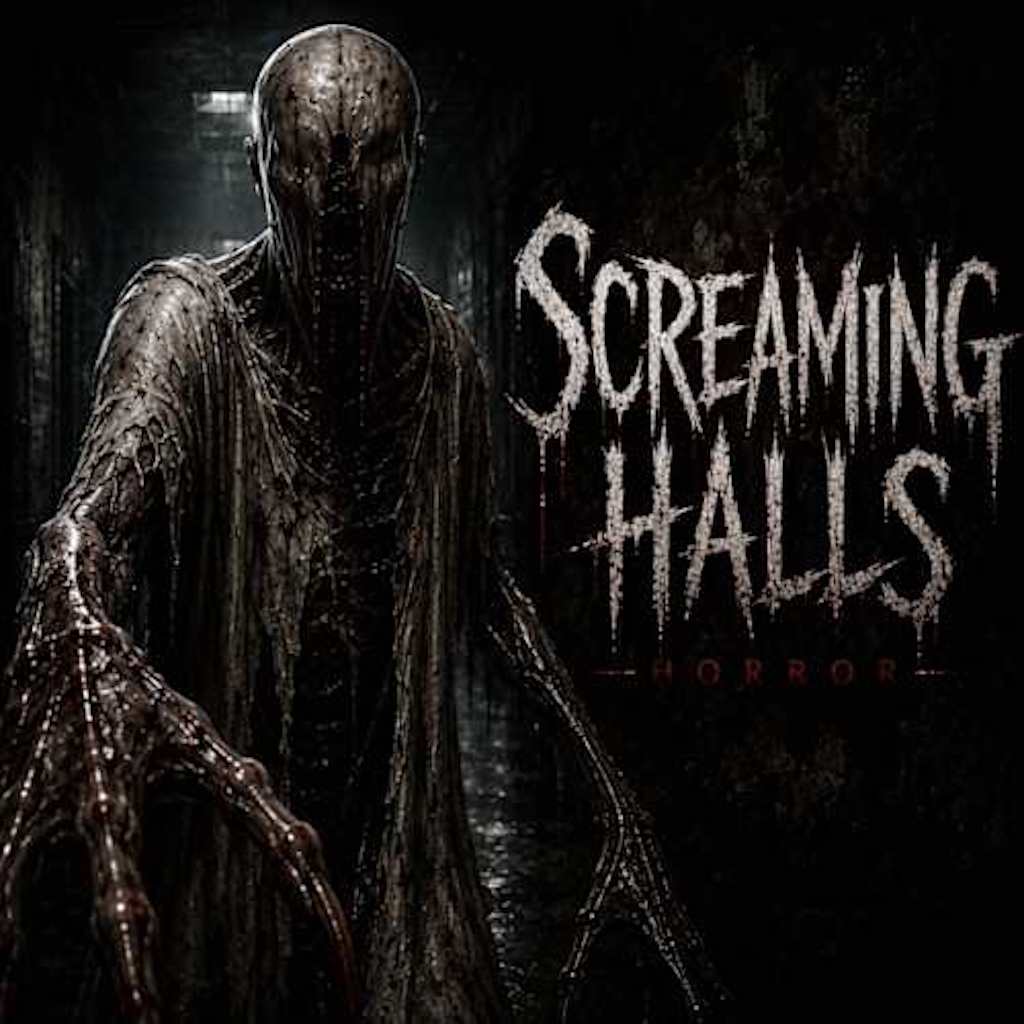
Horror games have long understood the power of the unknown. You do not necessarily need elaborate monsters, mountains of blood or complicated combat systems to make someone uncomfortable. Sometimes, all you need is a dark corridor, a flickering light and the growing realisation that you are not alone. Screaming Halls: Horror takes that wonderfully simple idea and builds an entire first-person psychological horror experience around it.
Developed and published by Downmeadowstreet, Screaming Halls: Horror begins with one of the genre’s most familiar scenarios. You wake in darkness with no idea who you are, where you are or how you got there. In front of you lies a seemingly endless network of cursed corridors, while the way out has been sealed by an ancient curse. To escape, you must explore the halls, find every cursed voodoo doll and somehow survive whatever else has decided to make this place its home.
It is an uncomplicated premise, but there is something inherently effective about it. The lack of information immediately puts the player on edge, while the confined environment leaves nowhere comfortable to retreat to. You are not wandering through a vast open world where danger might be miles away. Here, every doorway and every darkened stretch of corridor could be hiding something unpleasant.
Darkness Is The Enemy
The most successful element of Screaming Halls: Horror is undoubtedly its atmosphere. The game understands that darkness itself can be frightening, particularly when the player knows something may be moving beyond their limited field of vision. The corridors are deliberately claustrophobic, creating the sense that the walls are closing in even when nothing is physically happening. It is a simple trick, but horror has always been about eliciting an emotional response from relatively ordinary surroundings.
Sound plays an important part in maintaining that tension. Strange noises, unsettling audio cues and the occasional suggestion that something is nearby can make even an apparently empty hallway feel dangerous. You begin to listen rather than simply look, trying to work out whether that noise you just heard was part of the environment or a warning that something is approaching. Good horror often comes down to anticipation, and Screaming Halls gets some mileage from making players wonder what might happen next.
The problem is that anticipation only works when the game knows when to hold back. If every suspicious noise is followed by a scare, players quickly learn the rhythm. The fear starts to become less about what might be lurking in the darkness and more about waiting for the game to trigger its next scripted surprise. Screaming Halls occasionally falls into that trap, particularly when its jump scares begin to feel predictable.
Even so, there are moments when the atmosphere genuinely gets under your skin. Walking down a corridor that seemed perfectly safe moments earlier can suddenly feel completely different once you realise you cannot remember how you arrived there. That uncertainty is where the game is at its strongest.
Searching For The Dolls
The central objective is simple: find the cursed voodoo dolls scattered throughout the halls and collect them to break the curse. It gives the player a clear purpose without removing the mystery surrounding the environment. You know what you need to do, but you do not necessarily know where the next doll is hiding or what you might encounter while searching for it.
Exploration therefore becomes a game of risk and reward. Every new corridor might bring you closer to freedom, but it also increases the risk of encountering whatever is stalking the building. Limited light sources add another layer of discomfort, forcing players to consider where they are going and how much of their surroundings they can actually see. When darkness is treated as a gameplay mechanic rather than simply a visual effect, even basic exploration can become surprisingly tense.
Unfortunately, the puzzle design does not always match the quality of the atmosphere. Environmental lock-and-key challenges provide something for the player to think about, but they tend to be relatively straightforward. There is satisfaction in finding an object that finally allows you to progress, yet the puzzles rarely reach the point where they become genuine brain teasers.
That is a shame, because stronger puzzles could have helped give Screaming Halls a more distinctive identity. The setting provides plenty of opportunities for clever environmental challenges, particularly with its cursed corridors and distorted layouts. Instead, much of the progression revolves around the familiar process of searching an area, finding an item and using it somewhere else.
The Thing In The Dark
Of course, there is something else to worry about while you are searching. Screaming Halls: Horror promises a terrifying presence stalking the corridors, and the idea of being hunted in an enclosed space remains one of horror’s most dependable ingredients. There is something inherently frightening about hearing something nearby without being able to see it. The imagination tends to fill in the gaps, and often what we imagine is considerably worse than anything the game could actually show us.
The first-person perspective works particularly well here. You see the environment through the character’s eyes, so limited visibility becomes your problem rather than something you can simply observe from a safe camera position. A dark doorway is not merely something you are looking at on a screen. It becomes somewhere you have to decide whether you are brave enough to walk into.
However, the game’s supernatural threat does not always feel as unpredictable as the premise suggests. Once players recognise the patterns governing its appearances, some of the tension inevitably fades. The most effective horror enemies are those that force players to constantly question whether they are safe. When that uncertainty fades, the corridors can start to feel more like a series of obstacles than a genuinely threatening environment.
This is one area where Screaming Halls feels like a familiar indie horror experience rather than something genuinely revolutionary. There is nothing wrong with using established horror conventions, especially when they are executed competently, but the game rarely finds a completely new way of using them.
Familiar Territory
That sense of familiarity extends beyond the stalking presence. Amnesia, cursed locations, cryptic notes, strange noises, limited lighting and mysterious supernatural forces have become staples of modern indie horror. They work because they are effective, but the genre has reached a point where simply combining those ingredients is no longer enough to guarantee a memorable experience.
Screaming Halls: Horror does not completely escape that problem. It knows what a horror game is expected to look and sound like, and it delivers those elements without taking too many risks. The corridors are suitably oppressive, the darkness does much of the heavy lifting, and the jump scares provide the occasional jolt. What is missing is a distinctive idea that would make the game immediately recognisable among the countless other psychological horror titles available today.
The repetitive environments are particularly noticeable. A corridor can be an incredibly effective horror setting, but when the player spends too long navigating variations on the same basic environment, the novelty begins to wear thin. Instead of wondering what might be around the next corner, you can find yourself wondering whether there will ever be anything genuinely different around it.
That does not make the experience unpleasant, but it does limit its impact. Horror needs escalation, whether through story, environment, mechanics or increasingly disturbing encounters. Without enough variation, the tension can flatten out rather than continually build.
Short, Sharp And Uneven
Another consideration is the game’s relatively short playtime. There is certainly an argument that horror games are better when they do not overstay their welcome. A frightening experience can lose its impact if the player spends twenty hours wandering through increasingly familiar environments. Keeping things compact allows the developer to focus the experience and hopefully leave players wanting more.
In the case of Screaming Halls, however, the brevity feels more like a limitation than a carefully controlled design choice. The straightforward puzzles and repetitive exploration mean there is not quite enough mechanical variety to compensate for the short adventure. By the time you have settled into the rhythm of searching, solving and surviving, the experience is already approaching its conclusion.
There are still some enjoyable moments along the way. The atmosphere can be effective, the sound design occasionally gets under your skin, and the first-person perspective does a good job of making the darkness feel personal. For players who simply want a quick horror fix, that may be enough.
But for anyone expecting a substantial psychological horror adventure with a compelling mystery and inventive gameplay, expectations should be kept in check.
Final Verdict
Screaming Halls: Horror understands the basic ingredients of atmospheric horror, even if it does not always know how to turn them into something truly memorable. Its dark corridors, unsettling sound design and lurking supernatural threat create an environment that can occasionally make the hairs on the back of your neck stand up. The voodoo doll objective gives exploration a clear purpose, while the limited light and first-person perspective reinforce the feeling of vulnerability.
Unfortunately, the experience is held back by familiar horror conventions, repetitive corridor environments and puzzles that rarely pose much of a mental challenge. The stalking threat can lose some of its effectiveness once its patterns become apparent, and the relatively short adventure leaves little room for the game to develop into something more ambitious. There is a good horror foundation here, but it feels like one built from ingredients players have tasted many times before.
That said, there is still something appealing about its simplicity. Screaming Halls does not bombard the player with unnecessary mechanics or attempt to turn itself into an action game. It wants you to walk into the darkness, listen to the sounds around you, search for the objects you need and wonder whether something is following you. When everything comes together, it can produce those wonderfully uncomfortable moments when you genuinely do not want to turn the next corner.
It is just a shame that those moments are not more frequent, and that the game does not do more to distinguish itself from the crowded indie horror field. Screaming Halls: Horror is worth considering for genre fans looking for a short atmospheric scare, but it is unlikely to haunt your thoughts long after the lights come back on.