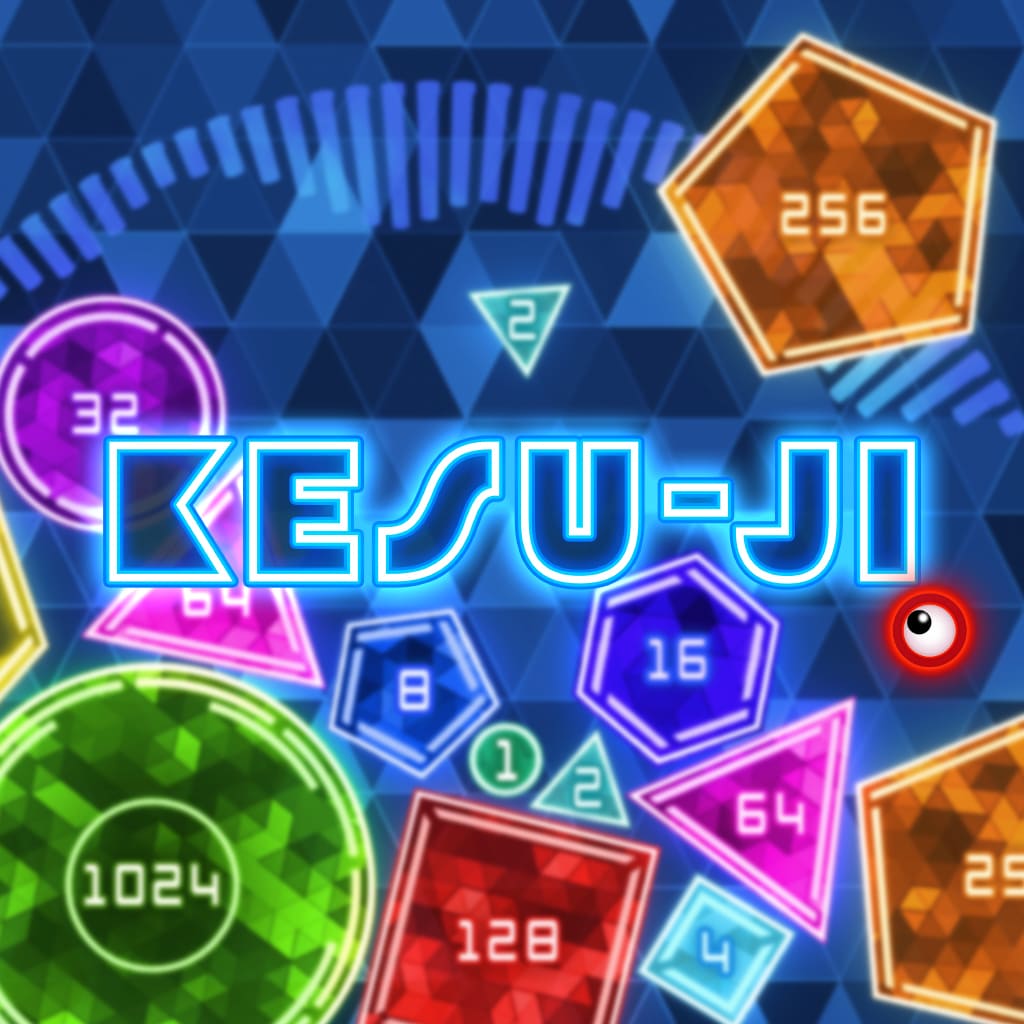
There is something wonderfully satisfying about watching a collection of numbered blocks collide, merge and transform into something considerably bigger than the pieces that came before. It is a simple pleasure, yet one that has kept puzzle games entertaining for generations, from the humble joys of matching tiles to the addictive pursuit of creating ever-larger numbers. KESU-JI, developed by peakvox and published by O-TWO inc., takes that familiar concept and gives it an energetic arcade makeover, bringing together six distinct game modes, a relaxing presentation and a progression system built around chasing ever-higher scores. Rather than relying on a single puzzle format, it continually changes the rules, challenging players to adapt their strategies while keeping the core satisfaction of merging identical blocks firmly at its heart.
Available on PC and Nintendo Switch, KESU-JI is a game that understands the appeal of a quick session that somehow turns into an entire evening. Its colourful presentation and laid-back atmosphere make it immediately approachable, yet beneath that relaxed exterior lies a surprisingly varied collection of challenges that can become frantic, demanding and occasionally unforgiving. Whether you are carefully planning a sequence of merges or desperately trying to prevent the playing field from collapsing into chaos, there is a pleasing rhythm to the experience. It may not reinvent the puzzle genre, but it offers enough variety and personality to make its familiar mechanics feel fresh.
A Simple Idea With Plenty of Potential
At its core, KESU-JI revolves around merging blocks with identical numbers, doubling their value and creating opportunities for further combinations. It is a simple concept that is easy to grasp within moments, making the game accessible to players who might otherwise be intimidated by more complex puzzle experiences. The real challenge lies in managing the available space, recognising potential combinations and deciding when to act rather than simply reacting to whatever appears next. A successful merge can open up the board and set off a satisfying chain of combinations, while a poorly considered move can quickly leave you struggling for room.
There is a tactile pleasure in the game’s central mechanic, particularly when several merges come together in quick succession. Watching smaller blocks combine into increasingly substantial values provides a natural sense of progression, and those moments when a carefully planned move produces a much larger result are among the game’s most rewarding. The experience encourages experimentation, rewarding players who take the time to understand how each mode behaves and how its particular rules can be used to their advantage. It is the kind of gameplay that feels intuitive at first but gradually reveals more depth as players become familiar with its possibilities.
What makes KESU-JI more interesting than a conventional merging puzzle is its willingness to take that central mechanic in several different directions. Instead of simply increasing the difficulty through larger numbers or more restrictive boards, each mode introduces a new twist that changes how players approach the same basic idea. This helps the game avoid becoming monotonous, although the quality and appeal of each mode will naturally depend on individual preferences. Some are more thoughtful and deliberate, while others place greater emphasis on speed, reflexes and the ability to remain calm when the screen begins to fill.
Six Modes, Six Different Challenges
The variety on offer is undoubtedly one of KESU-JI’s strongest features, with six modes that give the game a much broader identity than its simple premise might initially suggest. Mode Gravity is an especially interesting variation, with gravity pulling blocks towards the centre of the playing field. The objective is to keep merging while staying within the blue circle, introducing a spatial challenge that encourages players to think carefully about where blocks will move and how much room they have left. It cleverly tweaks the familiar rules, creating a puzzle that feels distinct without abandoning the satisfaction of matching numbers.
Mode Shooter takes a more chaotic approach, surrounding the player with blocks closing in from all 360 degrees. Matching identical numbers remains the key to scoring points, but the constant pressure from every direction gives the mode a much more urgent feel. There is less opportunity to sit back and calmly consider every move, and players must become comfortable making quick decisions as the available space becomes increasingly restricted. It is an enjoyable change of pace, although the heightened chaos may not appeal to those who prefer a more methodical puzzle experience.
Mode MewMew introduces a race against the clock, challenging players to stack blocks as high as possible in pursuit of a substantial score. Time pressure transforms the merging mechanic into a test of speed and judgement, where hesitation can be just as damaging as a poor decision. It rewards familiarity, as recognising combinations quickly becomes essential to building a successful run. For players who enjoy chasing personal bests and shaving seconds off their performance, it offers an appealing arcade-style challenge.
Mode 65536 is perhaps the most straightforward expression of the game’s central concept, asking players to merge identical numbers, double their values, and ultimately reach the enormous target of 65536. The attraction lies in the pursuit of a clearly defined objective, with each successful combination bringing the player a little closer to that elusive final number. Reaching such a high value demands patience, planning, and a willingness to make the most of every available space. It is a mode that will particularly appeal to fans of traditional number-merging puzzles, offering a familiar experience with a challenging long-term goal.
Mode Climbing takes a different direction, turning the experience into a mountain-climbing time attack. Here, the challenge is to reach the summit against the clock, adding a sense of urgency that feels quite different from the slower process of building large-numbered blocks. It provides another welcome change of pace and helps reinforce the idea that KESU-JI is a collection of related arcade challenges rather than a single puzzle with a handful of variations. Finally, Mode Drone introduces a defensive element, tasking players with protecting the DNA, represented by an eyeball, from incoming enemies. Piloting a drone, blasting threats, and collecting experience points to upgrade skills add a more action-focused dimension, making it the most mechanically distinct of the six modes.
Finding Your Own Strategy
Although the individual modes offer distinct challenges, the game’s wider appeal stems from how they contribute to an overall progression system. Scores earned across the modes are combined into a Total Score, which feeds into global rankings and provides a broader measure of a player’s performance. This creates an incentive to explore the entire game rather than focusing exclusively on one favourite activity. A player who excels at traditional merging may find themselves challenged by the frantic pace of Shooter or the time pressure of Climbing, giving the overall experience a sense of variety and purpose.
The inclusion of special abilities such as Smashes, Nudges and Bombs adds another layer of tactical thinking to the modes where they are available. These tools can help players recover from difficult situations, create space or take advantage of a promising opportunity. Using them effectively is important, as simply activating a power whenever it becomes available may not always produce the best result. Knowing when to intervene and when to let a situation develop naturally can make the difference between a modest score and a particularly satisfying run.
There is also a pleasing sense of progression through the rewards unlocked by accumulating Total Score. Perks can provide useful advantages, while new skins and music tracks offer ways to customise the experience and keep it feeling fresh. These rewards give players additional goals beyond simply achieving a high score, although their appeal will depend on how much importance they place on unlocking cosmetic extras. The progression system is effective at encouraging continued play, but it is unlikely to be enough on its own to maintain interest for players who are not naturally drawn to score chasing.
Relaxed Presentation, Arcade Energy
One of the more appealing aspects of KESU-JI is its balance between a relaxed atmosphere and the increasingly demanding nature of its gameplay. The colourful visuals and chill musical presentation help establish a welcoming environment, making it easy to settle into a session without feeling overwhelmed. That sense of comfort is particularly important for a puzzle game, where players may want to enjoy a few minutes of casual entertainment rather than commit to a lengthy or mentally exhausting experience. Even when the action becomes hectic, the presentation helps preserve the game’s approachable personality.
Visual clarity is also important, particularly in modes where blocks arrive from several directions or where players are working against the clock. The merging mechanics need to remain easy to follow, as confusion over the playing field can quickly turn a challenging situation into a frustrating one. KESU-JI benefits from keeping its central concept straightforward, allowing players to focus on positioning, timing and decision-making rather than struggling to understand the interface. Its presentation may not be especially elaborate, but it serves the gameplay well.
The audio and visual customisation options add a little more personality, with unlockable music and skins providing opportunities to change the atmosphere as players progress. These additions are welcome, especially for anyone who expects to spend considerable time improving their scores. They do not fundamentally change the experience, but they help make repeated sessions feel a little less routine. The overall presentation is best described as pleasant and functional, supporting the gameplay without demanding attention for its own sake.
The Endless Appeal of the High Score
The global leaderboards are central to KESU-JI’s long-term appeal, giving players a reason to keep returning after they have become familiar with the six modes. There is particular satisfaction in seeing improvement reflected in a score, especially when it comes from mastering a mechanic that initially seemed awkward or overwhelming. The Total Score system also encourages players to develop a broader understanding of the game, rewarding consistency across its different challenges rather than allowing a single exceptional performance to define their progress.
However, score chasing is inherently personal. For some players, the desire to climb the rankings will provide dozens of hours of entertainment, while others may be content to unlock a few rewards and move on. Once the mechanics of each mode become familiar, much of the game’s replay value depends on the player’s enthusiasm for improving their performance. Certain modes can also become chaotic enough that strategic planning gives way to quick reactions, which may frustrate those who prefer puzzles that consistently reward careful thought.
This does not undermine the game’s overall design, but it does mean that KESU-JI is best suited to players who enjoy arcade-style repetition and gradual mastery. Its six modes provide substantial variety, yet they are all built around a relatively small set of core ideas. The game is at its strongest when players are discovering new approaches, experimenting with power-ups and learning to handle the distinctive rules of each mode. Once that discovery period has passed, the leaderboards and personal targets need to provide the motivation to keep playing.
Final Verdict
KESU-JI is a colourful and entertaining merging puzzle game that makes excellent use of a simple concept, taking it in six different directions. Its variety is a real strength, with modes ranging from thoughtful number-building to frantic defensive action, while its relaxing presentation makes it an inviting experience for casual players. The satisfaction of chaining successful merges, the strategic use of special abilities and the pursuit of global rankings combine to create a game that is easy to pick up yet offers plenty of opportunities for improvement.
It is not without its shortcomings. Some modes can feel chaotic rather than carefully strategic, and its long-term appeal relies heavily on a player’s enthusiasm for chasing high scores and unlocking rewards. The underlying mechanics are familiar, and players looking for a deep puzzle adventure or a more substantial sense of progression may find the experience somewhat limited. Nevertheless, the sheer variety on offer and the satisfying nature of its central gameplay make it a worthwhile addition to the arcade puzzle genre.
Ultimately, KESU-JI succeeds because it understands that a good puzzle game does not always need an elaborate story or complicated mechanics. Sometimes, all it takes is a clever twist on a familiar idea, a handful of enjoyable challenges and the promise of one more attempt at beating your best score. It may not keep everyone hooked indefinitely, but for fans of casual arcade puzzles, there is plenty here to enjoy.