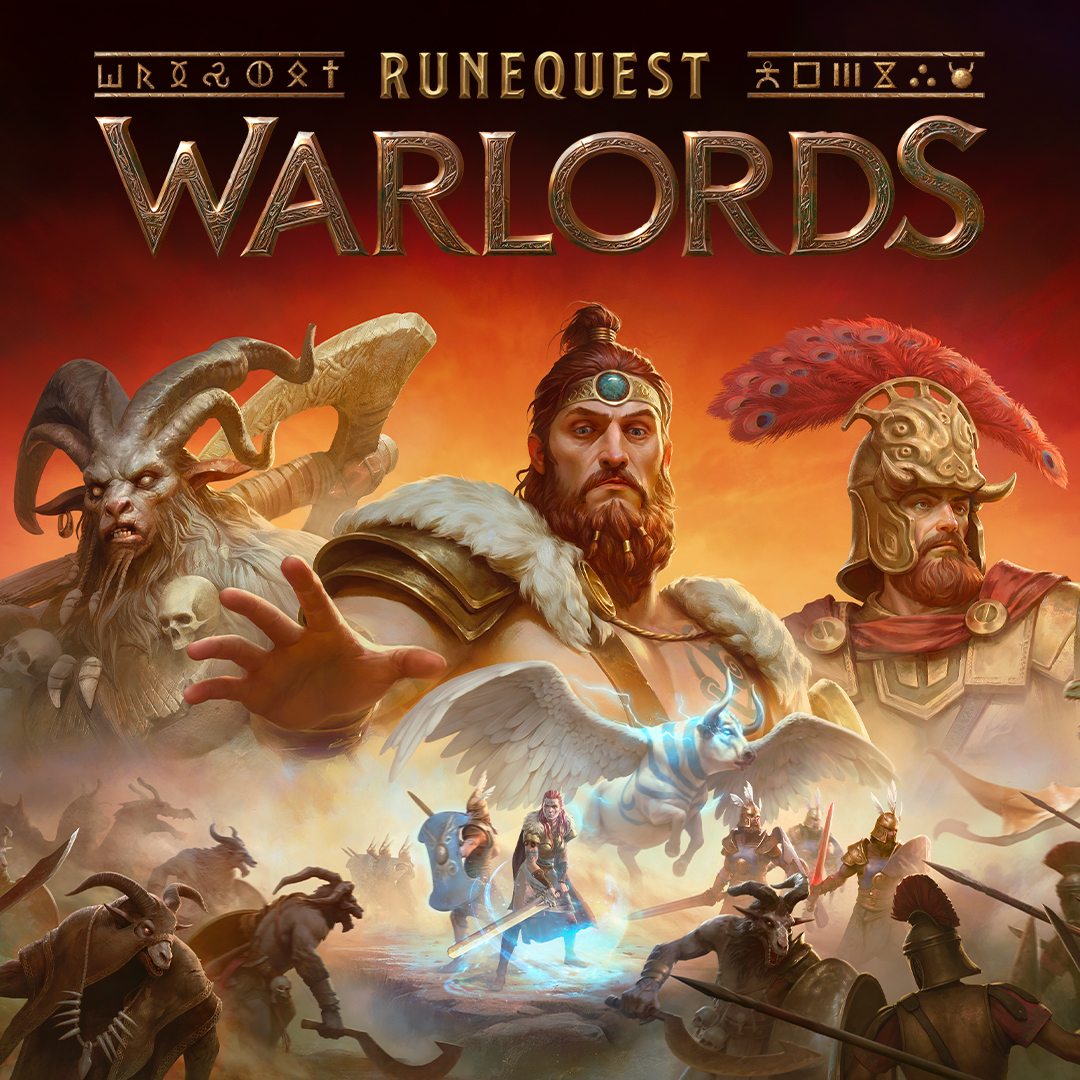
RuneQuest: Warlords is a game that wears its ambitions openly. Rooted in classic fantasy sensibilities and inspired by tabletop traditions, it attempts to merge large-scale strategy with mythological flavour and faction-driven decision-making. This is not a fast-paced or immediately accessible experience; instead, RuneQuest: Warlords asks players to slow down, absorb systems, and take responsibility for the long-term consequences of leadership.
At its best, the game delivers a thoughtful, systems-heavy strategy experience that rewards planning and patience. At its weakest, it risks overwhelming players with complexity while occasionally struggling to clearly communicate its depth.
Worldbuilding and Setting
The fantasy world of RuneQuest: Warlords is dense with lore, but it is delivered in a restrained, matter-of-fact manner rather than through cinematic spectacle. This is a setting defined by political tension, ancient forces, and competing cultures rather than clear-cut heroism. You are not playing a chosen saviour; you are a ruler, a warlord, and a strategist navigating a living world that does not revolve around you.
The game’s mythological elements are woven directly into its systems. Gods, runes, and cultural traditions influence not just narrative flavour, but gameplay mechanics. This grounding gives the world a sense of internal logic, even when information is presented sparingly. Players willing to engage with the lore will find a setting that feels coherent and lived-in, rather than decorative.
However, RuneQuest: Warlords assumes a degree of familiarity or willingness to learn. Exposition is minimal, and the game often expects players to infer context through mechanics and outcomes rather than explicit storytelling. This approach suits the game’s tone but may alienate newcomers to the genre or setting.
Core Gameplay and Strategic Depth
At its core, RuneQuest: Warlords is a turn-based strategy experience built around territory control, faction management, and military decision-making. You are responsible for balancing expansion, diplomacy, economy, and warfare, often with limited resources and incomplete information.
Decision-making is deliberate and consequential. There are few “safe” choices, and the game frequently forces players to prioritise one need at the expense of another. Expanding too aggressively can destabilise your realm. Ignoring diplomacy can lead to drawn-out conflicts. Overcommitting to military power can strain economic stability.
Combat is tactical but restrained. Battles emphasise positioning, unit composition, and preparation rather than flashy animations or dramatic flourishes. Victory often comes down to foresight rather than moment-to-moment tactics, reinforcing the idea that wars are won long before armies clash.
This depth is one of the game’s greatest strengths, but it also contributes to its steep learning curve. RuneQuest: Warlords does not hold the player’s hand, and early mistakes can have lasting consequences. For strategy veterans, this is part of the appeal. For less experienced players, it can feel punishing.
Systems, Runes, and Factions
One of the game’s defining features is its use of runes and faction-specific mechanics. Each faction has its own cultural identity, strengths, and limitations, which significantly alter playstyle. Runes act as both thematic and mechanical modifiers, influencing everything from combat bonuses to political outcomes.
These systems encourage experimentation and replayability. Playing as different factions meaningfully changes the experience, forcing players to adapt rather than rely on familiar strategies. The downside is that not all systems are equally transparent. Some interactions are only fully understood after trial and error, which can be frustrating when outcomes feel opaque.
That said, when these systems click, they create a satisfying sense of mastery. Success feels earned rather than granted, and long-term planning becomes deeply engaging.
Presentation and Interface
Visually, RuneQuest: Warlords is functional rather than striking. Maps are clearly laid out, units are readable, and information is prioritised over ornamentation. The art style supports clarity, but rarely impresses. This is a game designed to be studied rather than admired.
The user interface is dense, and at times cumbersome. Menus are layered, tooltips are essential, and information overload is a frequent concern, especially in the early hours. While everything you need is technically available, it is not always presented in the most intuitive way.
Sound design is understated. Music provides a subtle fantasy backdrop without drawing attention to itself, while sound effects serve practical feedback roles rather than dramatic impact. This restraint suits the game’s cerebral tone, but contributes to an overall presentation that can feel dry.
Pacing and Player Commitment
RuneQuest: Warlords is not designed for short play sessions. Matches unfold slowly, with progress measured in incremental gains rather than sudden breakthroughs. This pacing reinforces the weight of leadership but demands sustained attention and commitment.
For players who enjoy long-term strategy and gradual dominance, this pacing is a strength. For others, it may feel exhausting. The game rarely offers quick wins or moments of catharsis, instead favouring steady accumulation and careful management.
Final Verdict
RuneQuest: Warlords is a demanding, thoughtful strategy game that prioritises systems, consequence, and world cohesion over accessibility or spectacle. It succeeds in creating a believable fantasy setting where leadership feels heavy and decisions matter.
However, its steep learning curve, dense interface, and restrained presentation limit its broader appeal. This is a game for players who enjoy complexity, patience, and long-term planning—not for those seeking immediate gratification or narrative-driven drama.
For its intended audience, RuneQuest: Warlords offers a rewarding and intellectually engaging experience that respects the player’s intelligence and commitment.