Some action games hand you a powerful sword and ask you to master its combos. Others reward lightning-fast reflexes with perfectly timed dodges and parries. Retrace the Light takes a different approach entirely. Here, your greatest weapon is the path you’ve already walked. Every dash leaves a glowing trail, and with the press of a button you can instantly rewind along that route, transforming movement itself into offence, defence and puzzle-solving all at once.
It sounds deceptively simple on paper, yet it changes almost every encounter throughout the game. Rather than charging directly at enemies, you’re constantly thinking a few seconds ahead. Every reposition, every escape route and every risky dive into danger becomes part of a larger plan. The result is an action adventure that feels fresh from its opening moments and continues to find inventive ways to evolve its central mechanic.
Developed by Xiaming Game, Retrace the Light wraps this clever gameplay in a stylish science-fiction adventure filled with mysterious technology, fragmented memories and surreal worlds born from the human mind. It does not always explain itself particularly well, and its dense terminology occasionally gets in the way of emotional storytelling, but when everything clicks together, it delivers an experience that stands apart from many of its contemporaries.
Movement Becomes Combat
The defining feature of Retrace the Light is its Spatial Retracing mechanic, and almost every system revolves around it. As Decem dashes across the battlefield, he leaves a luminous trail that records his movement. Activating Retrace instantly sends him back along that exact route, allowing players to avoid attacks, reposition behind enemies, or escape impossible situations in the blink of an eye.
It creates combat encounters that reward creativity just as much as raw reflexes. Instead of reacting at the last second, you begin setting traps through your own movement. You might deliberately dash through a dangerous area, bait an enemy into committing to an attack, then instantly retrace behind them, leaving them swinging at empty air. Few games make positioning feel this satisfying.
The mechanic also prevents combat from becoming repetitive. Standard enemies gradually introduce new attack patterns that force you to rethink where you leave your trail, while later encounters become almost dance-like exercises in planning and execution. Success comes from understanding both your enemies and your own movement, keeping battles engaging throughout the campaign.
The controls also deserve praise. Decem feels responsive from the outset, with smooth movement and satisfying attacks that complement the game’s mobility options. Even when battles become chaotic, the controls rarely let you down, so failures feel like genuine mistakes rather than frustrations caused by sluggish input.
Boss Battles That Reward Intelligence
Boss encounters are where Retrace the Light truly finds its identity. These towering manifestations of obsession are not simply oversized enemies with inflated health bars. Each introduces mechanics that prompt players to rethink how they use Retrace rather than relying on the same strategy throughout the game.
Learning attack patterns remains important, but knowing when to create escape routes is equally essential. Sometimes the safest place is directly beside the boss, knowing you can instantly warp back to safety when the next devastating attack arrives. Other fights encourage aggressive flanking, using Retrace to exploit blind spots before disappearing again moments later.
The bosses themselves are visually memorable. Their designs lean heavily into psychological symbolism, presenting twisted creatures that reflect distorted emotions rather than traditional monsters. Combined with impressive visual effects and energetic music, these confrontations become genuine highlights of the adventure.
The difficulty feels well judged for most of the campaign. The game asks players to improve steadily without becoming unnecessarily punishing. Certain late-game encounters may require several attempts, but victories feel earned through better understanding rather than simple perseverance.
Puzzles That Think in Four Dimensions
Retrace the Light never confines its signature mechanic to combat. Exploration frequently shifts into environmental puzzles that use the same movement system in completely different ways.
Rooms ask players to activate switches, cross impossible gaps, or manipulate objects by carefully planning movement routes before retracing them at exactly the right moment. It is refreshing to see a game commit so fully to a single core mechanic across every aspect of its design.
The puzzle design generally strikes an excellent balance between accessibility and challenge. Solutions are rarely obvious, yet they almost always feel logical once found. Rather than overwhelming players with obscure logic, the game builds naturally on earlier concepts, encouraging experimentation rather than frustration.
A handful of later puzzles are slightly difficult to read because of camera angles or environmental clutter, but these moments remain the exception rather than the rule. Most of the time, solving a room delivers the same satisfying sense of accomplishment as defeating a difficult boss.
A Beautiful Digital Dream
Visually, Retrace the Light makes a strong first impression. Its colourful 2.5D presentation blends futuristic architecture with abstract landscapes that often resemble dreams more than physical locations. Ancient ruins merge seamlessly into neon skylines, while surreal visual effects constantly remind players they are travelling through distorted psychological worlds rather than ordinary cities.
Lighting plays a central role throughout the experience. The glowing trails left by Retrace become part of the scenery itself, transforming every battle into a constantly evolving display of colour and motion. During particularly intense encounters, the screen fills with intersecting lines of light that somehow remain surprisingly legible.
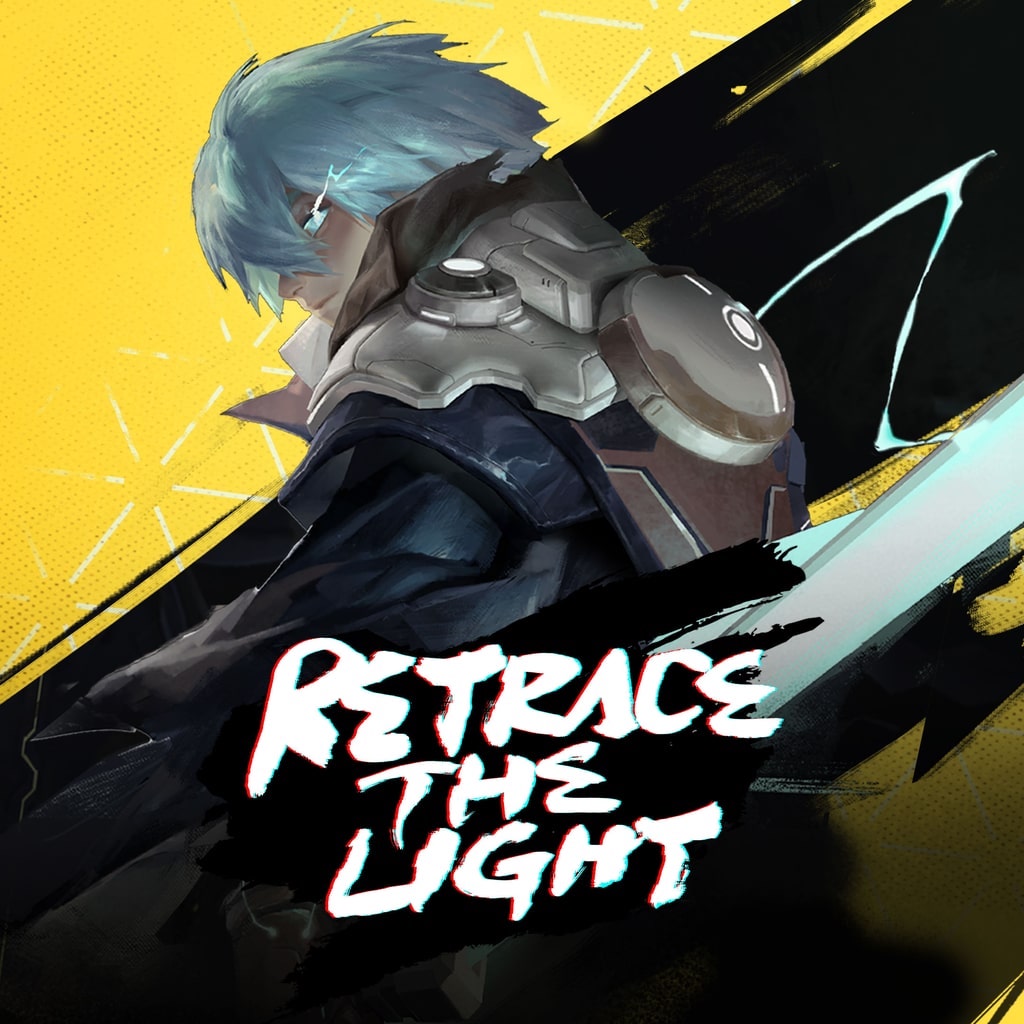
Character designs also stand out. Decem carries himself with quiet determination, while supporting characters and enemies all possess distinctive silhouettes that reinforce the game’s unique identity. The visual style confidently embraces science fiction without becoming sterile or overly clinical.
Performance remains consistently solid for most of the adventure. Frame rates hold up well during demanding combat sequences, allowing players to rely on precise timing without technical distractions interrupting the action.
Lost in Its Own Lore
If Retrace the Light has one significant weakness, it lies in its storytelling. The central mystery surrounding Decem, the Meta Mirror and humanity’s fractured memories certainly has intriguing ideas behind it, but the game often buries them beneath layers of complicated terminology.
Players are introduced to concepts, organisations and technologies at a rapid pace, with little opportunity to grasp their significance. Rather than building emotional investment first and expanding the mythology later, the narrative sometimes does the opposite. This can leave the opening hours more confusing than mysterious.
Thankfully, persistence pays off. As Decem gradually recovers fragments of his past, the emotional core becomes clearer, and the story begins to pose thoughtful questions about identity, trauma, and whether painful memories should be erased or confronted. Those themes resonate far more strongly than the dense science-fiction vocabulary surrounding them.
The branching endings also provide welcome replay value. Decisions made throughout the adventure influence Decem’s ultimate fate, giving additional weight to conversations and key narrative moments without overwhelming players with endless choice.
Customisation That Encourages Experimentation
Progression is delivered through an enjoyable module system that lets players tailor Decem’s abilities to suit different playstyles. Some upgrades strengthen parries and counters, while others enhance mobility, increase offensive potential, or reward aggressive use of Retrace.
The system remains flexible enough that experimenting never feels punishing. Discovering combinations that complement your approach adds another rewarding layer to the experience, particularly during boss encounters, where changing your build can completely alter your strategy.
Rather than chasing increasingly powerful equipment, progression focuses on expanding possibilities. That design philosophy fits perfectly with a game built around creative movement and player expression.
Final Verdict
Retrace the Light succeeds by building an entire adventure around a genuinely original mechanic and refusing to waste its potential. The Spatial Retracing system transforms movement into strategy, making every dash, retreat and reposition meaningful, whether you are solving puzzles or battling towering bosses. It constantly asks players to think differently, and that sense of discovery rarely fades.
Its ambitious narrative occasionally stumbles under the weight of its science-fiction terminology, while navigation can be confusing in certain sections. Even so, those issues never overshadow the quality of the gameplay. The combination of fluid combat, inventive puzzles, memorable boss encounters and striking presentation makes Retrace the Light a refreshing addition to the action-adventure genre.
Original ideas are increasingly rare in modern games, making Retrace the Light feel especially welcome. It is confident enough to trust players with an unfamiliar mechanic and skilled enough to make mastering it genuinely rewarding. That alone makes Decem’s journey worth taking.