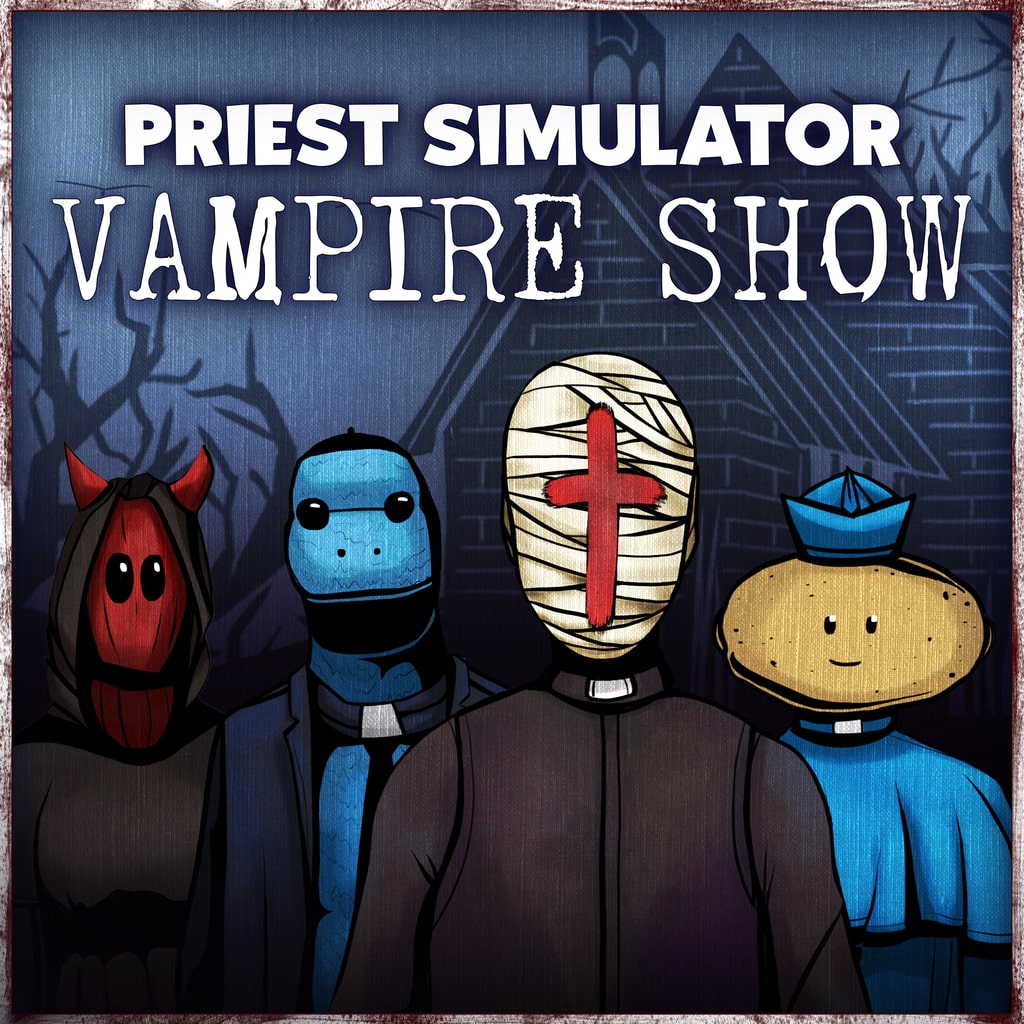
There are games that aim to make you laugh, others that push boundaries with offensiveness, and some that embrace chaos entirely. Priest Simulator: Vampire Show, developed by Asmodev and published by Ultimate Games S.A., confidently juggles all three, adding a mockumentary style that makes sure nothing is taken too seriously.
Originally launched on PC in 2024 after a lengthy Early Access phase starting in 2022, the game made its way to PlayStation 5 on April 16, 2026. An Xbox Series X|S release is also scheduled for May 7, 2026. What you get is a sandbox action comedy set in a twisted version of modern Poland, where religion, absurdity, and vampire folklore collide in ways that are intentionally chaotic, often crude, yet sometimes genuinely inspired.
This isn’t a game that aims for subtlety. It’s all about leaving a memorable impression.
Setting & Premise
The game takes place in San de Ville, a made-up rural town that feels like a twisted mix of satire and a fever dream. You step into the shoes of a vampire priest who’s lost his “batoon” a relic with a deliberately misspelled name the game refuses to take seriously and now he’s trying to make his way back to Hell, all while navigating the chaos swirling around him.
This chaos includes satanists (played with a humorous misspelling to emphasize their cultish nature), possessed villagers, corrupted clergy, and a town infrastructure that seems to have been held together by sheer stubbornness and duct tape.
From the very start, the tone sets the stage: this is a world where nothing is sacred—not even language itself. The dialogue is intentionally unpolished, full of awkward English localization, broken phrases, and comedic timing that feels more improvisational than scripted. Whether you find this charming or grating largely depends on how much patience you have for deliberate awkwardness.
Adding another layer is the ‘mockumental’ style, where events are presented as if part documentary, part satire, and part wild gameplay footage stitched together without concern for coherence or logical flow.
Gameplay & Core Loop
Priest Simulator: Vampire Show is a game that blends sandbox exploration, combat, and light management into a unique experience. You’re free to wander through San de Ville, fight off enemies, upgrade your gear, and work toward restoring the local church piece by piece.
The combat is chaotic and over-the-top, deliberately leaning into spectacle. You have a divine arsenal of eight weapons, and you can dual-wield at any time, which means combinations matter more than precision. One moment, you might be firing a holy shotgun while swinging an axe; the next, wielding a symbolic relic alongside something completely absurd.
This isn’t a game where balance is the main goal. Instead, it encourages experimentation and spectacle. Enemies attack in waves, and fights often become frantic, messy affairs rather than carefully planned battles.
There’s also a progression system based on “black metal” crafting. It lets you upgrade and modify your weapons, adding a bit of structure to the chaos. It gives you a reason to gather resources, experiment with different setups, and push your gear to its limits, making every encounter feel more meaningful.
Church Renovation & Simulation Elements
One of the core systems of the game revolves around renovating the church itself, which brings out the more “simulator” aspect of the experience. Players are encouraged to purchase blueprints, repair decayed structures, install modern upgrades, and watch as the church’s “faith level” gradually rises.
As the church gets better, new gameplay features open up such as sermons, confession systems, and more ways to interact with villagers. There’s a strange little joy in seeing the church transform from a crumbling ruin into a functioning, if still somewhat absurd, hub of activity.
That said, the simulation elements can feel a bit shallow. They give a sense of progression, but mostly revolve around simple upgrade loops. It’s the humor and presentation that really breathe life into this section, rather than any deep mechanical complexity.
Exorcisms & Side Activities
A large part of the gameplay involves exorcising villagers who have been possessed and dealing with supernatural disturbances triggered by cursed objects, flawed clerical decisions, and demonic meddling.
These exorcisms are more like mini-games than intricate systems. They differ in how they play out but usually involve simple interactions or combat, all wrapped in a fitting theme.
Additional content, including DLC-like expansions such as Her Ghost, builds on this idea with extra quests, characters like Cardinal Godspeed who returns from Infernal Radiation and quick storylines featuring strange supernatural threats, like a rogue tooth fairy.
These elements underline the game’s unique character: chaotic, unpredictable, and proudly weird.
Writing, Humour & Tone
The writing in Priest Simulator: Vampire Show is its defining feature. It deliberately embraces a rough, imperfect style, full of awkward phrasing and sharp, absurdist humor that often goes straight for the unpredictable. Some jokes hit because of their surprise, while others rely on repetitive or intentionally clumsy language that might not connect with everyone. The humor isn’t polished or refined; it’s raw, improvisational, and sometimes self-aware of its own roughness.
The mockumentary format adds to this tone at times, enhancing the parody. Yet, there are moments when it feels underused, and the game seems to forget it’s a documentary parody altogether, turning into a chaotic sandbox that invites chaos more than coherence.
World Design & Exploration
San de Ville feels unexpectedly open, almost like stepping into a semi-sandbox world where players can freely wander between different objectives, engage with NPCs, and naturally stumble into events along the way. The environment deliberately shifts in tone, blending rural absurdity, sharp religious satire, and chaotic supernatural elements, creating a sense of unpredictability and wonder.
Exploration here isn’t about methodically uncovering hidden secrets; rather, it’s about embracing the surprises that unfold, often in ways you didn’t anticipate. This design encourages curiosity and spontaneity, inviting players to immerse themselves in a world that feels alive and unpredictable. However, this approach can sometimes make the pacing feel uneven, depending on the paths and encounters the player happens to trigger.
Visuals & Presentation
Visually, the game presents a style that’s both functional and artistically distinctive. The environments are clear and easy to read, focusing more on character animation and comedic timing than on detailed realism.
The character models often feature exaggerated proportions and expressive gestures, which beautifully underline the game’s satirical and playful tone. While it may not showcase cutting-edge visual technicality compared to bigger productions, its consistent art style perfectly captures the game’s spirit.
On the technical side, the PS5 version performs smoothly, managing the lively chaos on screen with ease despite the constant activity. At launch, the Xbox Series X|S version is expected to deliver a similarly stable experience, handling the action with confidence.
Structure & Longevity
The game’s structure feels like a loose collection of missions, with optional activities and a sandbox world that invites exploration. Your journey is fueled by completing exorcisms, upgrading the church, and following the main story about battling demonic forces and seeking personal redemption.
How long you’ll stay engaged really depends on how much you enjoy repeating tasks and appreciate the game’s sense of humor. The systems aren’t overly complicated; what keeps things interesting is the unpredictability of events, which helps hold your attention longer than you might expect.
Final Verdict
Priest Simulator: Vampire Show isn’t polished, and it doesn’t try to be. Instead, it’s a chaotic mix of sandbox combat, satirical humor, and deliberately awkward presentation that puts personality above refinement.
When it hits the mark, it’s genuinely funny, unpredictable, and full of surprises. But when it misses, it can feel repetitive and somewhat shallow in structure. Still, its devotion to absurdity gives it a unique character that’s hard to find elsewhere.
This game thrives on inconsistency, which can be charming or frustrating, depending on who’s playing. Whether it’s entertaining or exhausting really depends on your taste for chaos and quirky unpredictability.