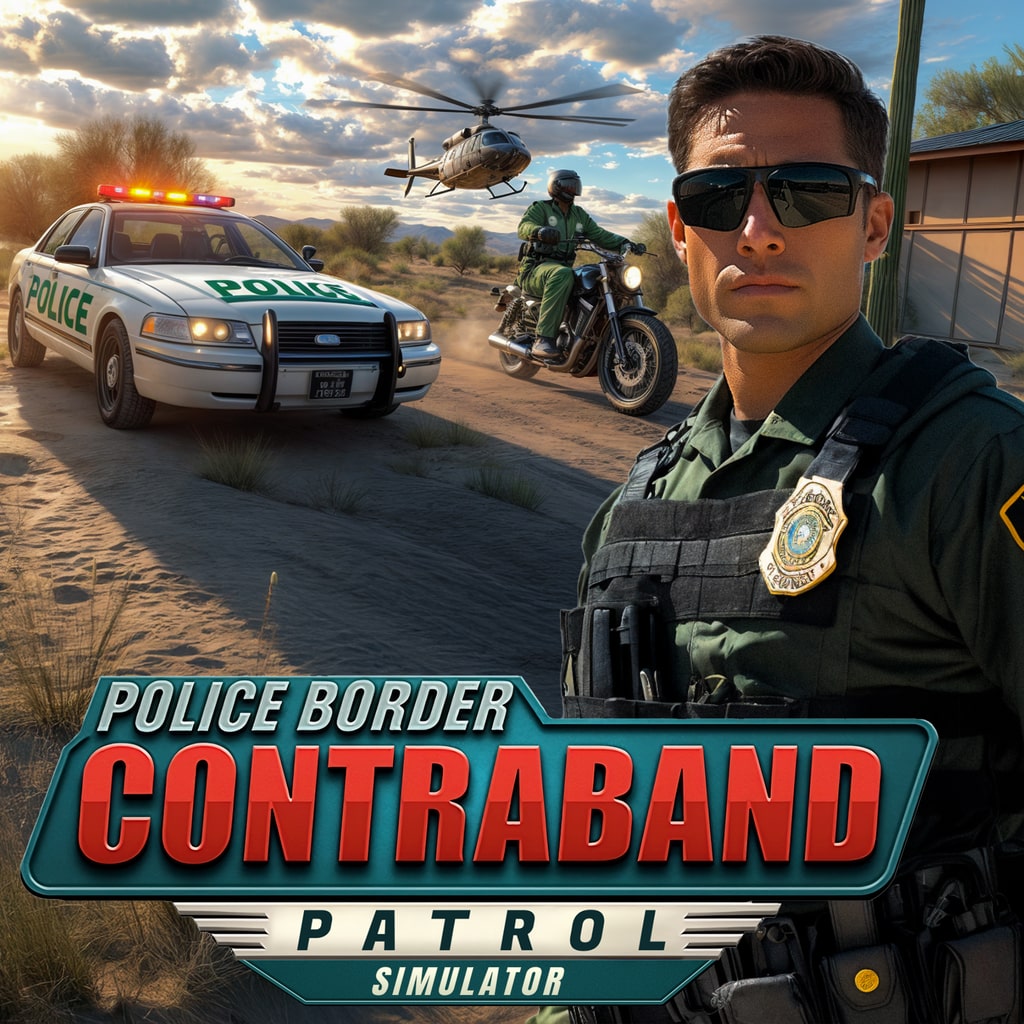
In a gaming landscape saturated with superheroes, high fantasy, and interstellar conflict, it’s refreshing — and surprisingly compelling — to find a title that places you not in the boots of an elite warrior but at the border checkpoint, that understated front line of real-world tension and consequence. POLICE BORDER CONTRABAND PATROL SIMULATOR (PBCPS) eschews bombast in favour of meticulous procedure, offering a simulation experience grounded in discipline, observation, and the slow, satisfying grind of professional mastery.
This is not a fast-paced action game. Nor is it a quirky arcade puzzler. It is a slow-burn simulator with precision at its core — a game where your greatest weapons are patience, critical thinking, and attention to detail. For players who enjoy procedural systems, emergent scenarios, and the satisfaction of mastering nuanced systems, Police Border Contraband Patrol Simulator is an intriguing and rewarding journey.
A Simulator With a Sense of Purpose
At its core, PBCPS places you in command of a border patrol station on a fictional frontier between two nations. Your job is straightforward in description but daunting in execution: inspect vehicles, interrogate drivers, sift through paperwork, and intercept contraband — all while maintaining order and upholding the law.
The game opens with a basic checkpoint tutorial: how to scan vehicles, verify IDs, and manage queues. These early moments are crucial, as they set the tone for what follows. There are no explosions or dramatic set-pieces here — only the steady, deliberate pulse of procedure. You learn to sort through manifests, flag discrepancies, and notice small inconsistencies that hint at concealed contraband or illicit intent.
This simplicity is deceptive. Once the early phases are over, PBCPS reveals itself as a study in emergent complexity. Every vehicle, every person crossing the border, is a unique puzzle — a bundle of data, demeanour, and opportunity for mischief. Detecting the bad actors demands more than rote repetition; it demands context, attention, and instinct.
Mechanics That Reinforce the Grind
One of the most striking aspects of Police Border Contraband Patrol Simulator is how its mechanics mirror real-world policing. There’s a procedural elegance to every task:
- Document Verification: Checking IDs, vehicle registrations, and travel passes isn’t a simple pass/fail. You’re encouraged to compare fonts, check issuing authorities, and spot subtle inconsistencies. A mistyped expiry date or a mismatched signature can be a clue — or a red herring.
- Vehicle Inspection: The heart of the game. You step into the shoes of a border officer rummaging through cargo vans, sedans, and trucks. You use tools like scanners and mirrors to peek under floorboards, check trunks, and assess hidden compartments. Your instincts matter. A driver’s nervous glance may not mean guilt, but it might.
- Interrogation and Profiling: Talking to suspects isn’t about rote phrases. The dialogue system lets you probe, push, or observe. Suspicious behaviour, contradictory statements, or vague answers provide critical hints. This creates emergent storytelling: no two encounters feel identical.
These mechanics do more than fill time. They create tension — a slow, cerebral suspense that unfolds as you weigh evidence, second-guess motives, and decide whether to detain, release, or escalate.
Emergence and Consequence
Police Border Contraband Patrol Simulator is at its best when it embraces emergent scenarios. A routine checkpoint early in the day might turn into a complex standoff by evening. Smugglers adapt their strategies, forged documents become more elaborate, and seasoned criminals may even taunt you with innocent confidence.
This dynamic adds robust replayability. There is no single “optimal path.” A well-trained officer might catch obvious contraband quickly, but the real challenge lies in reading patterns over time:
- Noting recurring violations from certain routes
- Tracking repeated offenders
- Predicting where hidden compartments might be located based on vehicle types and cargo manifests
Success isn’t just about catching bad actors — it’s about refining your judgement and anticipating bad behaviour.
Mistakes have consequences too. Letting a flagged vehicle go unchecked can lead to penalties, public relations hits, or even simulated political fallout. Conversely, detaining an innocent traveler can harm your reputation and lead to internal scrutiny. These stakes reinforce the game’s pacing and give each decision weight.
Learning Curve and Flow
PBCPS doesn’t throw players into the deep end unprepared. The tutorial and early checkpoint stages serve to familiarise newcomers with vocabulary, tools, and common scenarios. However, there’s still a meaningful learning curve once you’re tasked with handling multiple lanes, larger cargo hauls, or shifting security alerts.
This complexity is a positive — it demonstrates respect for the player’s ability to learn systems — but it can feel overwhelming at first, particularly for players unfamiliar with simulation games. Fortunately, the UI is thoughtfully designed: tooltips, procedural reminders, and contextual help reduce frustration without coddling the player.
What makes progress satisfying is how it feels earned. There are no handholds once the game’s systems are active; you are expected to connect details, recall patterns, and draw logical conclusions much like a real-world officer would.
Presentation and Atmosphere
Graphically, PBCPS adopts a utilitarian visual style. This is a game where clarity matters more than spectacle, and the art direction reflects that. Characters are detailed enough to convey personality without distracting from gameplay. Vehicles, documents, and cargo all render in crisp, readable form.
Sound design contributes significantly to immersion. Ambient audio — distant traffic, PA announcements, radio chatter — creates a sense of place. Tool sounds (scanner beeps, clipboard taps, engine rumble) are tactile and satisfyingly grounded. The soundtrack is subdued and functional, reinforcing the game’s sober tone rather than competing for attention.
The attention to sensory detail helps immerse players in their role. It’s not flashy, but it’s purposeful — and purpose is the point.
Multiplayer and Cooperative Potential
A neat touch is the inclusion of optional cooperative play. In this mode, multiple players can man different roles at the same checkpoint: one inspects vehicles, another manages documentation, and a third conducts interviews. Communication and coordination become key ingredients for success.
This feature brings a social edge to a genre that’s often solitary. Negotiating routines, divvying up responsibilities, and watching a suspect slip by because you forgot to check a manifest creates memorable sessions — and some heated but friendly disagreements.
Minor Bugs and Balance Issues
No simulation is perfect, and PBCPS has a few quirks worth noting. Occasionally, enemy AI drivers behave in ways that feel illogical — overly predictably angry or suspicious without clear cause. Some contraband placement can feel contrived rather than emergent. A few UI elements, especially in late-game inventory and evidence tracking screens, feel cluttered and could benefit from refinement.
However, these issues rarely derail the experience and are dwarfed by the simulator’s overall polish and ingenuity.
Final Thoughts — A Duty Well Performed
POLICE BORDER CONTRABAND PATROL SIMULATOR is a game with a distinct voice and focused intent. It’s not trying to emulate military conflict or cyberpunk fantasy; it’s trying to make the routine riveting, and in many ways it succeeds. The moments of quiet deduction, the careful inspection of a suspicious vehicle, and the satisfaction of uncovering hidden contraband all provide a sense of purpose that many games struggle to achieve.
This is a simulation that respects its players: it trusts them to learn systems, weigh evidence, and draw conclusions. It rewards patience, logical thinking, and attention to subtle detail. For players drawn to strategy, procedural challenge, and emergent narrative — and for anyone fascinated by the hidden dramas of real-world institutions — PBCPS is a thoughtful, engaging, and deeply satisfying experience.