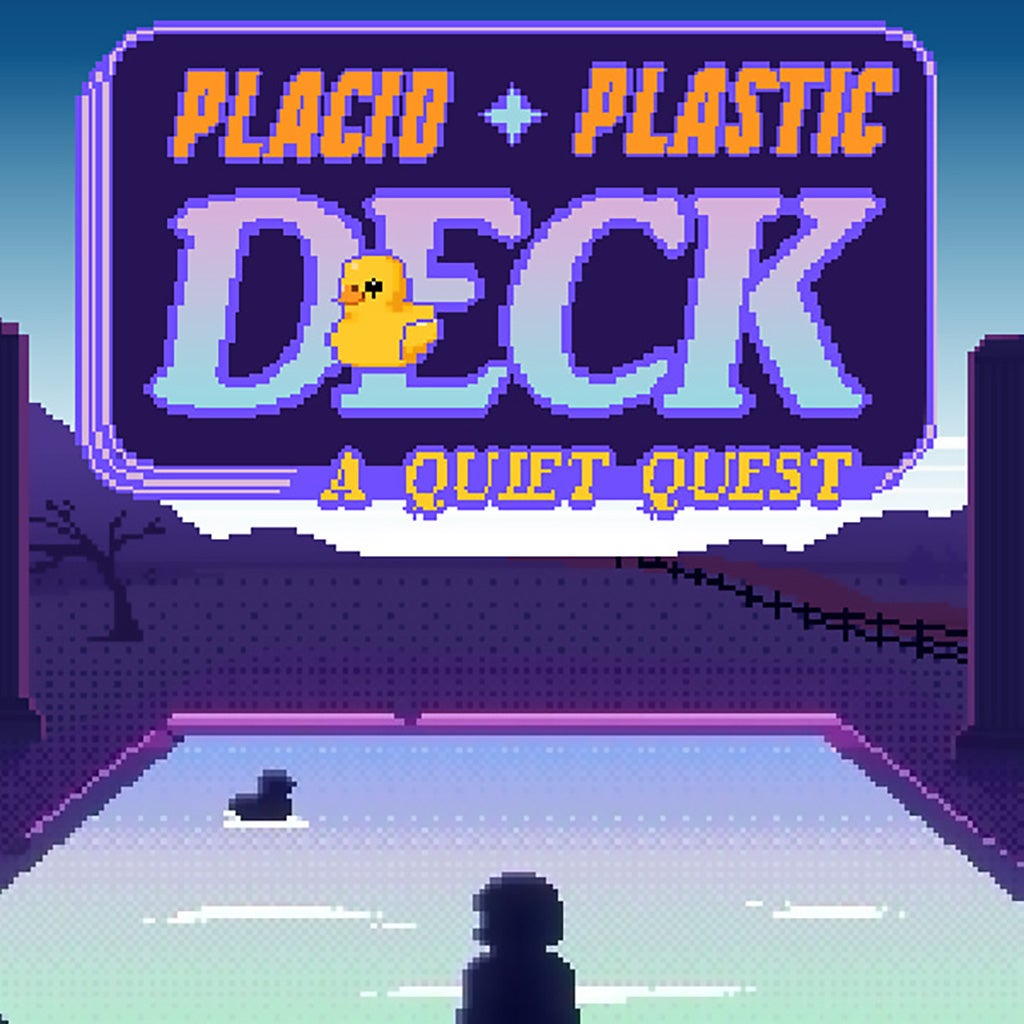
Few games felt as defiantly uneventful — in the best possible way — as Placid Plastic Duck Simulator. The 2022 cult hit asked players to simply watch rubber ducks float peacefully in pools, embracing stillness as entertainment. With Placid Plastic Deck – A Quiet Quest, developers turbolento games and Fantastico Studio attempt something unexpectedly ambitious: transforming that passive, meditative universe into a narrative-driven deckbuilding adventure.
Released February 17, 2026 for PC and Mac, A Quiet Quest shifts dramatically from idle observation to structured storytelling, card battles, and character growth. On paper, combining cozy absurdist humor with strategy mechanics sounds risky. In practice, the game becomes one of the year’s most charming genre mashups — part deckbuilder, part coming-of-age story, and entirely powered by rubber ducks.
It’s not a radical reinvention of card battlers mechanically, but its personality and sincerity elevate it far beyond novelty.
Story & Tone — A Small Story Told Gently
You play as Zoi, a teenage girl entering a regional card tournament despite possessing one critical flaw: she’s terrible at card games. Her motivation isn’t fame or glory but reconciliation — the tournament prize represents a chance to repair a fractured friendship.
This grounding emotional premise gives A Quiet Quest surprising weight. The narrative unfolds across a modest 5–7 hour campaign filled with eccentric opponents, strange locations, and quiet personal moments.
Dialogue choices shape relationships and influence story outcomes, leading to multiple endings that reflect Zoi’s emotional growth rather than simple victory conditions.
The writing strikes a delicate balance:
- Witty without becoming sarcastic
- Wholesome without becoming sentimental
- Funny without undermining sincerity
The humor often emerges naturally from the absurdity of serious conversations about rubber ducks as competitive entities.
Gameplay — Ducks Meet Deckbuilding
The core gameplay blends traditional deckbuilder mechanics with adventure game structure.
Players travel through a top-down pixel-art world, encountering opponents who challenge Zoi to card battles. Each victory unlocks new ducks, story progression, and dialogue paths.
Unlike hardcore deckbuilders, A Quiet Quest prioritizes accessibility. Early matches intentionally reflect Zoi’s inexperience, gradually teaching mechanics alongside narrative progression.
Combat systems will feel familiar to fans of modern card battlers:
- Energy-based card play
- Creature placement
- Trait interactions
- Strategic sequencing
However, complexity grows slowly, ensuring players never feel overwhelmed.
The comparison to Inscryption comes mainly from presentation and tone rather than mechanical depth. Battles emphasize personality and storytelling rather than ruthless optimization.
The Deck of Ducks
Naturally, every card represents a rubber duck — and each duck carries unique traits and quirks.
Some examples include:
- Ducks that gain strength when ignored
- Social ducks that buff neighboring allies
- Nervous ducks that weaken under pressure but excel late-game
- Mischievous ducks triggering unpredictable effects
What makes the system compelling isn’t raw complexity but personality-driven design. Ducks feel like characters rather than tools, reinforcing the game’s emotional core.
Learning how individual ducks behave mirrors Zoi learning confidence. Mechanics and narrative subtly align, creating satisfying thematic cohesion.
Deckbuilding becomes less about building the strongest possible strategy and more about understanding your companions.
Exploration & Adventure Structure
Between battles, players explore interconnected environments rendered in charming pixel art:
- Coastal towns
- Floating islands
- Airships
- Cozy indoor spaces filled with secrets
Hidden ducks and optional conversations reward curiosity. Exploration rarely becomes difficult but encourages slow pacing, matching the game’s relaxed tone.
NPCs frequently provide humorous dialogue or small narrative insights, making the world feel alive despite its modest scale.
The adventure structure keeps gameplay varied, preventing card battles from becoming repetitive.
Hybrid Visual Style
A Quiet Quest adopts a striking hybrid aesthetic.
Character exploration and storytelling unfold in hand-crafted 2D pixel environments, evoking classic RPGs. Meanwhile, card battles transition into stylized 3D boards populated with animated duck figurines.
This contrast works surprisingly well:
- Pixel art emphasizes intimacy and nostalgia.
- 3D boards add tactile presence to battles.
Cinematic moments occasionally merge both styles, reinforcing emotional story beats without feeling overly dramatic.
The presentation feels cohesive despite its contrasting techniques — a testament to thoughtful art direction.
Sound & Atmosphere
The soundtrack leans toward soft electronic melodies and gentle acoustic tones, maintaining a calming atmosphere throughout the journey.
Audio design supports the cozy tone:
- Subtle duck squeaks during battles
- Ambient environmental sounds during exploration
- Light musical cues reinforcing emotional scenes
Music never dominates attention but enhances the sense of warmth and reflection that defines the experience.
Difficulty & Accessibility
A Quiet Quest intentionally avoids punishing difficulty.
Matches provide challenge without frustration, and deck experimentation remains forgiving. Players rarely encounter hard progression walls, reinforcing the narrative focus.
This design choice may disappoint hardcore deckbuilder enthusiasts seeking deep meta complexity, but it aligns perfectly with the game’s intended audience and emotional pacing.
The goal isn’t mastery — it’s growth.
Replay Value & Endings
Multiple endings encourage replayability, driven primarily by dialogue decisions and relationship outcomes rather than radically different gameplay routes.
Additional ducks, secret matches, and hidden interactions reward second playthroughs, while Easter eggs — including menu secrets for returning players — add playful longevity.
Though relatively short, the game invites revisiting for emotional closure and discovery.
Performance & Technical State
Performance is stable across PC and Mac platforms, with smooth transitions between exploration and battle modes. Steam Deck compatibility works particularly well thanks to the game’s relaxed pacing and clear interface.
No major technical issues stand out, and load times remain minimal.
Pros & Cons
Pros
- ✔ Charming narrative with genuine emotional heart
- ✔ Creative duck-themed deckbuilding mechanics
- ✔ Accessible gameplay ideal for newcomers
- ✔ Beautiful hybrid pixel/3D art style
- ✔ Strong humor balanced with sincerity
Cons
- ✘ Limited mechanical depth for hardcore deckbuilder fans
- ✘ Short campaign length
- ✘ Low difficulty reduces long-term strategic challenge
Final Verdict
Placid Plastic Deck – A Quiet Quest could have easily been a novelty spin-off built purely on the popularity of its predecessor. Instead, turbolento games and Fantastico Studio deliver something unexpectedly thoughtful — a small, heartfelt adventure about growth, friendship, and learning confidence through play.
Its mechanics may not redefine the deckbuilder genre, but that was never the goal. The game succeeds because it understands tone. Every system, joke, and visual choice supports a gentle underdog story that feels personal rather than grandiose.
Where many strategy games celebrate mastery, A Quiet Quest celebrates learning — embracing mistakes, experimentation, and emotional honesty.
It’s cozy without being shallow, funny without being cynical, and sincere without losing its playful absurdity.
Sometimes the quietest quests leave the strongest impressions.