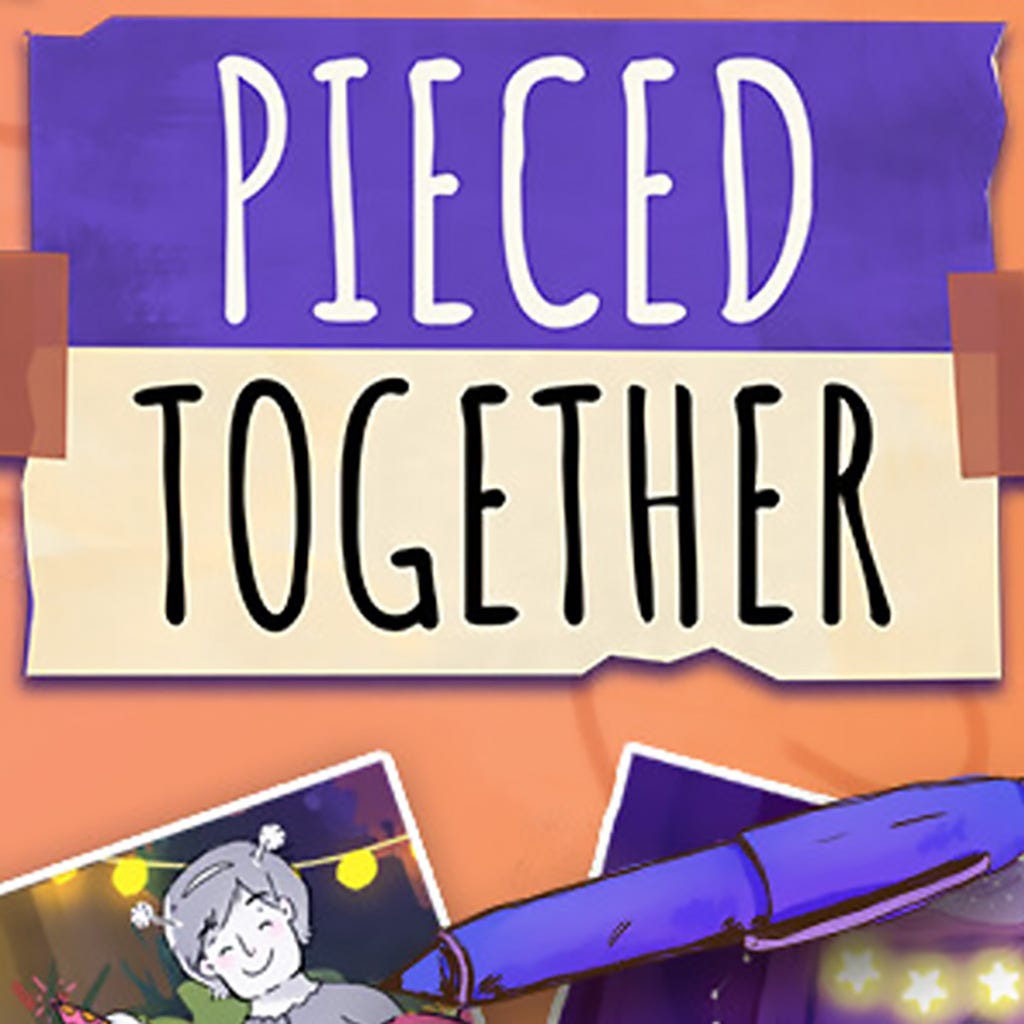
There are some games that ask you to conquer worlds, save kingdoms or defeat impossible odds. Then there are games like Pieced Together, which quietly ask you to sit down, open an old scrapbook and remember. Glowfrog Games’ debut is a remarkably gentle little experience about friendship, memories and the uncomfortable truth that growing older means some things inevitably change. It is not interested in throwing endless challenges at you or stretching a two hour story into twenty, instead choosing to make every photograph, sticker and scrap of paper feel like part of something much more personal.
That simplicity is both its greatest strength and the thing that will ultimately determine whether Pieced Together works for you. This is a cosy puzzle game first and foremost, but the puzzles are really a vehicle for a much more emotional journey. Across its carefully constructed chapters, you take on the role of Connie as she revisits memories and pieces together moments from her past, gradually revealing the story of a friendship that has meant more to her than perhaps she realised at the time. It is short, sweet and occasionally surprisingly painful, in the way that memories can be when viewed through older eyes.
A Scrapbook Full Of Memories
Pieced Together immediately establishes its identity through its wonderfully tactile presentation. Rather than throwing the player into a conventional puzzle interface, Glowfrog Games creates the sensation of physically handling photographs, paper shapes, keepsakes and decorative stickers. There is something inherently comforting about the process, particularly because the game never makes you feel rushed. You can take your time examining an item, working out where it belongs and appreciating the little details that make each scrapbook page feel personal.
The puzzles themselves are deliberately accessible, which is absolutely the right decision for this particular experience. You are generally arranging photographs, cutting shapes, matching objects or working out how different pieces fit together, but the satisfaction comes from understanding what those objects mean rather than simply solving a difficult brainteaser. There are moments where you might pause to figure out exactly how something should be arranged, but Pieced Together is never trying to make you feel stupid. It wants you to feel curious, and that distinction makes the whole experience much more inviting.
Connie’s Story
At the heart of Pieced Together is Connie, whose memories provide the thread connecting everything together. Her story unfolds gradually across six narrative chapters, with each section revealing another piece of her past and the friendship that shaped so much of it. The writing does not constantly hammer its emotional themes into you, which is important because stories about nostalgia can become painfully sentimental when they try too hard.
Instead, the game gives its memories room to breathe. A photograph might initially seem like nothing more than another object that needs to be positioned correctly, but its context can completely change how you view it. A seemingly ordinary moment becomes more meaningful when you understand the people involved and where they eventually ended up. That approach gives the scrapbook itself an almost diary like quality, as though you are not simply solving puzzles but helping Connie understand her own history.
Friendship And Growing Up
The central theme of friendship is handled with an unusual amount of maturity for such a small game. Pieced Together understands that friendships do not always end because somebody does something terrible. Sometimes people simply grow apart, life changes direction and circumstances make the relationship you once took for granted increasingly difficult to maintain. That can be a much harder thing to accept than a straightforward betrayal because there is nobody to blame.
This is where the game finds much of its emotional power. Its story is not necessarily about trying to recreate the past, but about understanding it and accepting that the person you were is not the person you are now. There is a gentle melancholy running through the experience, but it never becomes overwhelmingly bleak. Instead, there is warmth in the sadness, particularly in the idea that something can have been incredibly important even if it could not last forever.
Beautifully Handmade
Visually, Pieced Together is lovely in a way that perfectly suits its subject matter. The hand drawn illustrations have a warmth that would be difficult to achieve through a more conventional art style, while the scrapbook presentation makes everything feel like it has been physically created rather than simply rendered on a screen. Little details in the artwork help sell the idea that these are cherished possessions being rediscovered rather than generic puzzle pieces.
The hand drawn animations are similarly charming. There is no need for extravagant visual effects because the game’s appeal comes from its intimacy. The result feels closer to opening somebody’s personal memory box than playing a conventional adventure game. It is the sort of presentation that encourages you to slow down and appreciate the work that has gone into every page.
A Soundtrack For Reflection
The acoustic soundtrack deserves particular praise because it understands the importance of restraint. Rather than filling every moment with dramatic music, the game uses gentle melodies to support its emotional beats and create a sense of quiet reflection. The result feels natural rather than manipulative, allowing the music to sit comfortably alongside the visuals and narration.
The voice acting also helps enormously. Strong performances can make even relatively simple pieces of dialogue feel genuine, and the high quality voice work gives Connie’s memories an additional layer of personality. There is a sense that you are listening to somebody looking back on their life rather than being presented with a script designed solely to push you towards the next puzzle.
A Short But Sweet Journey
The biggest question surrounding Pieced Together is undoubtedly its length. At around one to two hours, this is a very short game by almost any traditional measurement. There are players who will inevitably finish it and wonder whether they wanted more, particularly if they become attached to Connie and the world she is revisiting.
Personally, I think extending the experience simply for the sake of adding content would have been a mistake. Pieced Together works because it is focused. It tells the story it wants to tell, gives each chapter enough space to make an impression and then gets out before the sentiment becomes repetitive. Like a good short story, it leaves you with something to think about rather than demanding that you spend dozens of hours with it.
The Joy Of Letting Go
Perhaps the most impressive thing about Pieced Together is that it does not confuse nostalgia with happiness. Looking back at childhood can be comforting, but it can also remind us of people we no longer speak to, places that no longer exist and versions of ourselves that cannot be recovered. The game understands that bittersweet quality and builds its entire experience around it.
The scrapbook mechanics reinforce that message beautifully. You are literally taking fragments of the past and putting them back together, but you cannot actually return to those moments. You can arrange the photographs, decorate the pages and preserve the memories, but time continues moving forward regardless. There is something quietly profound about that idea, especially because the game never needs to announce it with a huge dramatic speech.
The Final Verdict
Pieced Together is a small game with a surprisingly big heart. Its puzzles are gentle, its presentation is beautiful and its story understands that some of the most important moments in our lives are not grand adventures but ordinary afternoons spent with people we thought would always be there. Glowfrog Games has created something that feels sincere, carefully made and refreshingly comfortable with its own limitations.
It will not be for everyone. Players looking for demanding puzzles, huge amounts of content or complex systems will probably find the experience too slight, and there is no escaping the fact that one to two hours is a short commitment. But if you approach it for what it is, a cosy interactive scrapbook about friendship, memory and growing older, there is plenty here to appreciate.
Pieced Together reminded me that games do not always need to shout to make an impression. Sometimes they can simply sit beside you, hand you an old photograph and ask you to remember what it felt like when that photograph was taken. That is a surprisingly powerful thing for a game to achieve, and Glowfrog Games deserves credit for trusting its story enough to keep everything else simple.