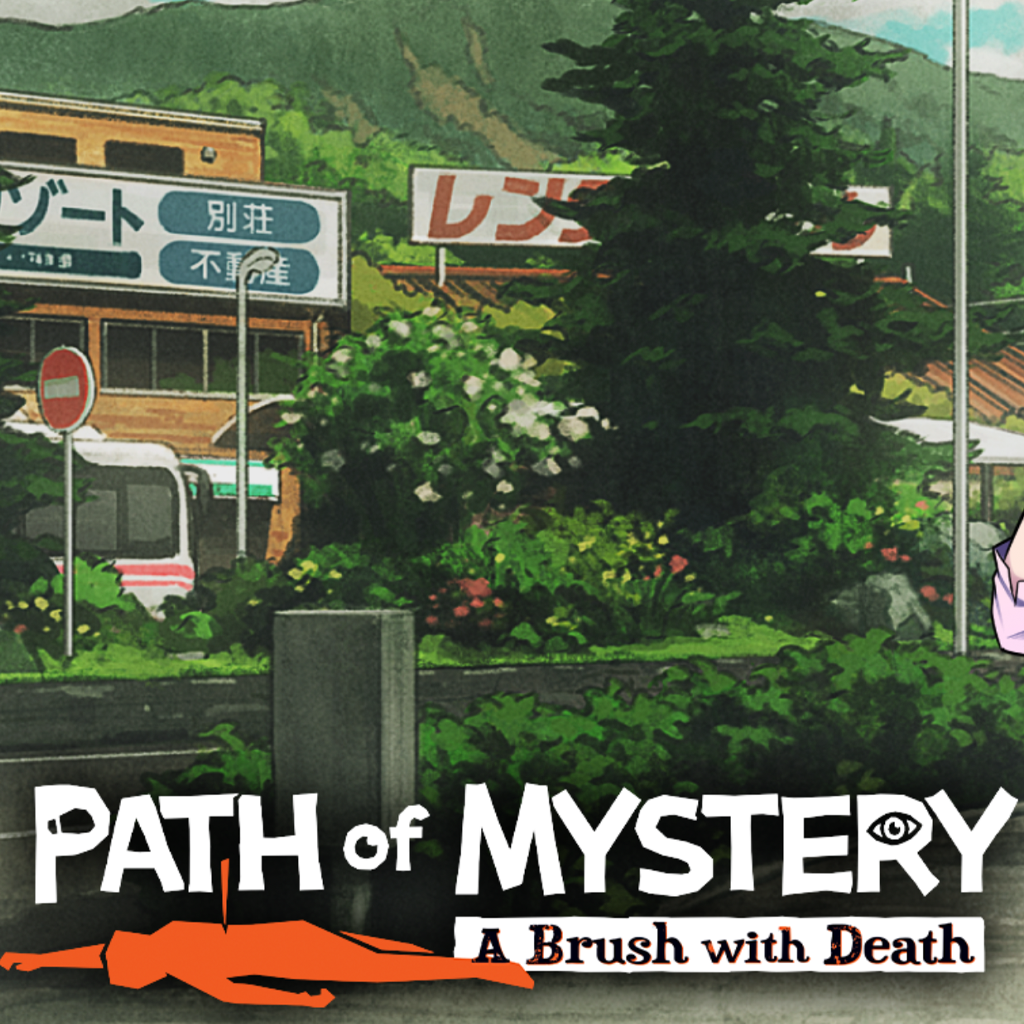
Mystery games live and die by two things: atmosphere and payoff. A compelling premise might pull players in, but only careful pacing, believable characters, and clever revelations can keep them invested long enough for the final twist to matter. Path of Mystery: A Brush with Death, the Western release of Mystery Walk, arrives on Nintendo Switch aiming to deliver exactly that — a supernatural detective story wrapped in nostalgic presentation and episodic storytelling.
Developed by Toybox and Imagineer — the team behind World End Syndrome — and published by Aksys Games, this visual novel adventure blends cold-case investigation with time manipulation mechanics. It’s a slower, more contemplative mystery than many modern detective games, but one that rewards patience with a surprisingly emotional narrative.
It may not reinvent the genre, but it understands what makes mysteries memorable.
A Cold Case That Refuses to Stay Buried
You play as Doppo Akazawa, a university student with a secret ability known as retrocognition: by touching certain objects, he can witness fragments of the past. When Doppo joins his school’s Mystery Research Club, he becomes entangled in a decades-old unsolved murder — the brutal killing of a renowned landscape artist in the quiet rural town of Narumizawa.
Thirty years ago, the case was closed under suspicious circumstances. The main suspect died, evidence was incomplete, and the truth quietly faded into local legend.
Your task is simple in theory: reopen the investigation.
In practice, it’s anything but.
The story unfolds gradually as you explore the town, interview residents, and uncover long-buried resentments. Narumizawa itself becomes a character — a place shaped by memory, denial, and secrets people would prefer remain untouched.
Unlike faster-paced mystery titles, A Brush with Death leans heavily into slow-burn storytelling. Conversations linger. Characters hesitate. Silences matter. This deliberate pacing helps sell the realism of revisiting trauma decades later.
Retrocognition: Seeing What Others Cannot
The game’s standout mechanic is retrocognition.
By interacting with important objects — a paintbrush, a broken railing, a forgotten photograph — Doppo slips into visions of the past. These sequences shift dramatically in presentation, adopting a 16-bit retro aesthetic that contrasts beautifully with the modern anime art style used in present-day scenes.
This dual-art approach isn’t just stylistic flair; it reinforces the thematic divide between memory and reality.
Past sequences aren’t fully interactive reenactments. Instead, they function as investigative puzzles. You observe details, piece together timelines, and search for inconsistencies that escaped the original investigation.
Crucially, the game trusts players to notice things themselves. Environmental storytelling plays a huge role — a moved object, a missing decoration, or a character standing slightly out of place can become vital evidence later.
It’s deeply satisfying when a seemingly minor observation turns into a breakthrough during interrogation.
Conversations as Combat
Rather than traditional puzzle-solving, the primary gameplay tension comes from interview and interrogation segments.
Armed with knowledge gained through retrocognition, Doppo must navigate conversations carefully. You cannot openly reveal your supernatural powers, meaning accusations must be framed logically using evidence and deduction.
These exchanges feel almost like courtroom battles, though quieter and more psychological than the Ace Attorney series.
Choosing when to push a suspect, when to stay silent, or when to present information creates genuine tension. Some characters grow defensive, others crack emotionally, and a few attempt manipulation themselves.
The writing shines here. Dialogue feels natural, often layered with subtext rather than overt exposition. Characters rarely behave like obvious suspects — they feel like ordinary people protecting complicated truths.
Episodic Storytelling Done Right
The narrative structure mimics a television crime drama, dividing the story into episodic chapters complete with opening and closing sequences.
This format works remarkably well for handheld play sessions. Each episode introduces new revelations or suspects while maintaining forward momentum.
The pacing benefits greatly from this approach:
- Episodes rarely overstay their welcome.
- Cliffhangers encourage continued play.
- Character arcs develop organically over time.
It creates a rhythm reminiscent of classic Japanese mystery dramas, where emotional beats matter as much as plot twists.
A Town Frozen Between Eras
Visually, Path of Mystery balances nostalgia and modern presentation.
Modern-day segments feature clean anime character portraits, expressive animations, and warm environmental designs that emphasize small-town tranquility.
Meanwhile, retrocognition scenes lean into pixel art aesthetics, evoking 90s adventure games. The effect is more than nostalgic — it subtly suggests that memories themselves are imperfect reconstructions.
The soundtrack complements this duality. Gentle piano and ambient tracks dominate exploration, while retro-inspired tones accompany past sequences. Voice acting remains in Japanese, delivered with strong performances that elevate emotional moments even for players relying on subtitles.
Strengths in Writing — and Its Limits
Where the game excels most is characterization.
Members of the Mystery Research Club provide warmth and humor, preventing the narrative from becoming overwhelmingly bleak. Their camaraderie gives emotional grounding to Doppo’s investigation.
However, the pacing won’t appeal to everyone.
Players expecting constant twists may find the early chapters slow. The game invests heavily in establishing relationships and local history before major revelations occur. While this pays off narratively, it demands patience.
Additionally, gameplay variety remains limited. Outside investigations and conversations, interaction is mostly menu-driven. Those seeking mechanical complexity may feel constrained.
But for visual novel fans, this restraint is intentional — the mystery itself is the gameplay.
Switch Performance and Presentation
On Nintendo Switch, performance is flawless.
Menus are responsive, text is easy to read in handheld mode, and load times are minimal. The episodic structure makes it ideal for portable play, reinforcing its “one more chapter” appeal.
Localization deserves praise as well. The English script flows naturally, preserving tone and cultural nuance without feeling overly literal.
Themes Beneath the Mystery
Beyond solving a murder, A Brush with Death explores deeper ideas:
- how communities rewrite history
- the fragility of memory
- guilt passed across generations
- and the ethical burden of knowing truths others cannot see
The supernatural element never overshadows the human drama. Instead, it becomes a metaphor for empathy — the ability to literally walk in someone else’s past.
By the time the final revelations arrive, the mystery feels less about identifying a culprit and more about understanding why events unfolded as they did.
Final Verdict
Path of Mystery: A Brush with Death is a thoughtful, atmospheric detective adventure that prioritizes storytelling over spectacle. Its retrocognition mechanic adds a clever investigative twist, while strong writing and distinctive visual presentation create a mystery worth unraveling.
It won’t satisfy players looking for fast-paced gameplay or constant action, but those willing to immerse themselves in its slow-burning narrative will find a deeply rewarding experience.
In an era crowded with high-stakes thrillers, this game succeeds by being intimate, reflective, and quietly haunting.