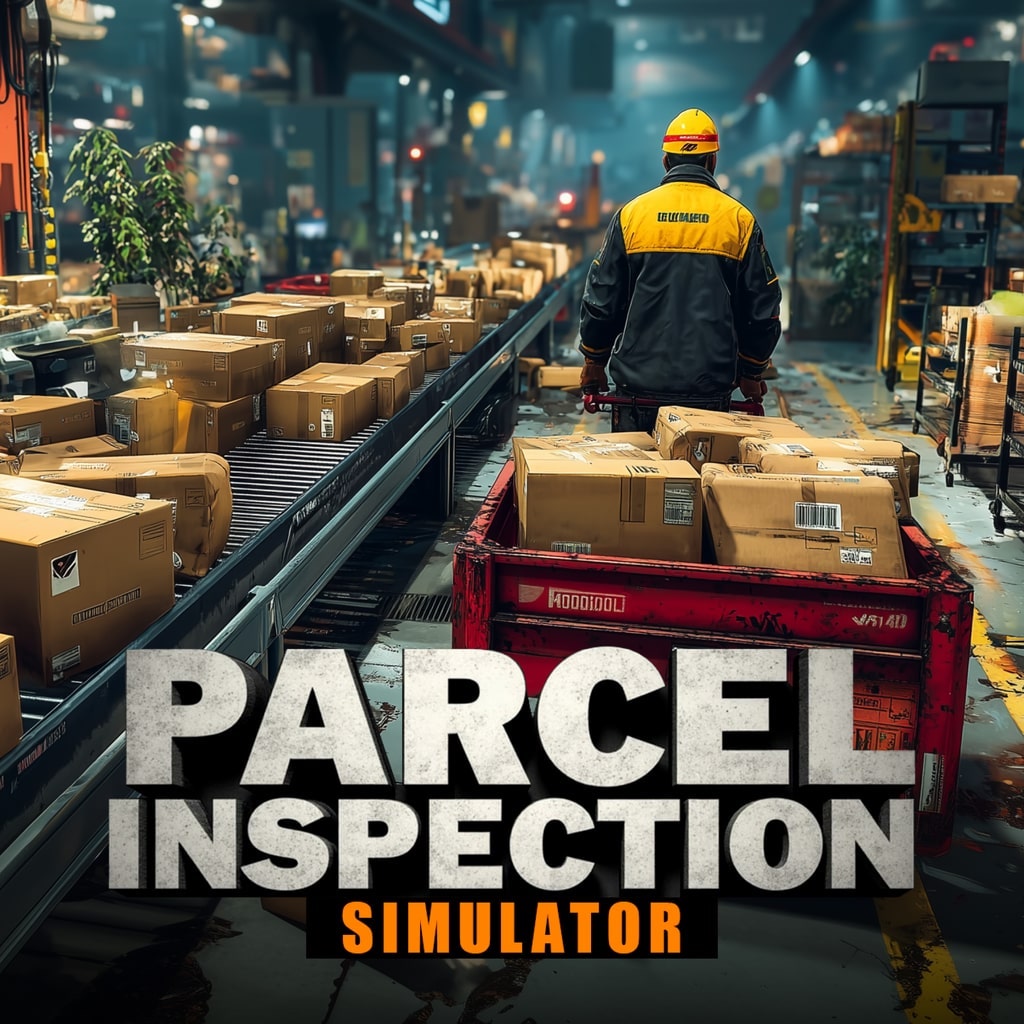
Released on April 10, 2026, Parcel Inspection Simulator arrives on PlayStation 4 as a “Pro Enhanced” simulation experience published by IORDER SRL. While earlier PC-focused iterations of parcel simulation games often leaned heavily on warehouse logistics and empire-building progression, this console release sharpens the concept into something far more focused—and far more tense.
Here, you are not simply moving boxes through a system. You are a frontline inspection officer in a global shipping pipeline, responsible for verifying documentation, checking cargo integrity, and identifying contraband or mismatched declarations before they enter circulation.
Every parcel tells a story. Some are mundane. Some are mistakes. And some are problems you are expected to catch before they escalate.
This is a simulator built around scrutiny.
Core Concept – Security, Accuracy, and Suspicion
At its heart, Parcel Inspection Simulator is a procedural security and customs inspection experience. Your job is to assess incoming shipments for accuracy and compliance across multiple layers of verification.
Each parcel must be assessed against:
- Sender and recipient documentation
- Declared weight vs. scanned weight
- Cargo classification accuracy
- Restricted or suspicious contents
- International shipping compliance rules
What begins as simple document matching quickly evolves into a layered investigative process. You are not just checking whether information matches—you are determining whether it has been deliberately falsified.
The inclusion of contraband detection significantly transforms the gameplay loop. Suspicious parcels may require secondary inspection, scanning, or outright rejection. As the workload increases, so does the likelihood of encountering complex, multi-variable discrepancies.
This elevates the experience beyond a typical job simulation into something closer to a procedural logic puzzle under pressure.
Gameplay Loop – Inspect, Scan, Flag, Process
The game’s structure revolves around a steady rhythm of inspection tasks, each building toward a larger operational flow.
Inspection and Verification
Every parcel enters your station with associated documentation. Your role is to verify accuracy using multiple tools:
- Visual label inspection
- Digital document comparison
- Weight scanning systems
- Cargo type validation checks
Discrepancies must be identified promptly and accurately. A mismatch may indicate a simple clerical error—or a deliberate attempt to circumvent customs restrictions.
Contraband Detection
One of this version’s defining features is the contraband screening layer. Some parcels contain undeclared or prohibited items, requiring closer inspection.
These segments introduce tension into what would otherwise be routine tasks. The game does not always make danger clear; instead, it relies on pattern recognition and player intuition.
Flagging a parcel incorrectly can slow operations. Missing contraband can later escalate penalties.
Sorting and Routing
Once inspected, parcels must be directed to the appropriate channels: clearance, secondary inspection, rejection, or escalation queues.
This routing system adds a logistical layer to the gameplay, reinforcing the idea that you are part of a larger enforcement pipeline rather than an isolated checker.
Difficulty Curve – Escalating Complexity Under Pressure
The difficulty progression in Parcel Inspection Simulator is gradual yet persistent. Early stages allow players to become familiar with basic verification tools and parcel formats.
As the game advances, complexity increases through:
- Higher shipment volume
- More frequent documentation inconsistencies
- Multi-step verification requirements
- Increased contraband probability
- Time-sensitive processing demands
Rather than abruptly overwhelming the player, the game builds pressure through accumulation. The challenge becomes less about understanding systems and more about maintaining accuracy under sustained pressure.
This creates a steady, almost procedural state of stress—where focus is constantly tested but rarely shattered.
Presentation – Functional Clarity with Clinical Tone
Visually, the game adopts a clean, utilitarian aesthetic designed to prioritise readability above all else. Parcels, documents, and scanning interfaces are rendered with sharp clarity, ensuring critical information is always visible.
This clinical presentation reinforces the game’s identity as a system-driven simulation. There is little decorative flourish, and it is intentional.
However, the downside is environmental monotony. Workspaces feel structurally similar over long sessions, with minimal visual variation between inspection zones.
The game’s aesthetic purpose is clarity, not atmosphere—and it commits fully to that goal.
Audio and DualSense Feedback – Weight and Consequence
Sound design is subtle yet effective, reinforcing the procedural nature of the experience. The ambient hum of the facility, scanner beeps, and parcel-handling noises create a consistent workplace atmosphere.
On PlayStation 4 Pro Enhanced systems, the DualShock 4 vibration system plays a surprisingly important role. Different parcel interactions produce distinct tactile feedback:
- Heavier shipments generate stronger controller resistance
- Rejected parcels trigger a sharp “stamp” vibration
- Scanning successful contraband creates a brief, sharp pulse
This physical feedback layer adds an unexpected sense of weight to otherwise abstract interactions, grounding the inspection process in a tactile response.
Progression – From Desk to Enforcement Hub
Progression is tied to facility expansion and operational efficiency. Starting from a single inspection station, players gradually unlock:
- Advanced scanning equipment
- Expanded sorting infrastructure
- Faster processing lanes
- Secondary inspection rooms
- Automated routing tools
The transformation of your workspace is one of the game’s most satisfying elements. You are not just completing tasks—you are building a system to handle increasing global complexity.
However, automation remains limited enough that player involvement never fully disappears, preserving the hands-on nature of the experience.
Replayability – Mastery Through Efficiency
There is no narrative endpoint in Parcel Inspection Simulator. Instead, replayability centres on optimisation.
Players are encouraged to:
- Reduce inspection errors
- Improve processing speed
- Minimise bottlenecks
- Maximise throughput efficiency
Each session becomes an exercise in refinement. The appeal lies not in completion but in control—perfecting the flow of an increasingly complex inspection system.
Final Verdict
Parcel Inspection Simulator is a focused, surprisingly intense simulation of procedural enforcement work. By shifting its emphasis to customs-style inspection, contraband detection, and weight-verification systems, it turns mundane logistics into a game of constant attention and measured suspicion.
Its strengths lie in clarity, structured escalation, and the satisfying tension of avoiding errors under pressure. However, its rigid presentation and repetitive environments may limit long-term variety for some players.
This simulation thrives on discipline. It does not seek to entertain through chaos, but through precision—and the quiet tension of catching something everyone else missed.