When PARANORMASIGHT: The Seven Mysteries of Honjo launched in 2023, it quietly became one of Square Enix’s most surprising cult hits—a supernatural visual novel steeped in Showa-era urban legends, clever meta puzzles, and haunting atmosphere. It felt niche, intimate, and weirdly daring for a major publisher.
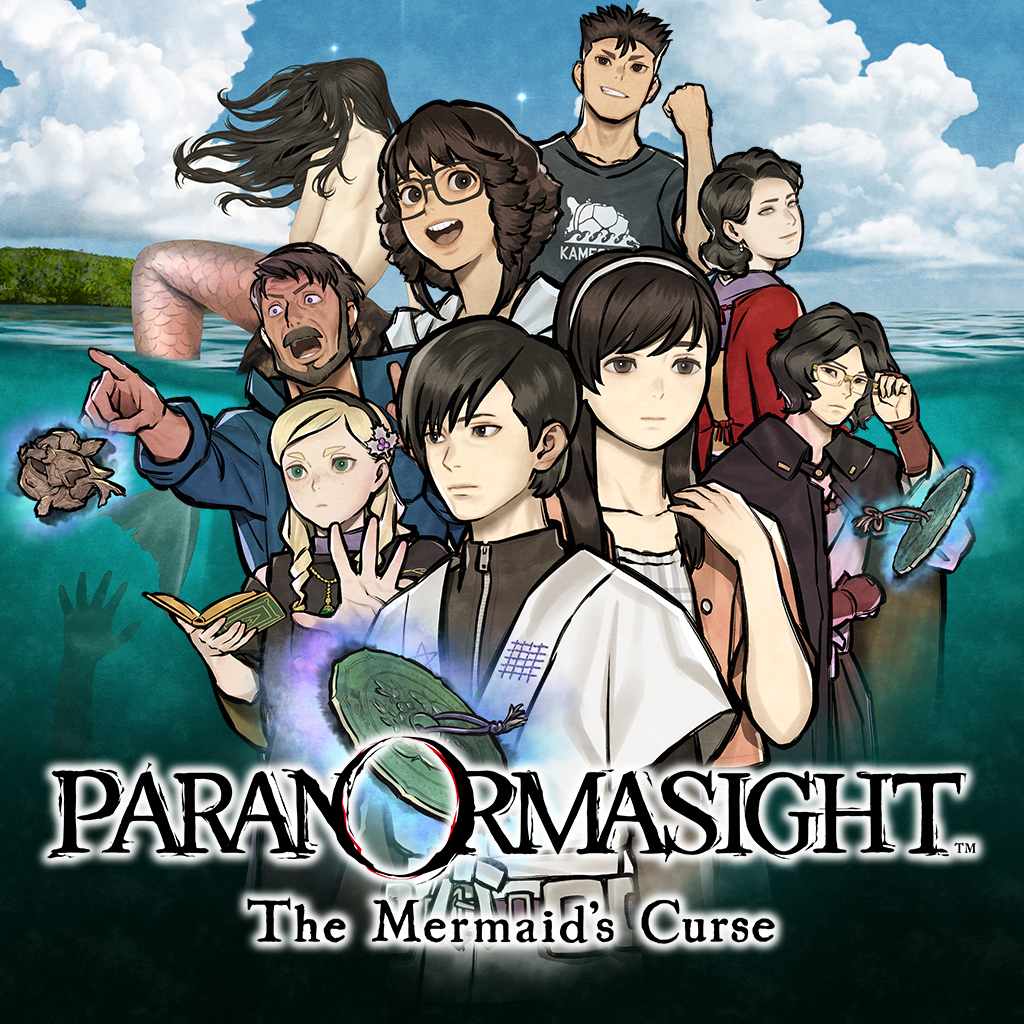
Three years later, PARANORMASIGHT: The Mermaid’s Curse arrives as a standalone sequel, shifting the action from the fog-drenched streets of Sumida to the coastal isolation of Kameshima Island in Ise-Shima. It keeps the series’ signature timeline web, fourth-wall mischief, and historical deep dives—but introduces new mechanics, a new legend, and a more emotional throughline anchored in family and identity.
If the first game was about cursed grudges in the city, The Mermaid’s Curse is about memory, myth, and the sea swallowing truth.
And it might be even stronger for it.
The Legend of Immortality
At the center of the story is Yuza Minakuchi, a young pearl diver living on the remote island of Kameshima. After experiencing a supernatural event on the ocean floor—encountering what appears to be another version of himself—Yuza becomes entangled in a growing web of curses linked to a centuries-old legend: the Mermaids of Ise.
According to island folklore, a mermaid grants immortality—but at a terrible cost.
Yuza suspects that his own mother, who vanished years ago, may somehow be tied to this legend. As mysterious drownings, foreign treasure hunters, and unsettling visions begin to converge, the narrative spirals into psychological horror layered with folklore and quiet tragedy.
Unlike many horror visual novels, The Mermaid’s Curse isn’t built around jump scares. Its dread is existential. The horror lies in what immortality truly means—and what happens when history refuses to stay buried.
A Web of Timelines
As with its predecessor, the game’s core structure revolves around a non-linear “Story Chart.”
You don’t play through a straight narrative. Instead, you:
- Switch between multiple protagonists
- Unlock new branches by solving problems in different timelines
- Trigger alternate outcomes that reveal key information
In addition to Yuza, you’ll control:
- A foreign treasure hunter chasing maritime secrets
- A housewife investigating a suspicious drowning
- A mysterious girl with unclear origins
Each character has their own perspective and knowledge. Solving a puzzle in one timeline may reveal information necessary to prevent death in another.
The Story Chart interface remains one of the series’ most elegant mechanics. It visually maps every branching possibility, encouraging experimentation rather than punishing failure.
And yes—the infamous “dead ends” return. Some outcomes are fatal. Others unlock hidden narrative threads.
It’s less about choosing right or wrong, and more about assembling truth.
Diving Into Something New
The biggest gameplay addition this time is the “Diving” mechanic.
At select points, Yuza enters first-person underwater sequences where you explore the seabed, search for clues, and uncover hidden objects. It’s not a full simulation—controls are simple and focused—but it adds a tactile layer to the investigation.
These segments are short, but effective.
The muffled sound design and weightless movement create a stark contrast to the text-heavy narrative sections. They also reinforce the game’s thematic focus on depth—both literal and metaphorical.
It’s not revolutionary, but it breaks up the pacing in welcome ways.
360° Investigation Returns
One of the original game’s standout features was its immersive 360-degree backgrounds. That system returns here, with beautifully rendered coastal and village environments recreated in collaboration with Mie Prefecture.
You can:
- Rotate environments fully
- Zoom into suspicious details
- Trigger dialogue based on what you inspect
The island setting provides a broader visual palette than Honjo’s urban gloom. You’ll explore:
- Wind-battered shorelines
- Quiet fishing docks
- Abandoned shrines
- Traditional houses overlooking the sea
The presentation is understated but atmospheric. The 1980s aesthetic remains intact—landline phones, cassette players, and subtle period detail ground the supernatural in reality.
Breaking the Fourth Wall (Again)
Fans of the first game know that PARANORMASIGHT isn’t afraid to mess with you.
The Mermaid’s Curse continues its playful (and occasionally unsettling) meta-narrative streak.
Without spoiling specifics, you can expect:
- The return of the “Storyteller”
- Puzzles that require interacting with the UI
- Moments where the game seems aware of your actions
It’s never gimmicky for the sake of it. These moments reinforce the theme of perspective and observation—reminding you that you are part of the storytelling process.
Few visual novels handle meta-elements as confidently as this series.
Edutainment With Purpose
Like its predecessor, the game doubles as an educational deep dive into Japanese folklore and regional history.
The in-game “Files” section updates constantly, providing:
- Context on mermaid legends in Ise-Shima
- Historical notes about pearl diving traditions
- Cultural references from 1980s Japan
What could feel like trivia instead enhances immersion. The folklore isn’t window dressing—it’s foundational.
By the time you reach the final act, the myth feels alive.
Sound & Atmosphere
The soundtrack leans toward minimalism—soft ambient tones, distant waves, quiet tension. Voice acting is used sparingly but effectively.
The horror is psychological rather than explosive.
Moments of silence are weaponized. The ocean becomes a character in itself.
And when the supernatural intrudes, it feels earned.
Pacing & Accessibility
At around 10–15 hours for full completion (including all endings), The Mermaid’s Curse strikes a comfortable length.
It doesn’t overstay its welcome. Branching routes feel meaningful rather than bloated. And the Story Chart makes revisiting alternate outcomes painless.
Importantly, you do not need to have played The Seven Mysteries of Honjo. While returning players will appreciate thematic callbacks and Easter eggs, this is a fully standalone narrative.
Where It Falters
While excellent overall, there are minor drawbacks:
- Some dialogue sections linger slightly longer than necessary.
- The diving segments, while welcome, could have been expanded further.
- A few late-game timeline jumps can momentarily confuse pacing.
But these are small blemishes on an otherwise tightly crafted experience.
Final Verdict
PARANORMASIGHT: The Mermaid’s Curse proves that the first game was no fluke.
It refines the timeline web, deepens its folklore integration, and adds new mechanics without losing the series’ identity. It’s unsettling without being gratuitous, educational without being dry, and clever without feeling smug.
Few visual novels manage to balance mystery, horror, and meta-play this elegantly.
Square Enix continues to nurture one of its most creatively daring modern series—and fans of supernatural storytelling should absolutely dive in.