In a genre defined by branching choices, emotional introspection, and slow-burn storytelling, Parallel Hearts takes a familiar framework and reshapes it into something quietly distinctive. Rather than focusing on the rush of first encounters or dramatic turning points, this romantic narrative visual novel explores what happens when a connection exists outside of time, memory, and certainty. The result is an experience that is reflective, intimate, and often haunting, even if its ambitions occasionally outpace its scope.
At its core, Parallel Hearts is less about falling in love and more about holding onto it — even when the world insists you shouldn’t.
A Story Built on Memory and Absence
You play as Nora, a young woman experiencing a recurring dream that unfolds beside a tranquil lakeside. Each night, she meets the same boy. Each morning, he forgets her completely. Nora remembers everything. He remembers nothing.
This simple but effective premise drives the entire narrative. The lake becomes a liminal space — not quite a dream, not quite reality — where conversations reset but emotions do not. Every interaction carries a bittersweet tension: you’re rebuilding a connection from scratch, knowing you’re the only one who remembers what came before.
What Parallel Hearts does particularly well is resist the urge to over-explain itself. It allows mystery to linger. Are these dreams fragments of a forgotten reality, echoes of a lost relationship, or manifestations of longing? The game isn’t interested in answering everything outright, instead trusting the player to sit with uncertainty.
The pacing is deliberately gentle. Scenes unfold slowly, often prioritising atmosphere and emotional nuance over plot progression. For players attuned to introspective storytelling, this restraint works beautifully. For others, it may feel like the story hesitates too often when it could move forward with more confidence.
Characterisation Through Choice
Nora is a strong protagonist precisely because she is understated. Rather than defining her through exposition, Parallel Hearts lets players shape her personality through dialogue choices. You decide whether she approaches the situation with hope, caution, curiosity, or emotional vulnerability. These decisions don’t drastically alter the story’s direction, but they meaningfully affect tone and character dynamics.
The boy in the dream is intentionally elusive. His amnesia isn’t just a plot device — it’s the emotional obstacle the entire game revolves around. Every conversation feels fragile, as though one wrong word could shatter what little connection exists. There’s a quiet ache in watching Nora invest emotionally in someone who can never remember doing the same.
The supporting cast is minimal, and intentionally so. Peripheral characters exist more as reflections of Nora’s internal state than as fully developed individuals. While this reinforces the story’s intimacy, it also leaves the world feeling somewhat insular. At times, you may wish for more external perspectives to contrast the central relationship.
Gameplay: Minimalism with Purpose
From a mechanical standpoint, Parallel Hearts keeps things simple. This is a visual novel first and foremost, with light interaction and dialogue choices forming the backbone of play. There are no complex branching paths or elaborate systems to master.
Choices are frequent but subtle. Instead of dramatically altering events, they shape how scenes feel and how relationships develop emotionally. This approach fits the game’s themes, but it also means replay value is limited. While multiple endings exist, they’re more variations in emotional resolution than radically different outcomes.
This design philosophy will appeal to players who value emotional consistency over mechanical depth. However, those expecting a densely branching narrative may find the experience more linear than anticipated.
Visuals That Embrace Stillness
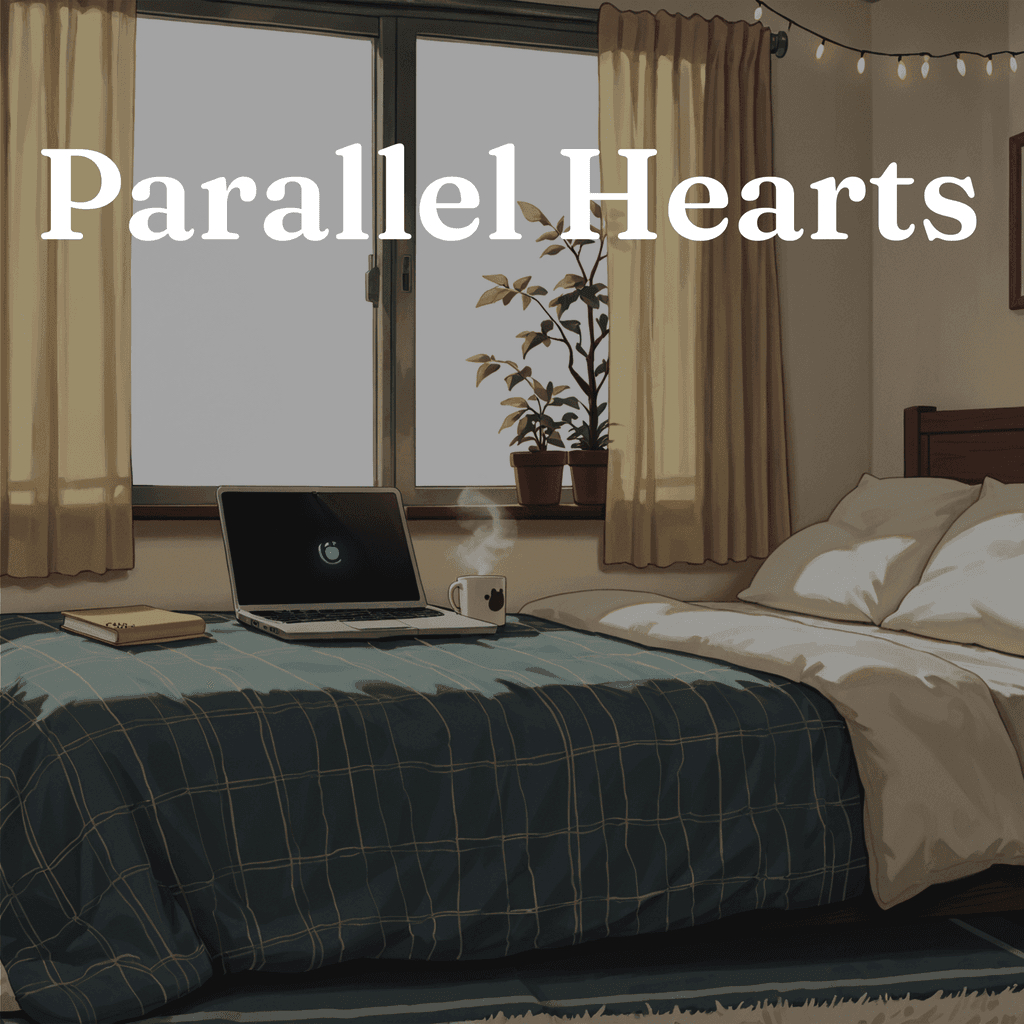
Visually, Parallel Hearts leans into softness and restraint. Character art is expressive without being exaggerated, and backgrounds favour calm, dreamlike environments over flashy spectacle. The lakeside setting, in particular, becomes a character in its own right — serene, melancholic, and emotionally charged.
The game’s presentation excels in moments of stillness. A pause between lines of dialogue, a subtle shift in expression, or a change in lighting can communicate more than words ever could. While the visual variety is limited, what’s there is used effectively to support the narrative tone.
Sound and Voice Work
Audio plays a crucial role in grounding the experience. The soundtrack is understated but evocative, favouring gentle melodies that enhance the game’s emotional weight without overwhelming it. Music often fades into the background, allowing silence to carry just as much meaning.
Voice acting, available in multiple languages, is consistently strong. Performances are restrained and naturalistic, aligning well with the game’s reflective tone. Emotional beats land not because of dramatic delivery, but because of sincerity.
Themes That Linger
What ultimately sets Parallel Hearts apart is its thematic focus. This is a story about memory, longing, and the fear of being forgotten. It asks uncomfortable questions: If someone forgets you, does the connection still matter? Is love defined by shared memory, or by how deeply it’s felt?
These ideas are explored gently, without heavy-handed moralising. The game trusts its audience to interpret meaning for themselves, which makes its emotional moments feel personal rather than prescriptive.
That said, the game’s restraint can sometimes work against it. There are moments where the narrative feels like it’s holding back when a deeper exploration would have strengthened its impact. The emotional payoff is real, but it may leave some players wishing the story pushed further.
Final Verdict
Parallel Hearts is a quiet, emotionally driven visual novel that understands the power of subtlety. It won’t appeal to everyone, particularly players seeking complex mechanics or dramatic plot twists, but for those who appreciate introspective storytelling and emotional nuance, it offers a memorable experience.
It’s a game best enjoyed slowly, with patience and openness — one that lingers in the mind not because of what it shows, but because of what it leaves unsaid.