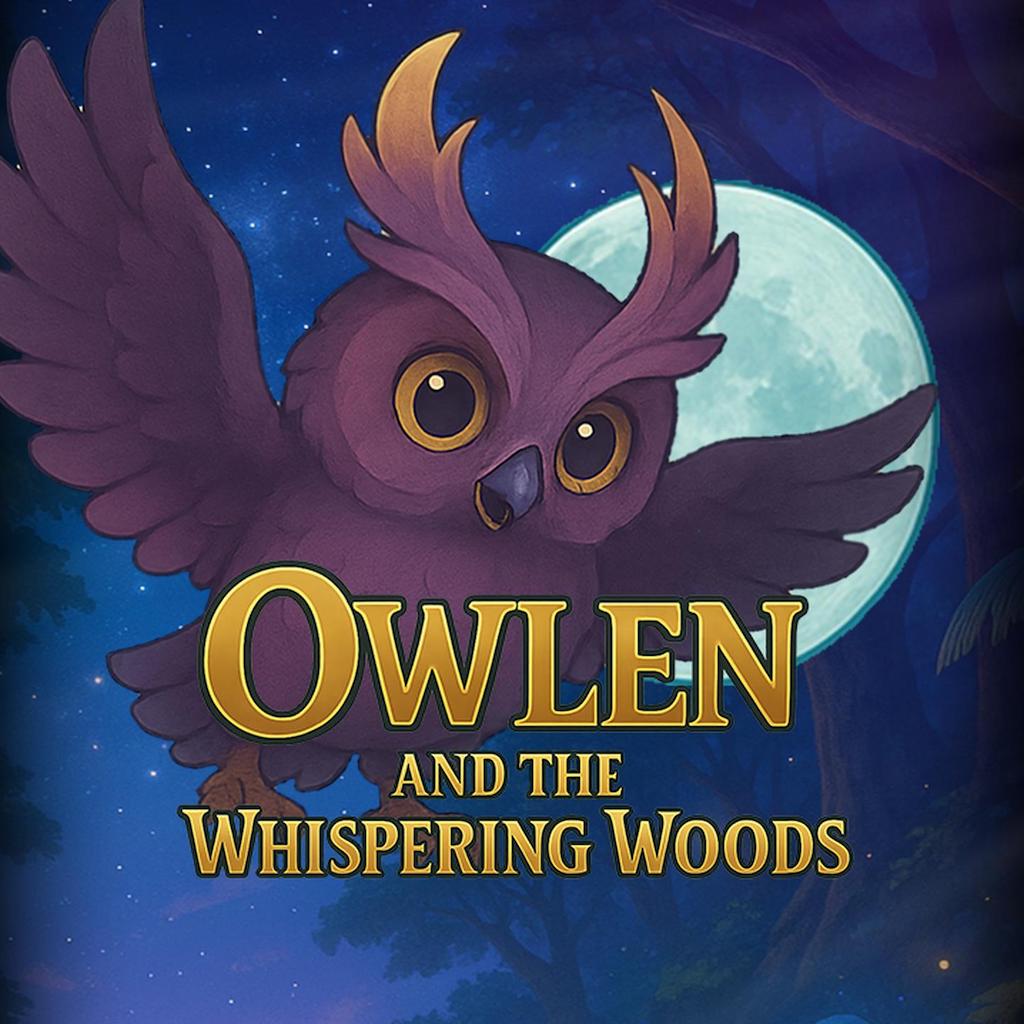
Owlen and the Whispering Woods continues EpiXR Games’ tradition of minimalist, meditative exploration experiences, offering a gentle, non-violent journey through a glowing, dreamlike forest. Released on 2–3 April 2026 for PlayStation 5, Xbox Series X|S, and Xbox One, this is a game that strips away almost every conventional layer of gameplay in favour of atmosphere, movement, and emotional tone.
You play as a young owl drifting through an enchanted woodland where every branch seems to whisper fragments of a forgotten past. There are no enemies, no combat systems, and no failure states. Instead, progression is built around exploration: flying through shimmering rings, collecting memory shards, and gradually restoring life to the forest’s broken spaces. It is, at its core, an experience about motion, memory, and mood.
From the outset, Whispering Woods makes its intentions very clear. This is not a game built around challenge or mastery, but one designed to be absorbed slowly, almost passively. The opening moments ease you into soft aerial controls that prioritise fluidity over precision. The owl’s movement feels weightless, with gentle acceleration and wide, sweeping turns that encourage you to simply glide rather than navigate with urgency.
There is something undeniably calming about this approach. Flying low through mist-covered marshes or rising above glowing canopies creates a consistent sense of tranquillity. The game rarely interrupts this flow, allowing you to exist within its spaces rather than conquer them.
However, this same simplicity is also its most defining limitation.
Minimalism That Soothes and Stagnates
The core gameplay loop remains largely unchanged throughout the entire experience. You enter a region, collect memory shards, activate magical nodes, and unlock the next section of forest. While each environment introduces new visual themes—ranging from bioluminescent groves to fog-heavy swamplands—the underlying structure never evolves beyond this basic rhythm.
On a mechanical level, there is very little progression. No new abilities are introduced, no meaningful upgrades alter your flight, and no systems deepen the interaction beyond collection-based objectives. For some players, this will be part of the appeal: a completely stress-free space where expectations are intentionally minimal. For others, it will feel underdeveloped.
The pacing reflects this design philosophy. Levels unfold slowly, encouraging repeated traversal through large, open areas. At times, this can enhance immersion, especially when combined with the ambient storytelling. At others, it risks feeling repetitive, particularly in longer play sessions where the lack of mechanical variation becomes more noticeable.
Despite this, the game never feels broken or unpolished. It simply commits fully to its vision of “interactive calm,” even when that vision may not sustain engagement for all audiences.
A Forest Painted in Sound and Light
If there is one area where Owlen and the Whispering Woods consistently excels, it is presentation. The visual design embraces stylised fantasy rather than realism, resulting in a world that feels intentionally dreamlike. Trees glow with soft internal light, mist rolls lazily across valleys, and colour palettes shift gently between regions to reflect emotional tone rather than geographical logic.
On PlayStation 5 and Xbox Series X|S, performance remains stable, with smooth frame rates that complement the game’s slow, deliberate movement. Load times are minimal, helping to preserve immersion as you transition between forest zones.
The audio design deserves equal praise. The soundtrack is understated but effective, built from ambient textures, soft piano motifs, and naturalistic sound layers such as wind, distant wildlife, and faint ethereal tones. It responds subtly to location and movement, reinforcing the sense that the forest is alive even when nothing overtly “happens.”
Together, these elements create a cohesive sensory experience that often feels closer to an interactive art installation than a traditional video game.
Storytelling Through Fragments
Narratively, the game depends heavily on environmental storytelling and fragmented memory sequences. Collecting shards offers glimpses of a forgotten past, while guiding spirits occasionally provide cryptic reflections or emotional prompts. The story itself is intentionally ambiguous, favouring interpretation over exposition.
This approach fits well with the game’s tone. It allows players to find meaning through atmosphere rather than dialogue, and at its strongest, the combination of visuals, sound, and slow movement can evoke a genuine sense of quiet reflection.
However, because the narrative is so abstract and subtly presented, its emotional impact will vary greatly depending on the player’s engagement. Those who invest time in piecing together its fragments may find it meaningful, while others might see it as vague or underdeveloped.
Final Thoughts
Owlen and the Whispering Woods does not aim to compete with traditional adventure or exploration titles. Instead, it fills a very specific niche: a calm, low-stress, emotionally contemplative experience designed for brief, mindful play sessions.
It succeeds in this realm thanks to its strong atmosphere, consistent presentation, and relaxing flight mechanics. However, its extreme minimalism also restricts its long-term appeal, with repetitive structure and a lack of mechanical development preventing it from reaching greater heights.
For players seeking a peaceful escape rather than a structured challenge, there is genuine value here. For those expecting depth or variety, it may feel too sparse to maintain interest.